Last Updated: October 23, 2026
Quick Summary
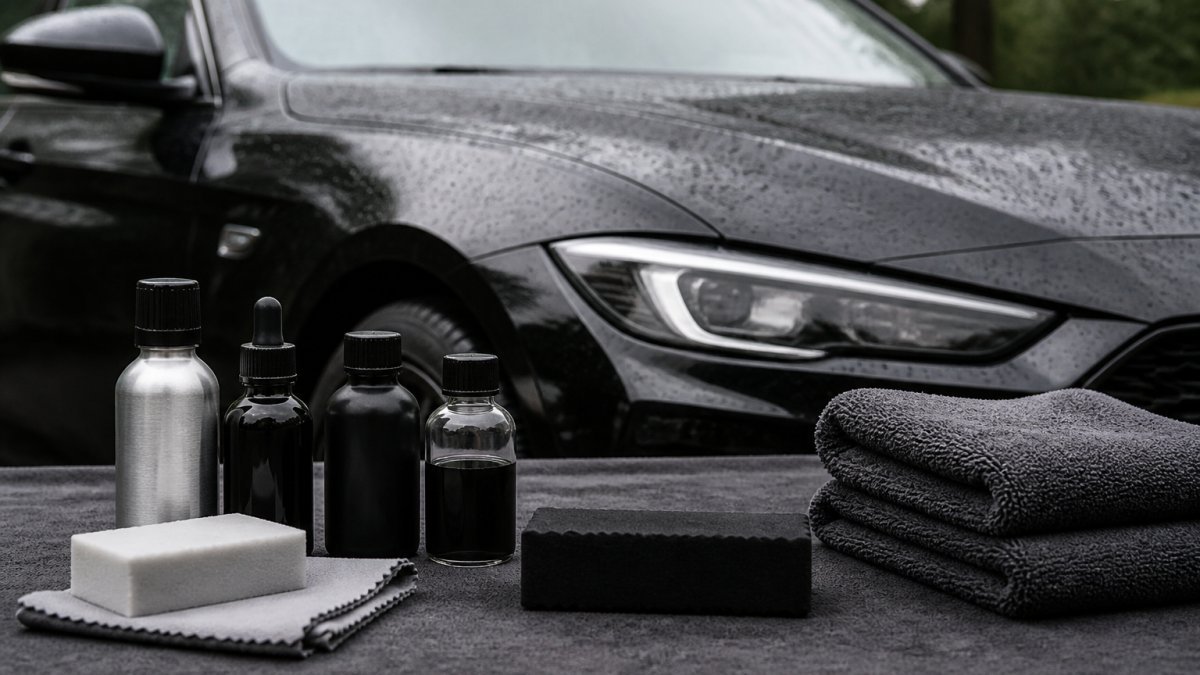
The best ceramic coating for daily drivers is one matched to your real routine, not the boldest durability claim. Choose a prosumer kit applied correctly over a professional-grade coating applied in poor conditions, and get the prep right.
- Consumer sprays fade within months, while prosumer kits bond for one to three years with proper prep.
- Ceramic coatings do not prevent rock chips or scratches; pair with paint protection film on high-impact areas.
- DIY coating takes minutes to apply but hours of prep, including clay bar and paint correction.
- Wash weekly or biweekly with pH-neutral shampoo and decontaminate seasonally to preserve the coating.
- Consumer sprays run roughly $15-$30 per bottle, while prosumer kits typically run $50-$100.
Table of Contents
- Why Daily Drivers Need a Different Ceramic Coating
- Quick Comparison: Top Ceramic Coatings for Daily Drivers
- How Long Does Ceramic Coating Last on a Daily-Driven Car?
- Ceramic Sealant vs Ceramic Coating: Which Fits Your Routine?
- DIY Ceramic Coating for Cars: What You Can Realistically Do
- Ceramic Coating Maintenance for High-Mileage Vehicles
- Application Risk, Cost, and Recovery From Mistakes
- Conclusion
- Frequently Asked Questions
Why Daily Drivers Need a Different Ceramic Coating
Daily drivers face conditions that garage queens never see: road salt, brake dust, bird droppings, UV exposure, and constant washing. The best ceramic coating for daily drivers balances durability with ease of maintenance, not just maximum gloss.
Here’s the core tension most buyers miss. Hard, high-solids coatings deliver the longest protection, but they demand careful application and strict curing conditions. Consumer-friendly sprays and sealants are forgiving but fade faster.
That’s the lens we use throughout this guide. Not “which coating is strongest,” but which coating actually holds up when your car lives outside, gets driven in rain, and sits in traffic.
For a daily driver, choose a coating you can maintain easily over one that promises the longest lifespan but demands flawless application conditions.
Quick Comparison: Top Ceramic Coatings for Daily Drivers
The best ceramic coating for daily drivers falls into three practical tiers, each suited to a different owner and budget. Below is how we group them, so you can match a product to your routine before reading reviews.
| Tier | Typical Durability | Application Effort | Best For |
|---|---|---|---|
| Consumer spray coating | Months | Low, wipe-on | Renters, quick protection |
| Prosumer kit coating | 1-3 years | Medium, needs prep | Enthusiasts who detail at home |
| Professional-grade coating | Multi-year | High, controlled conditions | Owners wanting long-term protection |
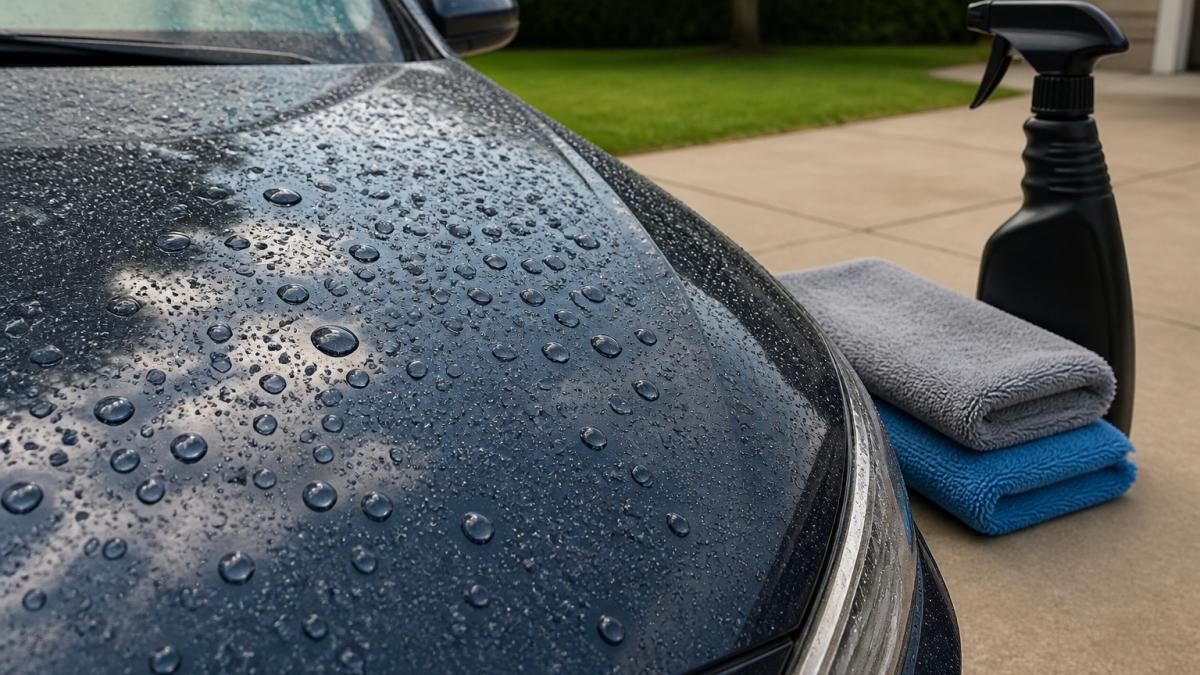
A common mistake is buying a professional-grade coating and applying it in a dusty driveway on a humid afternoon. High spots and streaking follow. Match the tier to your conditions, not your ambition.
How to Match a Tier to Your Daily-Driver Reality
Most roundups treat every car the same. Daily drivers are not the same. The right tier depends on four variables that competitors rarely separate:
- Commute conditions: Highway miles mean more road grime and bug splatter; stop-and-go traffic means more brake dust on the rear and wheels. A prosumer kit with strong chemical resistance handles both better than a spray.
- Parking: A car parked outside under trees or near a coast faces sap, bird droppings, and salt air. A professional-grade coating with a true clear-coat bond resists etching longer than a spray that fades in months.
- Climate: Strong UV and high heat accelerate coating degradation; road salt in winter demands a coating that shrugs off chloride. In harsh climates, the durability gap between tiers widens.
Representative Products by Tier
These are common, widely available examples that fit each tier. They are not the only options, and availability changes, but they illustrate what to look for.
- Consumer spray tier: Products like CarPro Reload, Gtechniq C2 Liquid Crystal, and Meguiar’s Hybrid Ceramic Wax are wipe-on sprays that add gloss and water beading for weeks to a few months. They are forgiving, need no curing booth, and suit leased cars or owners testing the waters. Expect to reapply every few months.
- Prosumer kit tier: Kits such as CarPro CQuartz UK 3.0, Gtechniq Crystal Serum Light, and Optimum Gloss-Coat come with applicators and require a clean, covered workspace. They bond to the clear coat for one to three years with proper prep and maintenance. This is the sweet spot for an enthusiast who details at home and wants real protection without a pro install.
- Professional-grade tier: Coatings sold to and installed by certified detailers, such as Gtechniq Crystal Serum Ultra or CarPro CQuartz Professional, offer multi-year durability and strong chemical resistance. They demand controlled conditions, paint correction, and often an installer warranty. They are the right call for an owner who wants long-term protection and will not apply it in a driveway.
What the Table Does Not Tell You
Durability ratings are ceilings, not promises. A spray rated for months can fade in weeks under road salt and automatic washes. A prosumer kit rated for years can fail early if applied over uncorrected paint or cured in high humidity.
Also note what a coating does not do: it does not prevent rock chips or scratches. If your daily commute includes gravel roads or tight parking, pair the coating with paint protection film on high-impact areas.
Choose the tier by your commute, parking, climate, and washing habits, not by the boldest durability claim. A prosumer kit applied correctly usually beats a professional-grade coating applied in poor conditions.
How Long Does Ceramic Coating Last on a Daily-Driven Car?
Ceramic coating longevity on a daily driver is shorter than the label claims, because sun, salt, and washing wear the layer down faster than on a stored vehicle. Expect consumer sprays to fade within months and professional coatings to hold for several years with proper care.
Manufacturers rate durability under ideal conditions. Real-world longevity depends on three factors:
- Exposure: A car parked outside in strong sun and road salt ages its coating faster.
- Washing habits: Harsh soaps and automatic brushes strip protection. pH-neutral shampoo preserves it.
- Maintenance: Regular maintenance washes and occasional decontamination extend the coating’s life.
Ask any installer how long a coating lasts and the honest answer starts with “it depends on how you treat it.” The label number is a ceiling, not a promise.
Skipping maintenance washes lets bonded contaminants sit on the coating and clog its surface. Once road grime and brake dust bake in, water beading drops off and the coating looks dull long before it should.
Ceramic Sealant vs Ceramic Coating: Which Fits Your Routine?
A ceramic sealant is a sprayable, short-term product that adds gloss and water beading for weeks to months, while a ceramic coating is a longer-lasting layer that bonds to the clear coat for years.
Here’s the practical split:
- Ceramic spray or sealant: Apply in under an hour, no curing booth needed, reapply every few months. Good for leased cars, tight schedules, or testing the waters.
- Ceramic coating: Requires surface preparation, paint correction, and a controlled cure. Rewards you with years of protection and easier washing.
If you’re coming from wax or sealant, expect the coating to change your wash routine, not eliminate it. You still wash the car. You just do it less painfully, because contaminants release more easily from a coated surface.
DIY Ceramic Coating for Cars: What You Can Realistically Do
DIY ceramic coating for cars is realistic for a careful owner with a clean, covered workspace, but it is not a beginner’s first project.
A realistic DIY sequence looks like this:
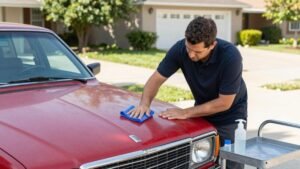
- Wash with pH-neutral shampoo and dry fully.
- Decontaminate with a clay bar to remove bonded fallout.
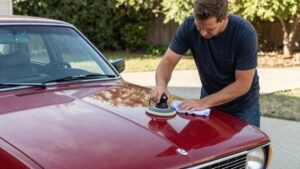
- Perform paint correction to remove swirls and scratches, since the coating locks in whatever finish is beneath it.
- Wipe the panels with a panel wipe to strip oils.
- Apply the coating in small sections with an applicator, leveling high spots immediately.
- Let it cure per the product instructions, away from moisture and dust.
The step most people skip is paint correction. Coating over swirl marks traps them under a glossy layer, and they become harder to fix later.
If your paint has scratches, oxidation, or swirls, professional paint correction before coating is the difference between a coating that looks great and one that magnifies every flaw.
Ceramic Coating Maintenance for High-Mileage Vehicles
Ceramic coating maintenance for high-mileage vehicles centers on frequent, gentle washing and periodic decontamination, not on reapplication. The coating reduces how often you need to correct the paint, but it still needs care.
Build a simple schedule around your driving:
- Weekly or biweekly: Maintenance wash with pH-neutral shampoo and a microfiber towel or wash mitt.
- Monthly: Check water beading. If it weakens, the coating may need a decontamination wash.
- Seasonally: Decontamination wash to clear road salt, tree sap, and environmental fallout.
High-mileage cars pick up more brake dust and road grime, so don’t stretch wash intervals. A coated car that never gets washed loses its beading and gloss faster than its durability rating suggests.
Keep a dedicated bucket, pH-neutral shampoo, and clean microfiber towels for coating maintenance only. Using the same gear you use on wheels or tires introduces grit that scratches the coated surface.
Application Risk, Cost, and Recovery From Mistakes
Application risk and total cost are where daily-driver buyers get surprised. A coating’s sticker price rarely includes the prep, correction, and time that make it perform, and mistakes during application can leave permanent high spots.
The Real Cost of a Daily-Driver Coating
Product price is only one line item. A realistic total cost of ownership includes:
- Product: Consumer sprays run roughly $15-$30 per bottle. Prosumer kits typically run $50-$100 and include applicators and sometimes a maintenance spray. Professional-grade coatings are usually sold to and installed by certified detailers, so the product cost is bundled into the install price.
- Prep supplies: Clay bar or clay mitt, iron remover, panel wipe, pH-neutral shampoo, microfiber towels, and applicators can add $50-$150 if you are starting from scratch.
- Paint correction: This is the biggest variable. A daily driver with swirls and light scratches may need a one-step polish; heavier defects need multi-stage correction. Supplies for a one-step polish (compound, pads, polisher) can run $150-$300, and a dual-action polisher itself is often $100-$200. Professional correction is priced by vehicle size and condition, so request a quote rather than relying on a blanket figure.
A common pattern is that the product is the smallest part of the total. The prep and correction are what make the coating look and last the way the label promises.
The Main Application Risks
- High spots and streaking: Uneven coating left to cure too long leaves visible marks that require polishing to remove. This is the most common DIY failure.
- Temperature and humidity: Applying in direct sun or high humidity causes the coating to flash too fast or cure unevenly. Most coatings want a shaded, moderate environment.
- Insufficient prep: Coating over contamination or uncorrected paint traps defects under a glossy layer.
Recovery From Mistakes
Recovery is possible but costly. Light high spots can often be polished out with a fine polish and a soft pad. Severe high spots or uneven curing may mean stripping the affected panel and reapplying. Water contamination during cure usually means polishing back and starting over on that section. That risk is the strongest argument for professional installation on a car you depend on every day.
Do not apply a coating in direct sun, high humidity, or a dusty driveway. Those conditions cause the high spots and uneven cure that lead to the most expensive recovery work.
If your paint has scratches, oxidation, or swirls, professional paint correction before coating is the difference between a coating that looks great and one that magnifies every flaw. Blue Ridge – Mobile Detailing handles multi-stage paint correction and coating installation at your home or workplace, so the finish is corrected before it’s sealed.
Conclusion
The best ceramic coating for daily drivers is the one matched to your real routine, not the one with the boldest durability claim.
If you’d rather skip the driveway guesswork, Blue Ridge – Mobile Detailing brings certified ceramic coating installation, multi-stage paint correction, and mobile service to your home or workplace. Schedule online to protect your finish without a shop visit.
Frequently Asked Questions
What is the best ceramic coating for a daily driver?
The best ceramic coating for daily drivers balances durability, ease of application, and real-world resistance to road grime and UV exposure. A professionally installed 5-year coating offers the strongest protection for commuters, while DIY-friendly spray coatings suit budget-conscious owners willing to reapply every 6 to 12 months. Look for coatings rated for daily-driven conditions rather than show-car garage queens.
Is ceramic coating worth it for a daily driver?
For most commuters, yes. A quality ceramic coating daily drivers rely on reduces how often you need to wash, protects against bird droppings, tree sap, and road salt, and keeps paint glossier longer. The upfront cost is higher than wax, but the reduced maintenance burden and lasting UV resistance typically justify it for owners keeping a vehicle three or more years.
Can you apply ceramic coating yourself?
You can, but results depend heavily on surface preparation. DIY ceramic coating for cars requires a full wash, clay bar decontamination, panel wipe, and often paint correction before application. High spots and streaking are common beginner mistakes. If your car has swirl marks or you want maximum durability, professional installation is safer, especially on luxury or newer finishes.
How do you maintain a ceramic-coated daily driver?
Ceramic coating maintenance is simple but consistent. Wash every two to four weeks with a pH-neutral shampoo, use the two-bucket method, and avoid automatic brush washes that cause micro-scratches. Apply a coating-safe topper or detail spray periodically, and remove bird droppings and tree sap promptly. Annual inspections help catch contamination before it bonds to the clear coat.