
Table of Contents
- What Mobile Fleet Detailing Includes
- Commercial Truck Wash Schedule: Frequency and Planning
- Fleet Detailing Cost: Pricing Factors and Budgeting
- Fleet Maintenance Checklist: Quality Standards and Inspection
- How to Prevent Salt Damage on Vehicles: Protection Strategies
- On-Site Fleet Detailing: Operational Advantages
- Professional Standards: Certifications, Training, and Accountability
- Frequently Asked Questions
Last Updated: October 12, 2026
What Mobile Fleet Detailing Includes
Mobile fleet detailing for commercial trucks brings professional cleaning and protection directly to your vehicles wherever they’re parked, eliminating the need to haul trucks away from your operation.
A complete mobile fleet detailing package typically includes exterior hand washing, wheel and tire cleaning, interior vacuuming and detailing, and specialized treatments for commercial vehicles facing heavy use and environmental exposure.
Exterior washing and protection
Exterior washing starts with a thorough hand wash using commercial-grade equipment and professional-quality soaps to remove road grime, dirt, and debris. For commercial trucks, this prevents damage to paint and protective coatings, not just improves appearance.
After washing, many providers apply protective treatments ranging from basic sealants to ceramic coatings that create a durable barrier against UV damage, oxidation, and environmental contaminants. Ceramic coatings bond to the paint surface and provide long-term protection, reducing the need for frequent reapplication.
When scheduling exterior detailing for your fleet, request that technicians inspect the paint condition first. Swirl marks or oxidation may require additional preparation before protective coatings are applied effectively.
Interior cleaning and maintenance
Interior detailing addresses the wear of constant use. Technicians vacuum seating surfaces, carpets, and floors, then clean and condition dashboards, wipe door panels, and sanitize high-touch areas like steering wheels and armrests.
For fleet vehicles, interior maintenance matters because drivers spend hours in these spaces daily. A clean interior reflects your company’s professionalism, maintains driver morale, and extends the lifespan of upholstery and interior components.
Specialized treatments for commercial vehicles
Commercial trucks face challenges standard detailing doesn’t address: winter salt exposure, jobsite dust, and constant UV radiation. Specialized treatments target these concerns.
Salt damage prevention is critical for fleet operations. Protective coatings prevent salt from bonding to paint and metal surfaces where corrosion begins. UV protection treatments keep paint from fading and oxidizing, and some providers offer undercarriage protection or ceramic coatings formulated for commercial vehicle paint.
Commercial Truck Wash Schedule: Frequency and Planning
The right cleaning frequency depends on usage patterns, operating environment, and maintenance goals. A truck running daily urban routes faces different exposure than one used for seasonal work.
Seasonal considerations and environmental factors
Winter presents the most aggressive challenge. Road salt, sand, and chemical de-icers accelerate corrosion and paint damage, so many fleet managers schedule detailing every two to four weeks to remove salt buildup before it causes permanent damage.
Spring and summer bring increased UV exposure, pollen, tree sap, and industrial fallout, so detailing schedules typically extend to every four to six weeks depending on local conditions.
Fall involves preparation for winter: a thorough detailing before cold months arrive, combined with protective coating application, can prevent significant damage.
The most cost-effective approach is preventive maintenance. Regular detailing catches damage early and prevents expensive repairs later. A vehicle cleaned every four weeks costs far less to maintain than one cleaned sporadically.
Creating a recurring service plan
A recurring service plan aligns your cleaning schedule with operational needs and budget. Start by assessing actual usage: delivery trucks running daily routes need more frequent attention than seasonal vehicles.
Work with your provider to establish a predictable schedule. Many fleet managers prefer weekly or bi-weekly service for high-use vehicles and monthly service for backup or seasonal equipment, making budgeting easier and keeping vehicles professional year-round.
Document your service schedule and track completed work to identify vehicles needing extra attention and provide maintenance evidence for warranty or insurance purposes.
Fleet Detailing Cost: Pricing Factors and Budgeting
Fleet detailing pricing depends on several variables; understanding them helps you budget accurately and compare provider quotes.
Fleet size matters, as larger fleets often receive volume discounts. Vehicle type affects pricing significantly: a full-size delivery truck costs more than a compact utility van. The level of service, basic wash versus comprehensive detailing with protective coatings, creates substantial price differences.
Service frequency impacts overall cost: weekly recurring service may quote lower per-visit rates than occasional jobs. Location matters too, since vehicles at a central yard are faster to service than those scattered across jobsites.
Variables that affect pricing
Vehicle size and type are primary cost drivers: a semi-truck requires more time and materials than a pickup, and utility vans, box trucks, and trailers each have different cleaning requirements and pricing.
Fleet condition affects pricing: regularly maintained fleets cost less per visit than those needing heavy-duty restoration. Oxidized paint, heavy salt damage, or interior neglect require more intensive work and extended service times.
Protective treatments add cost but provide long-term value. Ceramic coating increases the initial cost but reduces future maintenance and protects your investment; UV protection and salt-damage prevention similarly add upfront expense while preventing costly repairs.
Service frequency influences per-visit pricing: weekly recurring service costs less than monthly, and monthly costs less than occasional emergency cleaning, since consistency lets providers plan efficiently and pass savings to regular customers.
Getting an accurate quote
Request quotes that break down costs by service component, showing exterior washing, interior cleaning, wheel treatment, protective coatings, and specialized services separately. This clarity helps you understand what you’re paying for and where to adjust service levels.
Provide detailed fleet information when requesting quotes: number of vehicles, types and sizes, current condition, parking location, and preferred service frequency. The more specific your information, the more accurate the quote.
Ask whether quotes include travel time, since providers factor mobile service logistics differently. Clarify what’s included and what costs extra, such as water supply, power access, or special treatments.
Fleet Maintenance Checklist: Quality Standards and Inspection
Professional fleet detailing should meet consistent quality standards. Knowing what to look for before and after service ensures you’re getting the level of work your investment deserves.
Pre-service inspection points
Before technicians arrive, document your fleet’s current condition. Take photos of each vehicle’s exterior, focusing on paint condition, dirt accumulation, and any existing damage.
Check that vehicles are accessible and positioned for efficient service. Clear the parking area of obstacles that might slow technicians. Ensure adequate water and power supply are available if the provider needs them for mobile equipment.
Communicate any special concerns to your detailing provider beforehand. If a vehicle has a wrap or decal, sensitive paint, or interior damage, mention it. This prevents misunderstandings and ensures technicians use appropriate techniques for your specific vehicles.
Post-service verification
After detailing is complete, inspect the work before signing off. Walk around each vehicle and verify that exterior surfaces are clean and free of streaks or residue.
Test protective coatings if they were applied. Water should bead on treated surfaces rather than spreading flat. This indicates the coating is properly bonded and functioning as intended.
Document the completed work with photos. This creates a record of your fleet’s condition and provides a baseline for comparing future service quality. Keep these records for warranty or insurance purposes as well.
If you notice incomplete work or quality issues immediately after service, address them before the technician leaves. It’s far easier to correct problems on the spot than to request follow-up work later.
How to Prevent Salt Damage on Vehicles: Protection Strategies
Salt exposure is one of the most destructive forces for commercial fleet vehicles. Understanding how salt damage occurs and implementing protection strategies can prevent expensive corrosion and paint damage.
Understanding salt damage mechanisms
Salt accelerates oxidation and corrosion by creating an electrochemical reaction on metal surfaces.
Salt also bonds to paint surfaces and attracts moisture. This moisture traps salt against the paint, creating an acidic environment that etches and damages clear coat and base coat layers.
The undercarriage faces particularly aggressive salt exposure. Salt accumulates in crevices, wheel wells, and suspension components where it’s difficult to reach. This hidden salt causes rust that weakens structural components and shortens vehicle lifespan.
Protective coatings and treatments
Ceramic coatings create a hydrophobic barrier that prevents salt from bonding to paint surfaces. Water and salt-laden spray bead up and roll off rather than adhering to the paint.
Protective sealants offer similar benefits with less durability than ceramic coatings.
Undercarriage protection treatments seal hidden areas where salt accumulates. These treatments prevent rust formation on suspension components, brake lines, and structural elements.
Frequent washing removes salt before it causes damage. A regular detailing schedule during winter months, ideally every two to four weeks, prevents salt buildup.
On-Site Fleet Detailing: Operational Advantages
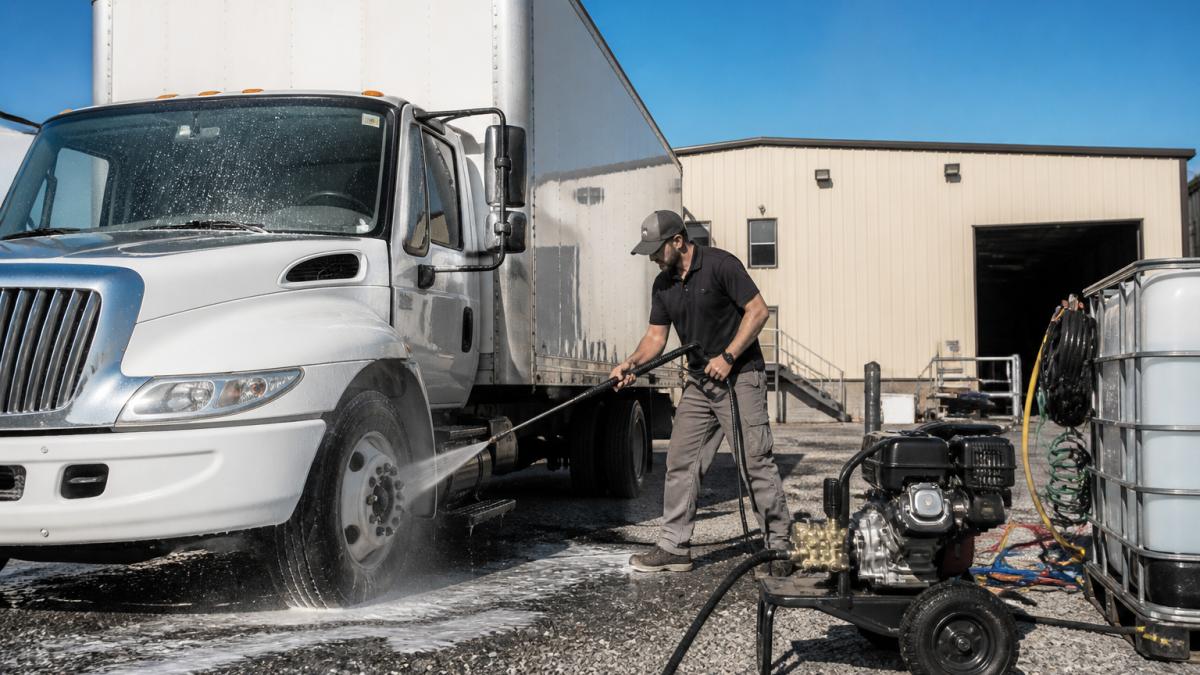
Mobile fleet detailing eliminates the disruption and inefficiency of traditional shop-based services. By bringing professional detailing to your vehicles, you keep your fleet operational and your business running without interruption.
Minimizing downtime and disruption
Traditional detailing requires you to transport vehicles to a shop, leave them there during service, and arrange pickup afterward. This process removes vehicles from service for hours or even days.
On-site detailing keeps vehicles at your location and operational. A technician arrives, details your vehicles while they’re parked, and leaves. Your fleet remains available for immediate dispatch if needed.
Scheduling is more convenient with mobile service. You control when technicians arrive rather than fitting your schedule around shop hours. Many providers offer early morning, evening, or weekend service to minimize impact on your operations.
Mobile service logistics and equipment
Professional mobile detailing requires proper equipment, water supply, and power access. Technicians arrive with commercial-grade cleaning systems, hoses, and treatment materials.
Water supply is essential. Most providers bring sufficient water for the job, but confirming this beforehand prevents delays.
Power supply enables specialized equipment like pressure washers and polishing machines. Confirming that adequate electrical access is available ensures technicians have what they need.
The provider should carry liability insurance covering mobile service. This protects both parties if damage occurs during service. Confirm insurance coverage before work begins.
Fleet operations with 5-15 vehicles parked at a central location benefit most from on-site mobile detailing. The efficiency gains and operational continuity justify the service investment.
Professional Standards: Certifications, Training, and Accountability
Quality mobile fleet detailing depends on the skill and knowledge of the technicians performing the work.
Professional detailers often pursue certifications in automotive paint protection, ceramic coating application, and fleet maintenance.
Proper technique matters significantly. Incorrect washing methods can damage paint.
Insurance and bonding protect you if damage occurs during service. Professional providers carry liability insurance covering their work.
References from other fleet clients provide insight into a provider’s reliability and quality.
Blue Ridge – Mobile Detailing brings this professional approach to commercial fleet care.
Managing a commercial fleet means balancing operational efficiency with vehicle maintenance.
Blue Ridge – Mobile Detailing specializes in fleet maintenance that fits your schedule. We arrive at your location with professional-grade equipment and apply protective treatments designed for commercial vehicles.
Frequently Asked Questions
How often should commercial trucks be washed and detailed?
Commercial truck wash frequency depends on operating conditions, weather, and road exposure. Trucks exposed to salt, mud, or harsh environments benefit from monthly or bi-weekly washing. Standard service areas typically need quarterly deep detailing combined with monthly exterior washes. Fleet managers should assess vehicle condition monthly and adjust schedules based on visible dirt accumulation, paint condition, and seasonal factors like winter salt exposure.
Can mobile fleet detailing be done at a business location?
Yes. Professional mobile fleet detailing services come directly to your yard, lot, jobsite, or business location. Mobile technicians bring commercial-grade equipment, water supply, and power supply to detail multiple commercial trucks without requiring vehicles to leave your facility. This minimizes operational downtime, eliminates transport time, and allows your fleet to remain available for work. On-site service is ideal for businesses with multiple vehicles that cannot afford shop downtime.
What does mobile fleet detailing for commercial trucks include?
Comprehensive mobile fleet detailing typically includes exterior hand washing, wheel and tire cleaning, window cleaning, interior vacuuming, and protection treatments. Services may include paint protection, ceramic coating, road grime removal, and rust prevention. Professional providers assess each vehicle’s condition and recommend treatments based on paint damage, interior wear, and environmental exposure. Specialty services address commercial vehicle needs like trailer detailing, utility van interiors, and semi-truck cleaning.
How can regular truck washing help prevent salt damage?
Regular washing removes salt deposits and corrosive road chemicals before they penetrate paint and undercarriage surfaces. Salt accelerates oxidation and rust formation on metal components. Frequent washing, combined with protective coatings like ceramic sealants, creates a barrier against salt exposure. Winter and post-road-salt-application washing is critical. Professional detailing includes thorough undercarriage and wheel well cleaning to remove trapped salt, extending vehicle lifespan and maintaining professional appearance.