Table of Contents
- What Professional Paint Correction Cost Actually Covers
- How Long Does Paint Correction Take?
- The Multi-Stage Paint Correction Process Explained
- Best Pads for Paint Correction 2026
- What Drives Paint Correction Cost: Vehicle Size, Condition, and Regional Labor Rates
- DIY vs. Professional Paint Correction: Risk and ROI
- Frequently Asked Questions
Last Updated: October 2, 2026
What Professional Paint Correction Cost Actually Covers
Professional paint correction cost reflects one thing above all: the hours of skilled, machine-guided work required to permanently remove defects from your clear coat rather than hide them. At Blue Ridge – Mobile Detailing, we explain it to customers this way: a wash removes dirt, but paint correction removes the damage itself.
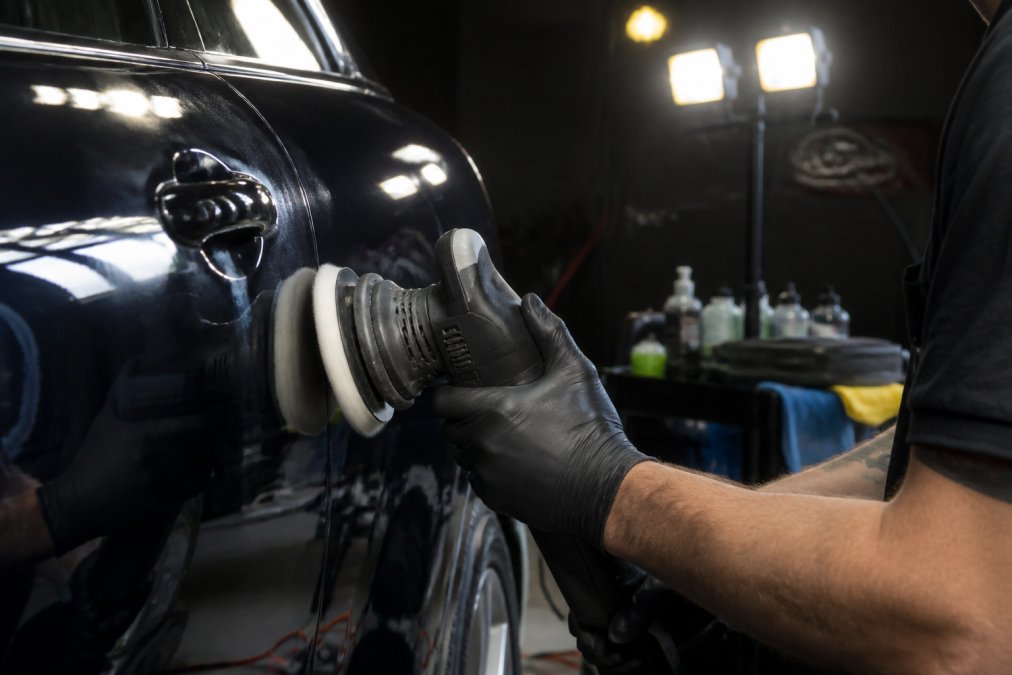
Paint correction is the multi-step machine polishing process that levels your clear coat to eliminate swirl marks, scratches, oxidation, and other paint defects. It is measured in stages, not minutes.
That distinction matters because the price you are quoted is really an estimate of labor. A one-step enhancement on a garaged weekend car might take an afternoon. A three-stage restoration on a neglected daily driver can run several days. Same vehicle size, wildly different invoices.
The hidden cost of prep work
Most quotes you see online cover only the polishing itself. The expensive, invisible half is what happens before the polisher ever touches paint.
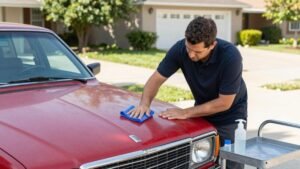
Proper surface preparation includes a full decontamination wash, a clay bar treatment to pull embedded contaminants, and an iron fallout chemical stage that dissolves brake dust bonded to the clear coat. Skipping this step traps grit under the pad and grinds fresh scratches into the finish.
A paint thickness gauge reading comes next. This tells the technician how much clear coat remains and how aggressively they can safely compound without burning through to the base coat. That single measurement often decides whether a vehicle gets a two-stage or a gentler single-stage approach.
The most common corner cut is skipping decontamination and paint depth readings. The consequence is not cosmetic: a pad loaded with trapped grit or an over-polished panel can leave permanent haze or a burned edge that costs far more to fix than the prep ever would have.
How Long Does Paint Correction Take?
The honest answer to how long does paint correction take is that it depends on condition and stage count, but most jobs fall between one and three days of dedicated work. A light single-stage polish on a well-kept car can finish in a few hours. A full multi-stage correction on a swirled, oxidized finish typically spans multiple sessions.
Vehicle size stretches that timeline. A compact coupe has far less surface area to work than a full-size SUV or a long-bed truck, and every extra panel adds compounding, polishing, and inspection time.
Weather and workspace add more. Mobile correction performed in a driveway demands shade management and stable temperatures, because polishing in direct sun or extreme heat changes how compounds behave. A controlled shop removes those variables but adds drop-off time.
- Single-stage enhancement: roughly half a day to a full day
- Two-stage correction: one to two days
- Multi-stage restoration: two to four days
The Multi-Stage Paint Correction Process Explained
The multi-stage paint correction process is a sequence of progressively finer machine polishing steps, each using a different pad and compound to remove defects and then refine the finish. Each stage removes a controlled amount of clear coat, so the order and the abrasiveness of the products matter enormously.
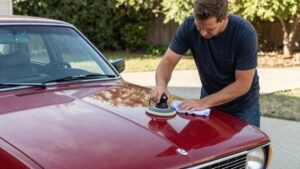
Compounding comes first. A rotary polisher or dual action polisher with a cutting pad and a coarse compound removes deeper scratches and levels the surface. This stage often leaves a slightly hazy finish, which is expected.
Polishing follows. A milder pad and polish refine that haze into clarity, removing the fine marring the cutting stage introduced. This is where gloss enhancement begins to show.
Finishing is the final refinement. A soft finishing pad and a fine polish bring out maximum depth and clarity, leaving a surface ready for protection.
Single-stage, two-stage, and three-stage compared
The number of stages is the single biggest driver of both time and price. More stages mean more passes, more product, and more labor hours.
| Stage Count | What It Removes | Typical Time | Best For |
|---|---|---|---|
| Single-stage | Light swirls, minor haze | Half to full day | Well-kept, newer paint |
| Two-stage | Moderate swirls, scratches | One to two days | Daily drivers, some defects |
| Three-stage | Heavy defects, oxidation | Two to four days | Neglected or restored paint |
Best Pads for Paint Correction 2026
- Cutting pads: firm foam or microfiber, used with compound for defect removal
- Polishing pads: medium-density foam, used to refine and add clarity
- Finishing pads: soft foam, used with fine polish for maximum gloss
- Wool pads: aggressive cutting, best left to experienced technicians on hard paints
A pro trick most guides skip: dedicate separate pads to each compound and polish, and clean them between panels. Cross-contaminating a finishing pad with cutting compound residue reintroduces the exact scratches you just spent hours removing.
Pad choice also interacts with paint hardness. Softer paints mar easily and reward gentle pads and slow speeds; harder clears tolerate more aggressive cutting. This is why a technician who inspects your paint before quoting will give a more accurate estimate than any flat online price list.
What Drives Paint Correction Cost: Vehicle Size, Condition, and Regional Labor Rates
Three variables move paint correction cost more than anything else: vehicle size, paint condition, and where you live. Understanding how they interact explains why two quotes for the same car can differ by hundreds of dollars, and why a flat national average is nearly useless for budgeting.
How the three variables combine into a quote
Most professional quotes are built from a simple internal formula: estimated labor hours × local hourly rate, plus materials and any add-on services. The table below shows how the same vehicle can land at very different totals depending on condition and market, not because anyone is overcharging, but because the underlying hours and rates genuinely differ.
| Scenario | Vehicle | Condition | Est. Labor Hours | Relative Cost |
|---|---|---|---|---|
| A | Compact coupe | Garaged, light swirls | Low | $ |
| B | Compact coupe | Neglected, oxidized | High | $$$ |
| C | Full-size SUV | Garaged, light swirls | Moderate | $$ |
| D | Full-size SUV | Neglected, oxidized | Very high | $$$$ |
Why prep work belongs in the cost conversation
When comparing quotes, ask what stage count, prep steps, and estimated hours are included, not just the total. Two quotes for “paint correction” can describe completely different amounts of work.
For a current estimate in the DMV, Eastern Panhandle, or Shenandoah Valley, request a quote from Blue Ridge – Mobile Detailing based on your specific vehicle’s size and condition.
DIY vs. Professional Paint Correction: Risk and ROI
DIY paint correction is possible, but the risk-to-reward math rarely favors a first-timer on a valuable finish. The equipment is affordable, yet the skill to use it safely is not something a single weekend teaches, and the failure mode is permanent.
The real cost of going DIY
A basic dual action (DA) polisher, a starter set of pads, compound, polish, clay bar, iron remover, and microfiber towels can be assembled for a few hundred dollars. On paper that looks like a bargain against a professional quote. But the comparison is incomplete unless you also count:
- Consumables and re-buys. Pads wear out, compounds get used up, and most first-timers buy the wrong aggressiveness level before finding the right one.
- Time. A multi-stage correction is many hours of focused, repetitive machine work. Most owners underestimate this by a wide margin.
- The cost of a mistake. This is the line item that never appears on a DIY shopping list but can dwarf everything else.
Why clear coat is unforgiving
Modern paint is a thin system: a color base coat topped by a clear coat that typically measures only a few mils thick, and the workable portion of that clear coat is thinner still. Paint correction works by removing a controlled amount of clear coat to level defects. Remove too much and you reach the base coat, a condition detailers call “burning through” or “striking through.”
The long-term ROI case
A properly corrected and protected finish holds its gloss and resale appeal far longer than one that was over-polished or left unprotected. Two mechanisms drive that value:
- Preserved clear coat. A technician who reads paint thickness with a gauge before polishing removes only what is safe, leaving clear coat for future years of ownership. An aggressive DIY job can consume that margin permanently.
- Protection that compounds. Ceramic coating applied after correction locks in the result and makes future washing easier, slowing the re-introduction of swirls. That means the correction lasts longer and the vehicle needs less frequent rework, the value builds over years, not weeks.
U.S. EPA guidance on automotive refinishing and surface preparation
Frequently Asked Questions
How much should I pay for paint correction?
Professional paint correction cost depends on three main factors: vehicle size, paint condition, and the number of stages. A single-stage enhancement on a small car costs less than a multi-stage correction on a large SUV with heavy oxidation. Regional labor rates also shift the number significantly. Because every vehicle is different, ask for a quote based on an in-person or photo inspection rather than accepting a flat rate over the phone.
What is the difference between 1-stage, 2-stage, and 3-stage paint correction?
A single-stage correction uses one polishing step to remove light swirl marks and boost gloss. Two-stage correction adds a compounding step before polishing to remove deeper defects like scratches and oxidation. Three-stage (multi-stage) correction includes compounding, polishing, and a finishing step to maximize clarity and depth on high-end or heavily damaged paint. More stages mean more labor hours, which is the biggest driver of paint correction cost.
Is paint correction worth the cost for older vehicles?
It depends on your goals. If the paint has enough clear coat left and you plan to keep the vehicle, correction can restore gloss and make the car look years newer. A paint thickness gauge reading tells the detailer whether there is enough clear coat to correct safely. If the clear coat is failing or too thin, correction may not be advisable, and repainting could be the better option.
How long will a paint correction last?
The correction itself is permanent as long as the clear coat is not damaged again. However, without protection like a ceramic coating or paint protection film, new swirl marks and environmental damage will return over time. Most owners pair correction with a coating to lock in the results, and the coating’s lifespan depends on the product and maintenance routine.