Table of Contents
- Paint Correction vs Ceramic Coating Explained: Two Different Jobs
- What Paint Correction Actually Removes
- What a Ceramic Coating Is and How It Bonds
- Benefits of Ceramic Coating Beyond Shine
- How Long Does Ceramic Coating Last?
- What Drives Paint Correction Cost
- When to Choose Which: A Decision Framework
- Frequently Asked Questions
Last Updated: October 7, 2026
Paint Correction vs Ceramic Coating Explained: Two Different Jobs
Paint correction vs ceramic coating explained comes down to one distinction: correction removes defects from your clear coat, while coating protects what’s underneath. They solve different problems, and confusing them leads to disappointing results. At Blue Ridge – Mobile Detailing, we often see this mix-up where owners book a coating expecting it to erase swirl marks that only polishing can fix. Below, we break down what each process does, what drives cost, and how to decide which one your vehicle actually needs.
Correction fixes the paint you have. Coating protects the paint you’ve fixed. Skipping correction before a coating locks in every swirl mark under a glossy layer.
What Paint Correction Actually Removes
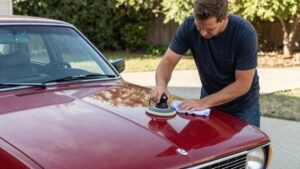
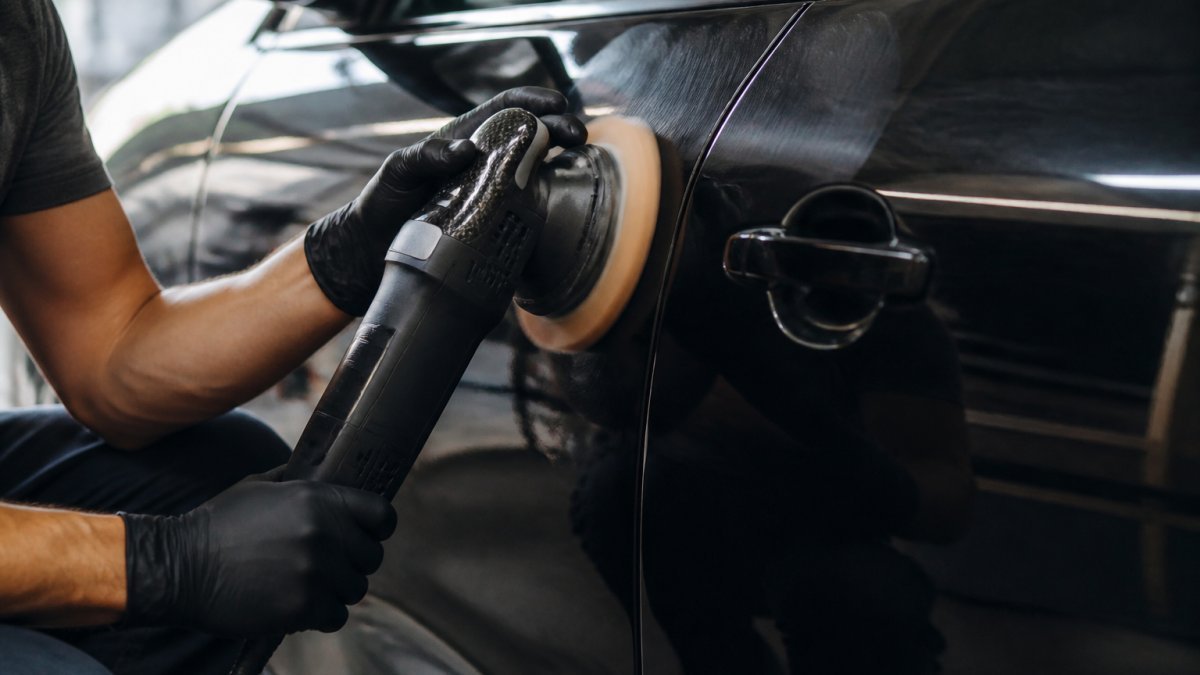
Paint correction is the machine polishing process that removes surface defects from your clear coat, restoring depth and clarity. It works by leveling the top layer of paint with an orbital polisher and progressively finer pads and compounds.
The defects it targets include:
- Swirl marks and spider-webbing from improper washing
- Holograms left by rotary buffers
- Micro-marring from automated car washes
- Oxidation that dulls the finish
- Light scratches that haven’t broken through the clear coat
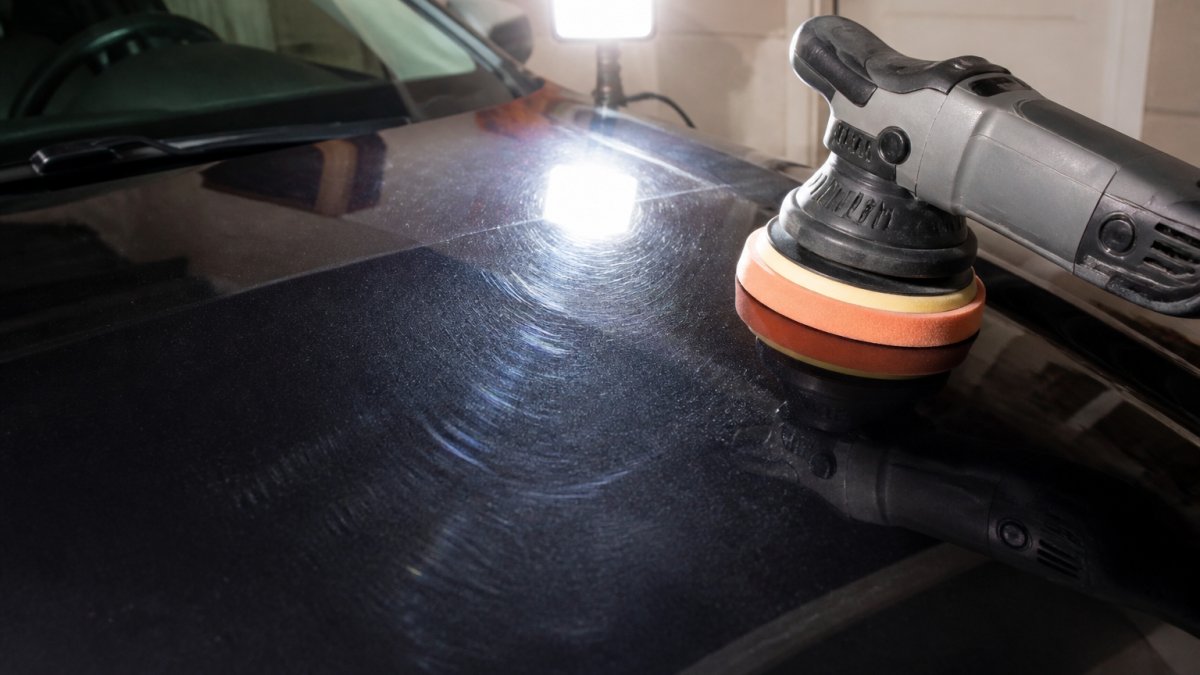
Swirl Marks, Holograms, and Micro-Marring
Swirl marks are fine circular scratches that catch light at certain angles. Holograms appear as repeating patterns from buffer trails. Micro-marring is the lightest category, often invisible until you inspect the paint under direct sunlight or a dedicated inspection light. A common mistake is assuming these come from the factory. They almost never do. They come from contact washing, dirty towels, and automatic brushes.
Oxidation, Scratches, and Paint Thickness Limits
Oxidation is the chemical breakdown of clear coat from UV exposure, leaving a chalky, faded appearance. Machine polishing removes it, but only if enough clear coat remains. Paint thickness matters here. Every polishing pass removes a small amount of material, and once the clear coat is gone, it doesn’t come back. Measuring paint depth before touching the surface is a common practice, because aggressive compounding on a thin panel can burn through and require a repaint.
What a Ceramic Coating Is and How It Bonds
A ceramic coating is a liquid polymer, typically nano-ceramic and solvent-based, that chemically bonds to your clear coat and cures into a semi-permanent protective layer. It is not a wax, and it does not fill scratches.
The bonding process follows a sequence:
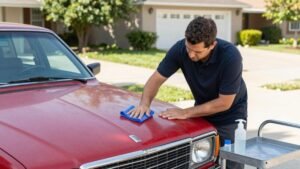
- Surface decontamination removes embedded iron, tar, and road film
- A clay bar treatment strips remaining bonded contaminants
- An isopropyl alcohol wipe removes polishing oils so the coating can adhere
- The coating is applied panel by panel and leveled with a suede applicator
- Curing time follows, during which the coating hardens and cross-links
Skip the prep and the coating fails. This is the part most guides gloss over: a coating applied over contamination or uncorrected paint will peel, haze, or fail within months.
Benefits of Ceramic Coating Beyond Shine
The benefits of ceramic coating extend well past gloss enhancement. The layer’s hydrophobic properties cause water to bead and roll off, which means fewer water spots and easier maintenance washes. Its chemical resistance handles bird droppings, tree sap, and road salt better than wax.
There’s a practical angle too. A coated vehicle stays cleaner longer and releases dirt with far less effort, which reduces the contact that causes swirl marks in the first place.
Ask what prep steps are included before any coating quote. If decontamination and an isopropyl alcohol wipe aren’t listed, the coating won’t bond properly no matter how good the product is.
How Long Does Ceramic Coating Last?
How long does ceramic coating last depends on the product tier, the prep quality, and how you maintain it. Professional-grade nano-ceramic coatings installed over properly corrected paint commonly last several years, and some carry longer manufacturer warranties.
Three factors shorten that lifespan:
- Harsh automatic car washes with abrasive brushes
- Failure to perform a periodic maintenance wash with pH-neutral soap
- Parking under constant tree sap or industrial fallout
A coating is a sacrificial top coat, not a force field. It takes the abuse so your clear coat doesn’t, but it still needs care.
How to Tell a Coating Has Failed
A coating rarely fails all at once. It degrades in stages, and the signs show up in a predictable order:
- Loss of hydrophobics. Water stops beading tightly and starts to sheet or cling. This is the earliest signal and usually the first thing to go.
- Water spotting that won’t wipe away. Once the surface stops repelling minerals, hard water etches into the layer and stays.
- Dulling and loss of gloss. The finish looks flat under inspection light even after a wash.
- Contamination bonding. Tree sap, tar, and iron particles start sticking again instead of releasing at the wash stage.
- Chalking or hazing. The coating itself is breaking down, not just dirty.
A simple test: after a pH-neutral wash, pour water across a horizontal panel. If it beads and rolls, the coating is still working. If it sheets flat, the top layer is compromised. A decontamination wash and a light polish of the coating surface can sometimes restore performance if the failure is only at the surface, but once the layer is chalking, it’s done.
Removing a Failed Coating Safely
Removal is a machine polishing job, not a chemical strip. The process is mechanical abrasion of the coating layer itself.
Never use a strong solvent, acetone, or a rotary buffer at high speed to strip a coating. Solvents can attack trim and sealants, and aggressive rotary work risks burning through the clear coat that the coating was supposed to protect.
Environmental and Safety Considerations
Coatings are solvent-based and off-gas during application. DIY application requires nitrile gloves, eye protection, and a respirator rated for organic vapors, plus ventilation, a closed garage is not adequate. Used applicator suede and towels should be allowed to cure fully before disposal, since solvent-soaked rags can generate heat as they dry. Follow the manufacturer’s safety data sheet rather than improvising, and check local household hazardous waste rules for disposal of leftover product.
What Drives Paint Correction Cost
Paint correction cost depends on three variables: the severity of the defects, the size of the vehicle, and the number of stages required. A one-step polish on a lightly swirled daily driver sits at the low end.
| Factor | Low End | High End |
|---|---|---|
| Defect severity | Light swirls | Heavy oxidation, deep scratches |
| Vehicle size | Compact car | Full-size truck or SUV |
| Stages required | One-step | Multi-stage |
| Paint condition | Newer, garaged | Older, neglected |
| Time on site | A few hours | A full day or more |
Because pricing depends on the vehicle in front of us, we quote after inspecting the paint in person. For current pricing on correction and coating packages, check our site or request a quote.
When to Choose Which: A Decision Framework
Choosing between the two comes down to what you want the paint to look like and how long you want it to stay that way. Use this logic:
- Choose paint correction alone if your paint has swirl marks, oxidation, or scratches and you want the finish restored to its original clarity.
- Choose correction plus ceramic coating if you want that restored finish protected and easier to maintain long term.
- Choose coating alone only if your paint is already defect-free. In practice, few vehicles qualify without at least a light polish.
- Choose neither yet if your clear coat is failing or you have exposed primer. Repainting comes first.
The Five-Year Cost Picture
Most guides stop at the sticker price. The real question is total cost of ownership over the life of the vehicle. Here’s how the two paths can compare over time for a daily-driven vehicle:
| Cost Category | Traditional Wax / Sealant | Ceramic Coating |
|---|---|---|
| Initial correction | Often skipped | Required before coating |
| Initial protection | Low per application | Higher upfront |
| Reapplication frequency | Every 2-4 months | Every 1-5 years depending on tier |
| Wash frequency | Higher, wax attracts and holds dirt | Lower, hydrophobic surface releases dirt |
| Wash labor per year | More hours, more contact | Fewer hours, less contact |
| Swirl re-introduction | Higher, more washing, more marring | Lower, less contact washing |
| Re-correction needed | Likely within 5 years | Less likely if maintained |
Two things drive the math. First, wax and sealant require repeated application, and each application is a hands-on job. Second, every wash cycle is a chance to introduce new swirl marks, which means the wax path tends to need correction again sooner.
For a vehicle the owner plans to keep and drive daily, the coating path can offer long-term benefits in terms of paint condition.
Ask for a written breakdown of what’s included at each stage, decontamination, correction stages, coating tier, and any maintenance plan. The cheapest quote is often the one that skips prep, and that’s the quote that fails first.
Matching the Choice to the Vehicle
- Daily driver, kept long-term: Correction plus a professional-grade coating. The maintenance savings and reduced re-correction compound over the years.
- Lease return in 1-2 years: A one-step correction and a quality sealant may be the smarter spend.
- Garaged weekend car: Correction for the finish, and a coating if the owner wants minimal upkeep between drives.
- Fleet or work vehicles: Coating pays back fastest here, fewer wash cycles and less labor across a lineup.
- Older vehicle with failing clear coat: Neither. Address the paint failure first.
Applying a ceramic coating over uncorrected paint traps swirl marks and scratches under a glossy layer, making them harder to remove later. Correct first, coat second.
Failure signs to watch for on an existing coating include loss of water beading, a dull or chalky appearance, and water spots that no longer wipe away. When that happens, removal and reapplication may be needed. Environmental impact and safety matter here too: coatings are solvent-based and require ventilation and proper protective equipment during application, and a certified installer follows manufacturer handling guidelines rather than improvising.
Frequently Asked Questions
Is paint correction and ceramic coating worth it?
They solve different problems, so the value depends on what your paint needs. Paint correction removes swirl marks, oxidation, and scratches that washing cannot fix, restoring clarity and depth. Ceramic coating then seals that finish with a layer that resists UV damage, chemicals, and water spotting while making maintenance washes easier. If you have dull or swirled paint, correction is the step that produces visible change. If your paint is already in good shape, coating protects it.
Should I get paint correction before ceramic coating?
In most cases, yes. A ceramic coating locks in whatever is underneath it, so applying it over swirl marks or oxidation traps those defects under a glossy layer. A primer polish or at least a light one-step correction, followed by an isopropyl alcohol wipe to strip polishing oils, gives the bonding agent a clean surface. If your paint is nearly flawless, a chemical decontamination and clay bar treatment may be enough before coating.
How long does ceramic coating last?
How long ceramic coating lasts depends on the product and how the vehicle is cared for. Professional-grade nano-ceramic coatings installed by a certified applicator can last several years. Maintenance washes with a pH-neutral soap and periodic inspections extend the coating’s life.
Does ceramic coating remove scratches?
No. Ceramic coating adds a thin protective top coat, but it does not level the paint or fill in scratches. The only way to remove surface defects like swirl marks, holograms, and fine scratches is machine polishing, which levels the clear coat around the defect. That is why paint correction and ceramic coating are usually paired: correction removes the damage, and the coating protects the corrected finish from new damage.
What drives paint correction cost?
Paint correction cost depends on the size of the vehicle, the condition of the paint, and how many stages of machine polishing are needed. A one-step correction on a well-kept car takes far less labor than a multi-stage correction on oxidized or heavily swirled paint. Whether the vehicle needs surface decontamination first also factors in. Ask for a quote based on an in-person or photo assessment rather than a flat rate.
Can you apply ceramic coating without paint correction?
You can, but the result reflects whatever is on the paint. If the surface has swirl marks, water spots, or oxidation, the coating seals those defects in and the finish will not look as sharp. A light primer polish or at least a thorough clay bar and isopropyl alcohol wipe is recommended so the bonding agent can adhere properly. Skipping prep also risks poor adhesion, which shortens how long the coating lasts.