Table of Contents
- Why Road Salt Destroys Cars: The Chemistry of Corrosion
- How to Remove Road Salt from Car Undercarriage
- Best Car Wash Frequency in Winter (And Why It Matters)
- Benefits of Ceramic Coating for Winter Protection
- DIY vs. Professional Salt Protection: Cost-Benefit Analysis
- EV Salt Protection: What Electric Vehicle Owners Need to Know
- Protecting Your Interior and Storage Strategies for Long-Term Parking
- Conclusion
- Frequently Asked Questions
Last Updated: September 27, 2026
Why Road Salt Destroys Cars: The Chemistry of Corrosion
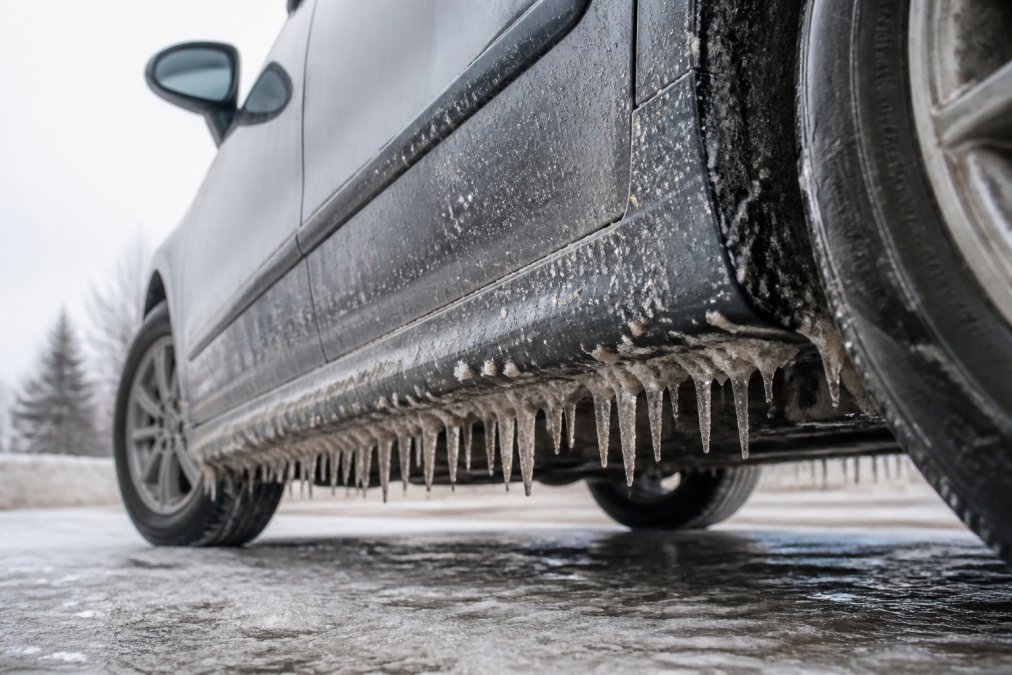
Road salt is the biggest threat to your car’s body in winter. It mixes with snow and water into a brine that clings to metal, speeding oxidation through clear coat, paint, then steel.
How to Remove Road Salt from Car Undercarriage
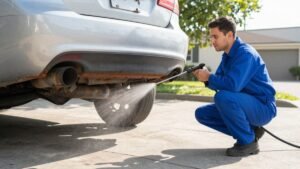
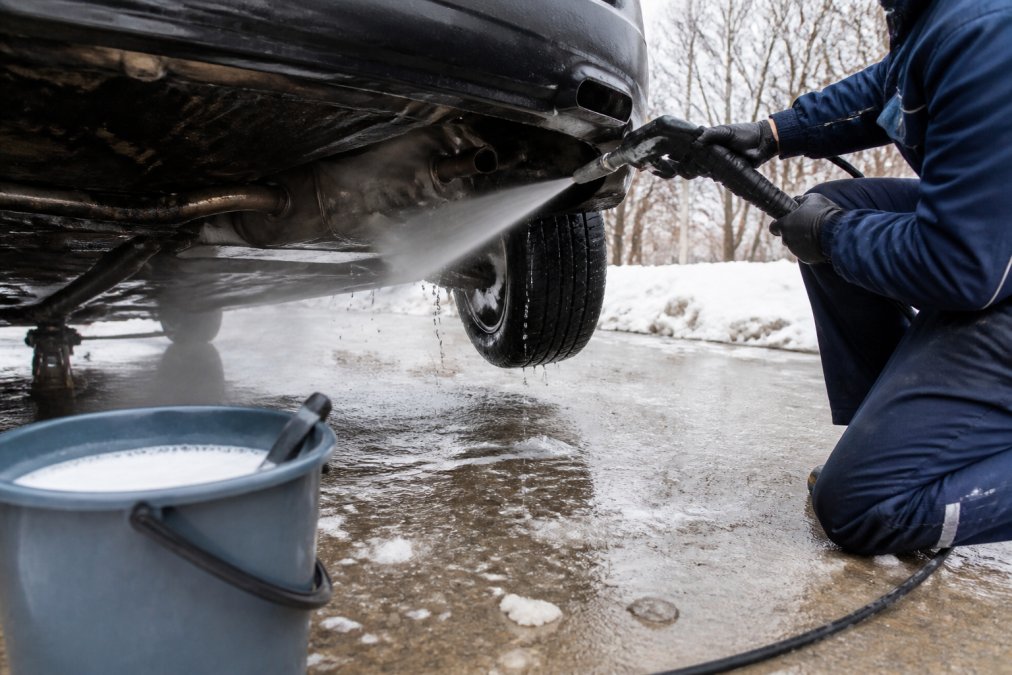
The best way to remove road salt from your car’s undercarriage is a thorough pressure wash aimed at the chassis, wheel wells, and frame rails, within a few days of every salted road drive. Waiting weeks lets brine dry and bond, making it harder to flush.
Pressure Washing the Undercarriage Safely
A pressure washer removes salt buildup a garden hose can’t touch, but technique matters: too much pressure in the wrong spot can strip paint or force water into electrical connectors.
Follow these steps:
- Park on a hard surface with good drainage
- Use a wide-angle nozzle, not a pinpoint tip
- Start at the rear and work forward, flushing frame rails and wheel wells
- Keep the wand moving; never hold it in one spot
- Use a pH-balanced shampoo for the body panels afterward
- Rinse the entire vehicle, including fender liners and the inside of wheels
Inspecting Vulnerable Areas: Brake Lines, Frame Rails, and Fender Liners
Salt attacks the parts you can’t see. After flushing, check these with a light:
- Brake lines: Look for flaking or surface rust. Any pitting means a professional inspection is overdue.
- Frame rails: Rust here spreads into the chassis and weakens the structure.
- Fender liners: These plastic shields trap salty slush against metal.
- Wheel wells: Salt and grit collect here and grind against the paint.
Best Car Wash Frequency in Winter (And Why It Matters)
Wash your car every 10 to 14 days in winter, or after any drive on salted roads. Frequent washing is the cheapest rust prevention you can buy; skipping it lets salt sit on paint and undercarriage for months, and that’s when corrosion takes hold.
Choosing the Right Car Wash: Touchless vs. Hand Wash
Touchless automatic washes are convenient and clear-coat safe since nothing touches the paint, but they clean weakly, especially on lower panels where salt sticks hardest.
| Wash Method | Best For | Watch Out For |
|---|---|---|
| Touchless automatic | Quick winter rinses | Misses heavy salt buildup |
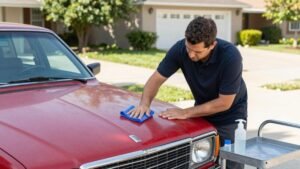
| Hand wash | Deep cleaning, paint safety | Needs two-bucket method |
| Mobile detailing | Full undercarriage flush | Schedule ahead in winter |
Benefits of Ceramic Coating for Winter Protection
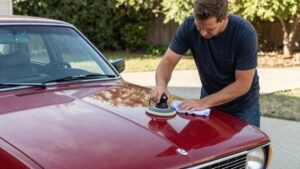
A ceramic coating forms a semi-permanent barrier that makes it harder for salt, slush, and contaminants to bond to paint. It won’t stop rust on bare metal, but it protects the clear coat and makes winter washes far more effective.
How Ceramic Coating Compares to Wax and Paint Sealant
The real difference shows up in maintenance. A coated car rinses cleaner in winter because salt has a harder time sticking to the surface. That means less scrubbing and lower risk of wash-induced swirl marks.
For owners of new or newer vehicles, ceramic coating is the smartest long-term play, locking in gloss and cutting the effort of every winter wash. Blue Ridge – Mobile Detailing installs ceramic coatings as a certified installer, prepping the paint first so the coating bonds to a clean surface.
DIY vs. Professional Salt Protection: Cost-Benefit Analysis
Should you spend a Saturday in a cold driveway or pay someone? The answer depends on four variables, climate, vehicle, available time, and tolerance for rework.
The Real Cost of DIY
DIY salt protection is cheap in cash but expensive in time and equipment. A realistic winter kit includes:
- A pressure washer with an undercarriage attachment (a basic electric unit runs a few hundred dollars; a gas unit with enough flow for a proper undercarriage flush costs more)
- A pH-balanced car shampoo and a salt-neutralizing wash additive
- Two buckets, grit guards, and separate wash mitts for the upper and lower body
- A spray sealant or wax you can reapply every few weeks
- A hose bib that does not freeze, or a heated space to work in
The Real Cost of Professional Protection
Professional protection splits into two purchases, and conflating them is the most common mistake:
- Recurring maintenance (mobile wash and undercarriage flush): Priced per visit, usually comparable to a mid-tier automatic wash but with a real undercarriage flush included. Best for owners who want the work done but do not want to buy equipment.
- One-time protection (ceramic coating, professional undercoating): A larger upfront spend that lasts years. This is the purchase that actually changes how much salt sticks to your vehicle.
The Decision Framework
Work through these four questions:
- How long is your salt season? Two or three months of occasional salting rewards DIY; five months of heavy brine favors professional protection, because the reapplication math stops working in DIY’s favor.
- Do you have heated, drained space? Without it, no winter hand washing is possible, so DIY collapses to touchless washes that miss the undercarriage.
- What is your vehicle worth, and how long will you keep it? A ceramic coating amortized over five years is a different calculation than on a two-year lease.
- What is one rust repair worth to you? Brake line replacement, rocker panel repair, and subframe work all cost far more than a season of professional washes. The break-even isn’t the service price, it’s the repair you avoid.
Where DIY Genuinely Wins
DIY isn’t the consolation prize. It wins in three situations:
- You enjoy it. If detailing is a hobby, the time cost isn’t a cost.
- You have a garage and a pressure washer. Once the equipment is sunk, each wash is nearly free.
- You drive a beater. Where cosmetics don’t matter, a disciplined DIY undercarriage flush every two weeks captures most of the rust-prevention benefit at almost no cost.
Where Professional Genuinely Wins
- You cannot get under the car safely. A proper flush needs a lift, ramps, or a dedicated undercarriage attachment; most driveway setups can’t reach the frame rails and inner fender liners where salt does its damage.
- You want a coating that survives the season. Spray sealants and waxes are reapplied multiple times per winter; a professional ceramic coating is a once-every-few-years purchase.
- You have more than one vehicle. DIY’s per-vehicle time cost scales linearly; professional mobile service doesn’t.
The break-even is rarely about the price of the wash. It is about whether you will actually do the wash in February, in the cold, every two weeks, without fail. Most people will not. If that is you, professional recurring service is the cheaper path in real terms, because it is the only path that gets done.
Pricing depends on your vehicle’s size, condition, and the service you choose. Pricing depends on your vehicle’s size, condition, and the service you choose. Blue Ridge – Mobile Detailing provides quotes based on your specific vehicle, so reach out for current rates.
EV Salt Protection: What Electric Vehicle Owners Need to Know
EVs face the same salt threat as gas cars, plus a few unique ones: the battery pack, charging ports, and high-voltage connectors sit low on the chassis, right where brine collects.
EV owners should pay extra attention to:
- Battery tray and skid plates: Salt residue can trap moisture against these surfaces.
- Charging port seals: Salt spray can dry out rubber seals over time.
- Regenerative braking: EVs use brakes less, so brake lines and calipers get less heat to dry them out.
Never pressure wash directly into a charging port or high-voltage connector. Water intrusion there can trigger fault codes and costly repairs. Wipe those areas by hand with a damp cloth instead.
Protecting Your Interior and Storage Strategies for Long-Term Parking
Salt doesn’t stay outside. It rides in on your boots, melts into the carpet, and dries into white stains that corrode seat brackets, seat rails, and interior bolts. The fix starts at the door.
Interior Salt Defense
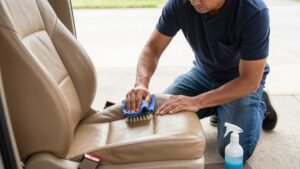
Rubber floor mats are the simplest, most effective barrier, trapping slush in a tray instead of letting it soak into carpet. Pull them out, hose them down, and dry them completely before reinstalling, a wet mat over carpet just relocates the problem.
Beyond mats, three habits matter:
- Kick the snow off before you get in. Most salt reaches your carpet on your boots in the first thirty seconds of a drive.
- Vacuum and shampoo carpet in late winter, not spring. Salt crystals are hygroscopic, they pull moisture from the air, so left in carpet through a humid spring they keep corroding metal long after the roads are clean.
- Wipe down door sills and seat rails. These metal parts sit closest to where salty slush lands and are first to show surface rust.
The Garage Myth: Why Indoor Parking Is Not Automatically Better
The standard advice is to park in a garage, advice that is incomplete and sometimes wrong.
- Climate-controlled, ventilated garage, dry air, stable temperature, no condensation cycles.
- Covered carport or open-air driveway, the vehicle dries between drives.
- Unheated, damp, closed garage, the worst option, because it traps moisture against a salted vehicle.
Long-Term Parking: A Step-by-Step Protocol
If the vehicle will sit for weeks or months, a seasonal car, a deployment, a long trip, order of operations matters:
- Wash and dry thoroughly, including the undercarriage. Never store a salted vehicle; salt left on metal for months is the single most damaging thing you can do.
- Apply a protective coating or sealant to the paint. Last chance to seal the surface before months of sitting.
- Park on a dry, hard surface. Concrete or asphalt, not bare ground or grass, which wicks moisture into the chassis.
- Use a breathable car cover, never a plastic tarp. A tarp traps condensation against the paint and promotes the corrosion you’re trying to prevent.
- Keep the vehicle off sprinkler lines and away from downspouts. Repeated wetting from irrigation is a common, overlooked cause of rust on stored vehicles.
- Start and move the vehicle periodically, or use a battery maintainer. Moving redistributes lubricants and prevents flat spots; a maintainer keeps the battery charged.
- Crack a window slightly if the space is sealed. Airflow beats airtight storage for corrosion prevention.
If You Must Park Outside
Outdoor storage isn’t a death sentence. The priorities shift:
- Elevate the vehicle if possible. Even a few inches of airflow under the chassis helps it dry.
- Face the vehicle so prevailing wind moves under it, not against one side.
- Check the undercarriage monthly. A quick visual inspection catches surface rust before it becomes structural.
- Rinse the undercarriage after any warm spell that melts residual road salt. Mid-winter thaws are when salt does its worst work, because the brine reactivates.
A damp, unheated garage can accelerate rust more than outdoor parking. If your garage smells musty or shows condensation on the walls, it is trapping moisture, and that moisture is working against your vehicle every day it sits.
The cheapest rust prevention is a rinse you actually do. Salt sitting on metal for weeks does far more damage than any single wash could prevent, and a damp garage can make that sitting worse, not better.
Conclusion
Preventing salt damage on vehicles comes down to consistency: flush the undercarriage, wash every couple of weeks, and add real protection before winter hits. Salt is patient. It works on your car every day it sits there.
Frequently Asked Questions
How long does it take for road salt to cause rust on a car?
Surface rust can begin within days of exposure to road salt, especially on bare metal or scratched paint. Significant corrosion on brake lines, frame rails, and wheel wells often develops over one to two winters without regular washing. The longer salt sits on metal, the deeper it penetrates. Washing your vehicle every 10 to 14 days during winter removes salt buildup before it has time to cause lasting damage. Inspect vulnerable areas monthly for early signs of surface rust.
Does ceramic coating protect against road salt?
Yes. A professionally applied ceramic coating creates a semi-permanent protective barrier that road salt and de-icing agents struggle to bond to. Unlike wax, which breaks down in weeks, ceramic coating lasts years and resists the chemical reaction that leads to oxidation and corrosion. It also makes washing away salt buildup easier because contaminants release more readily from the coated surface. For winter driving, ceramic coating offers the most durable paint protection available.
What is the best way to wash salt off a car in winter?
Use a touchless car wash or hand wash with a pH-balanced shampoo and a pressure washer focused on the undercarriage, wheel wells, and fender liners. Avoid abrasive brushes that can scratch paint. Wash when temperatures are above freezing to prevent water from freezing in locks or seals. If you cannot wash at home, a professional mobile detailing service can remove salt buildup without you leaving your driveway. Frequency matters more than method: every 10 to 14 days is ideal.
Does undercoating prevent salt damage on vehicles?
Undercoating adds a protective barrier to the chassis, frame rails, and wheel wells, but it is not a permanent solution. It can chip or peel over time, allowing salt and moisture to reach bare metal underneath. For best results, combine undercoating with regular undercarriage washing and a ceramic coating on painted surfaces. Inspect the undercoating each fall for cracks or thin spots and reapply as needed. No single treatment replaces consistent winter maintenance.