Table of Contents
- How Professional Mobile Window Tinting Works
- Ceramic Window Tint Benefits for Your Vehicle
- Automotive Window Tinting Laws: What You Need to Know
- How to Prepare Your Car for Mobile Tinting
- Window Film Types: Ceramic, Carbon, and Dye-Based Options
- Mobile Service Area and Scheduling Your Appointment
- Curing Time, Maintenance, and Aftercare
- Frequently Asked Questions
Last Updated: September 25, 2026
How Professional Mobile Window Tinting Works
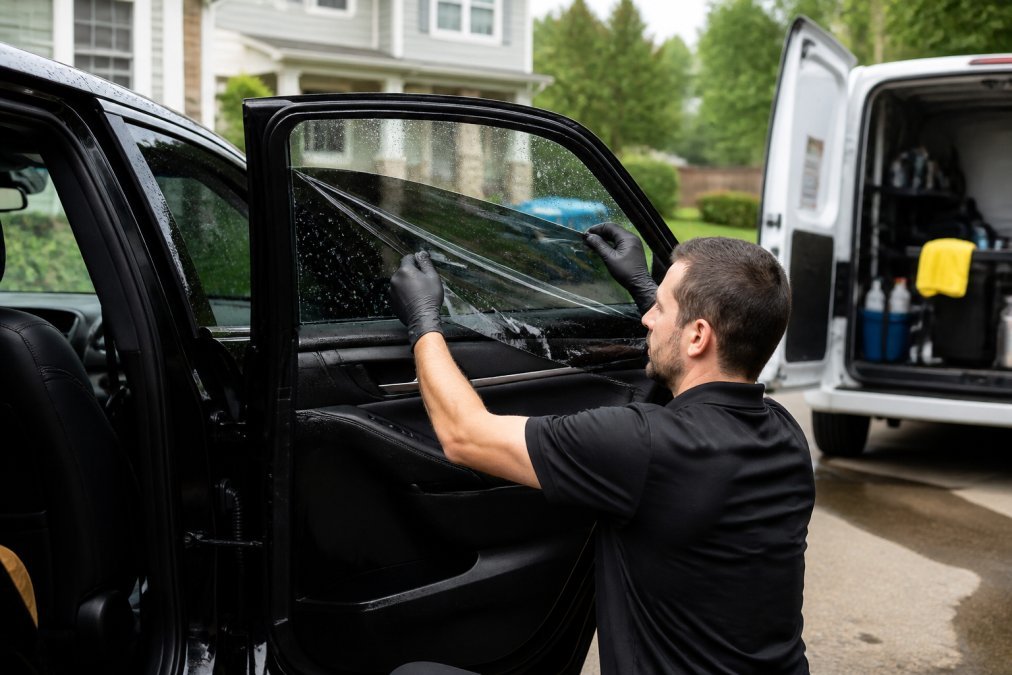
Professional window tinting mobile service brings the installation bay to your driveway, office lot, or fleet yard. Instead of losing your vehicle for a day, a trained technician arrives with film stock, a plotter, and the tools to cut and install tint on site. This guide from Blue Ridge – Mobile Detailing covers how the process works and how to prepare.
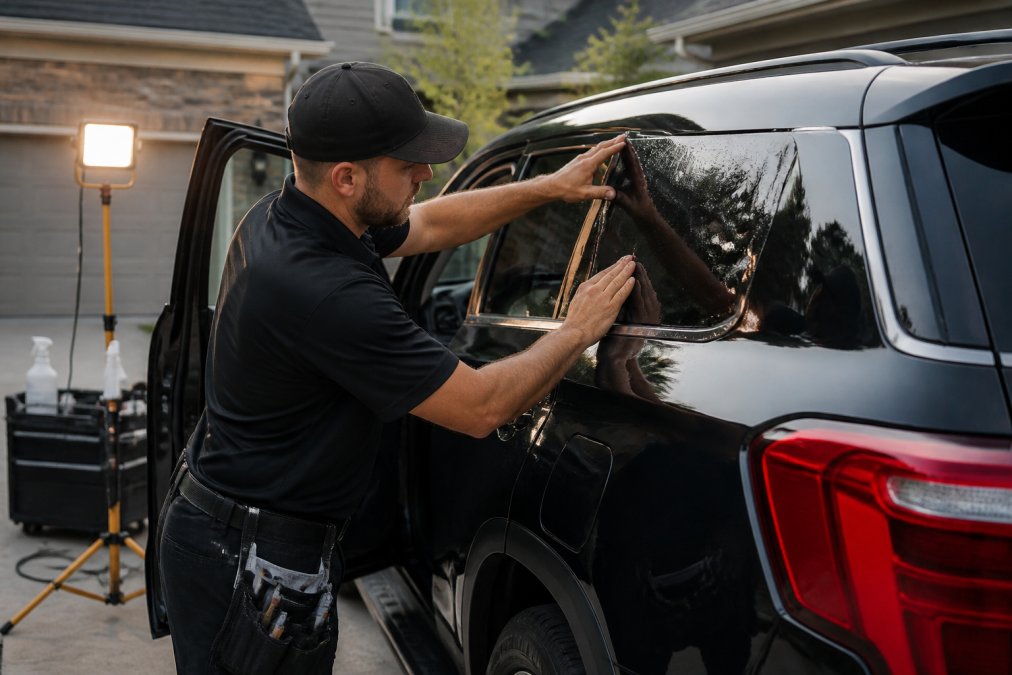
What the Mobile Technician Brings to Your Location
A mobile tint rig is a compact version of a shop bay: a film plotter for computer-cut patterns, a heat gun, squeegees, slip solution, and a power source. Because film is cut to your exact vehicle’s dimensions, there’s no trimming on your paint.
- On-board plotter for custom patterns
- Portable power and lighting
- Film stock across multiple shade percentages
- Installation tools and slip solution
- Protective coverings for surrounding surfaces
The On-Site Installation Process Step by Step
The sequence runs from prep to final inspection in a few hours, depending on vehicle size and window count.
- Inspect glass for chips, scratches, or existing film
- Clean and degrease each window surface
- Cut film patterns on the plotter
- Apply film with slip solution and squeegee out moisture
- Heat-shrink edges for a tight fit
- Inspect for bubbles, dust, and alignment
Ceramic Window Tint Benefits for Your Vehicle
Ceramic film blocks heat through infrared rejection rather than darkening alone, so you get comfort without an illegal shade level. It’s the top choice for luxury and performance vehicles because it doesn’t interfere with GPS, toll transponders, or cell signals the way some metallic films can.
The practical payoff shows up in three places:
- Heat rejection: Less solar load means the cabin cools faster and the AC works less.
- Ultraviolet protection: UV rays fade leather, crack dashboards, and damage trim. Film blocks most of that.
- Glare reduction: Headlight glare and low-sun glare drop noticeably, which helps on long drives.
Automotive Window Tinting Laws: What You Need to Know
Tint laws are set at the state level, governing how dark your windows can be, which windows are restricted, and whether reflective films are allowed. Enforcement varies, but the rules are published and knowable. Here’s the framework to check your state’s limits before a technician cuts film.
The Three Regulatory Buckets
Nearly every state regulates tint through some combination of these categories:
- Front side windows (driver and passenger). The most heavily regulated. Most states set a minimum VLT. Some states also cap reflectivity.
- Rear side windows. Usually less restrictive than the front. Many states allow darker film or no limit at all, and some permit limo tint on rear passenger windows.
- Rear windshield. Often the most permissive, especially when the vehicle has dual side mirrors. Some states allow any darkness; others still set a VLT floor.
Medical Exemptions
Every state provides a path for drivers with a documented medical need. The process usually requires a signed form from a licensed physician. If you qualify, the exemption generally allows darker film, but the paperwork must be in order before the install, not after a citation.
Reflectivity and Color Rules
Beyond VLT, many states cap reflectivity. Metallic and some ceramic films push reflectivity higher, and states with caps may reject them on front windows even if the VLT is legal. A handful of states also ban specific colors, red, amber, and blue tints commonly, because they mimic emergency vehicle lighting.
How to Verify Your State’s Limits
Before booking, confirm three things for your state: the minimum VLT for front side windows, whether rear windows have a separate limit, and whether reflectivity is capped. The most reliable sources are your state’s motor vehicle agency and the state statute itself. You can start with state motor vehicle tint regulations or your state DMV site, then cross-check the statute number if you want the exact language.
Installing film darker than your state allows can fail inspection and lead to a fix-it ticket. The installer can’t talk you out of a citation, and some states require the film to be removed entirely before the ticket is cleared. Confirm the legal VLT before the film goes on.
Why a Reputable Installer Confirms Shade First
A professional mobile technician will ask for your state and confirm the legal shade for each window before cutting film. That’s the difference between a job that passes inspection and one that has to be redone. If a provider quotes a shade without asking where the vehicle is registered, treat that as a red flag, it’s your vehicle on the line if it’s wrong.
How to Prepare Your Car for Mobile Tinting
Mobile tinting is only as good as the environment it’s installed in. Unlike a shop bay with filtered air and controlled temperature, your driveway, parking garage, or fleet lot introduces variables the technician can’t control. Site conditions affect the final result as much as the film itself. Here’s what to set up before the technician arrives.
Environmental Conditions That Determine Install Quality
Film adheres through a slip solution that must evaporate cleanly. Airborne contaminants, direct sun, and temperature swings all interfere.
- Shade is non-negotiable. Direct sunlight heats the glass and flashes off the slip solution before it can be squeegeed out, trapping air and creating silvering. A garage, carport, or shaded side of a building is ideal; if no shade exists, ask whether the provider carries a pop-up canopy.
- Dust and pollen are the enemy. Open-air installs near gravel, construction, or a freshly mowed lawn pull particles under the film. A paved lot beats dirt or grass.
- Wind moves debris. Even a light breeze carries grit onto a wet window. A garage with the door cracked beats an open driveway on a breezy day.
- Temperature range matters. Most films install best within a specific temperature range. Outside this range, film can stiffen or slip solution can dry too fast. A climate-controlled garage solves both.
- Power access. The plotter, heat gun, and work lights need a standard 110V outlet within cord reach. At an office lot or fleet yard, confirm an outlet or ask whether the rig carries a generator.
If your only option is an open driveway on a hot, windy day, reschedule. A one-week delay beats a lifetime of trapped dust specks you can’t unsee.
Vehicle Preparation Checklist
Once the environment is sorted, prep the vehicle itself. This part is quick.
- Wash the exterior so road grime doesn’t transfer to glass
- Clear the interior of valuables, car seats, and loose items near the windows
- Clean the inside glass with a streak-free cleaner if you have time, the technician does a final wipe, but starting clean saves minutes
- Roll all windows down so the technician can reach the top edges and felt seals
- Note existing chips, scratches, or aftermarket film so the technician can document pre-existing conditions
- Remove toll transponders, dash cams, and suction mounts from the glass
- Park so both sides have at least a few feet of clearance
- Plan for the full scheduled window, typically two to four hours for a full vehicle, longer for large SUVs or trucks
What the Technician Handles On Site
You’re not responsible for the install mechanics. The technician brings the plotter, film stock, slip solution, squeegees, heat gun, and protective coverings for trim and paint, then cuts patterns to your vehicle’s dimensions, applies film, heat-shrinks edges, and inspects for bubbles and alignment. Your job is to provide a workable space and stay out of it until the final walkthrough.
Don’t hover or ask questions mid-install. Film work requires a clean field and steady hands. Save your questions for the inspection at the end, when the technician can point out what to watch for during curing.
After the Install: What to Expect on Site
Before the technician leaves, walk the vehicle with them and check every tinted window inside and out under good light. Small water pockets and a faint haze are normal and clear during curing. What you should not see: creases, trapped debris, lifted edges, or film that looks cloudy rather than wet. Flag anything questionable before they pack up, it’s far easier to fix on site than on a return visit.
Window Film Types: Ceramic, Carbon, and Dye-Based Options
Three film families cover most installs, differing in heat performance, longevity, and price.
| Film Type | Heat Rejection | Fade Resistance | Best For |
|---|---|---|---|
| Ceramic | Highest | Excellent | Luxury and long-term ownership |
| Carbon | Moderate to high | Good | Matte look, mid-range budget |
| Dye-based | Lowest | Fair | Basic privacy on a tight budget |
Mobile Service Area and Scheduling Your Appointment
Mobile tinting only works if the technician reaches you. Service areas are defined by a radius around a home base, so coverage thins out farther from the metro.
Requesting a Quote and Booking Online
Pricing depends on vehicle size, window count, and film type. Ceramic runs higher than carbon, and full-vehicle jobs cost more than a front-window set. Rather than publish a flat rate, most mobile providers quote per job.
Curing Time, Maintenance, and Aftercare
New tint needs time to cure. During the first few days, small water pockets and a slight haze are normal as moisture evaporates through the film. Full curing typically takes a few days to a couple of weeks, longer in cool or humid weather.
Aftercare keeps the film looking new:
- Wait at least a few days before rolling windows down
- Skip ammonia-based cleaners, which degrade film
- Use a soft microfiber cloth and mild soap
- Don’t scrape ice or use abrasive pads on tinted glass
- Expect a warranty on professional-grade film from quality installers, subject to the provider’s terms
Professional-grade film plus ammonia-free care is what helps maintain the film’s appearance.
Frequently Asked Questions
Is mobile window tinting as good as shop-based tinting?
Mobile window tinting delivers the same professional-grade results as a shop when the technician uses quality film and proper installation techniques. The main difference is location. A mobile technician brings an on-board plotter for custom-cut film, professional tools, and the same ceramic or carbon films you would find at a fixed location. The key is choosing a provider with certified installers and a lifetime warranty on installation quality.
What are the legal tint limits for automotive window tinting in my state?
Tint laws vary by state and typically regulate visible light transmission on front side windows, rear windows, and windshields. Some states allow darker rear windows than front ones. Before booking, check your state’s specific VLT requirements for each window position. A professional mobile tinting provider can walk you through compliant shade percentages so your installation passes inspection and avoids tickets.
How long does professional mobile window tinting take?
Most standard vehicles take two to four hours for a full tint job, depending on the number of windows and film type. Larger vehicles with more glass or complex curves may take longer. Ceramic film installation sometimes requires additional care during shrinking and placement. Your technician will give you a time estimate when you request a quote based on your specific vehicle.
Does mobile window tinting require a garage or covered space?
A garage is ideal but not mandatory. Mobile technicians can install tint in a driveway or parking lot as long as conditions are dry and relatively dust-free. Wind, rain, and heavy debris can affect installation quality, so most providers will reschedule if weather is poor. If you have a garage, clearing space for the vehicle gives the best environment for a clean, bubble-free result.