Table of Contents
- How Often to Wash a Ceramic-Coated Car
- Best Car Wash Soap for Ceramic Coating
- What Not to Use on Ceramic Coating
- Ceramic Coating Maintenance Schedule
- Step-by-Step Ceramic Coating Maintenance Wash
- Troubleshooting: Water Beading, Water Spots, and Coating Performance
- When to Get Professional Decontamination and Maintenance
- Frequently Asked Questions
Last Updated: October 16, 2026
How Often to Wash a Ceramic-Coated Car
To maintain a ceramic coated car, rinse weekly and hand wash every two weeks. That habit protects the coating more than any product you can buy.
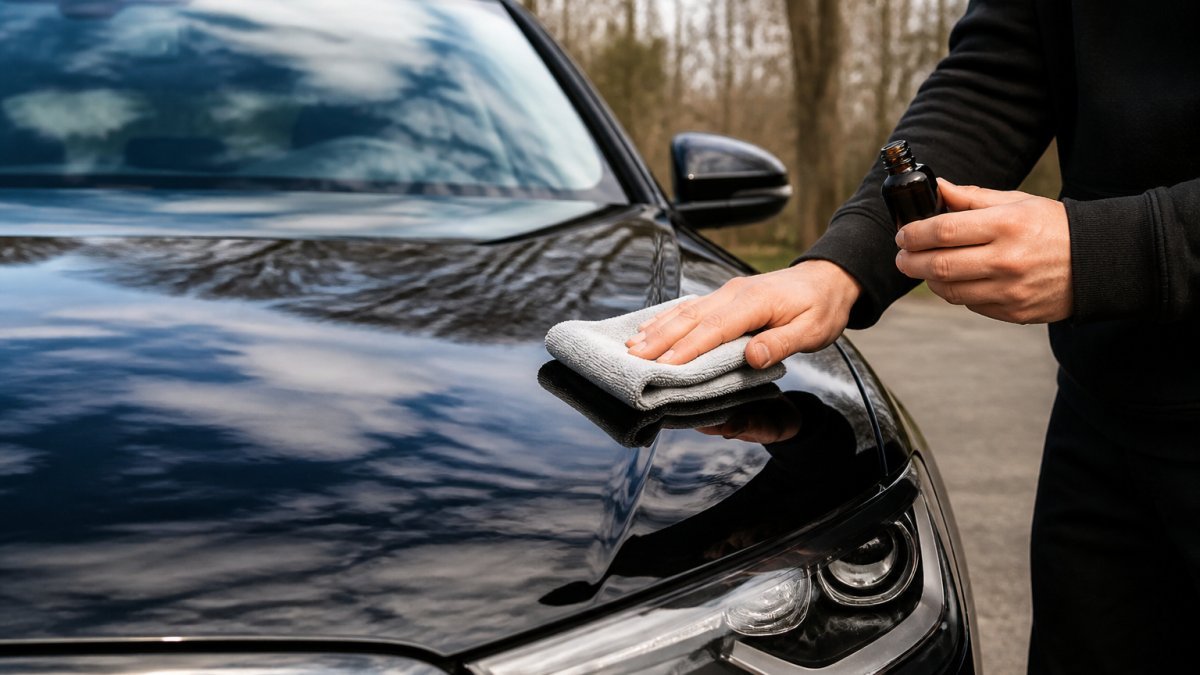
A ceramic coating is a liquid polymer that bonds to your paint, creating a semi-permanent, hydrophobic layer that makes water bead and dirt release faster. It still collects road grime, which slowly clogs the surface.
Weekly Rinses and Biweekly Hand Washes
A weekly rinse takes ten minutes and removes dust before it bonds.
- Rinse the whole car with plain water
- Blast the wheel wells and lower panels
- Dry with a microfiber towel if water spots are a concern
If you drive on salted roads or park under trees, wash weekly instead, more frequent washing is fine if your soap and tools are safe.
Best Car Wash Soap for Ceramic Coating
The best car wash soap for ceramic coating is a pH-neutral, coating-safe shampoo, which lifts dirt without stripping the protective layer. Look for “pH-neutral” and “coating-safe” on the label.
Here is how the main soap types compare:
| Soap Type | Safe for Coating | Best Use |
|---|---|---|
| pH-neutral coating shampoo | Yes | Every routine wash |
| Wash-and-wax combo | No | Uncoated paint only |
| Dish soap | No | Never on a coated car |
| Waterless wash spray | Yes | Light dust, quick touch-ups |
A quality soap plus a proper wash mitt does more for coating longevity than any additive. According to chemical safety guidance from the American Chemistry Council, matching a cleaner to the surface it touches prevents damage that harsh products cause over time.
What Not to Use on Ceramic Coating
Automatic car washes with abrasive brushes are the fastest way to ruin a coating: the bristles drag grit across the paint and leave swirl marks that dull the gloss.
Touchless washes are gentler, but their strong chemicals still wear on the coating. A hand wash is always safer.
One trip through a brush-style wash can leave swirl marks that cost far more to correct than the wash saved. If you must use an automatic wash between hand washes, choose a touchless option and dry the car yourself afterward.
Ceramic Coating Maintenance Schedule
Build your ceramic coating maintenance schedule around how long the coating has been on the car. The first week matters more than the first year.
The First 7 Days: Respect the Curing Window
Fresh coatings are still cross-linking. Most installers specify a cure window, commonly 7 days, longer in cool or humid conditions, before washing or rain exposure. Follow your installer’s written instructions over any general advice, including this article.
During that window:
- Do not wash the car
- Do not apply a booster, spray sealant, or wax
- Avoid parking under trees or near sprinklers
An infrared curing lamp may shorten the window; a cool driveway application may lengthen it.
Weeks 2 Through 8: Establish the Routine
Once the cure window closes, keep the surface clean so the coating can finish hardening.
- Rinse weekly if the car is driven daily
- Hand wash every two weeks with a pH-neutral, coating-safe shampoo
- Dry promptly with microfiber, never air dry in the sun
Months 3 Through 12: Layer In Boosters and Inspections
A coating needs periodic support, not constant product.
Every 4 to 8 weeks:
- Apply a ceramic maintenance spray or booster after a wash, while the panel is still wet
- Check water behavior on the hood, roof, and vertical panels
Every 3 months:
- Deep clean wheels and tires with a dedicated wheel cleaner and separate tools
- Wipe down exterior trim, glass, and door jambs
- Inspect the lower panels and rear bumper for bonded contamination
Every 6 to 12 months:
- Book a professional inspection, and a chemical decontamination if the surface feels rough after washing
- Have the installer assess whether a coating refresh or top layer is warranted
- Review your wash habits for anything that has slipped, such as reusing a dirty mitt or skipping the pre-rinse
Year 2 and Beyond: Watch for Wear, Not Just Dirt
A quality coating can last several years, but the top layer takes the abuse. By year two, monitor condition rather than building habits.
- Beading that fades within a few months of a booster application is a signal, not a crisis
- Chalky or dull patches that survive a wash and a booster point to coating wear
- A professional inspection is the only reliable way to tell contamination from failure
A maintenance spray takes five minutes and adds weeks of beading. Apply it while the car is still wet, then dry as normal. Most owners skip this step and wonder why their coating fades early.
Do not stack wax, sealant, or wash-and-wax products on top of a coating at any point in the schedule. They sit on the surface, mute the hydrophobic behavior, and make it harder to judge whether the coating itself is still working.
Step-by-Step Ceramic Coating Maintenance Wash
A safe wash follows the same order every time. Work top to bottom, and never let soap dry on the paint.
What You’ll Need:
- Two buckets with grit guards
- pH-neutral car shampoo
- Microfiber wash mitt
- Foam cannon or foam gun
Pre-Rinse, Foam, and Two-Bucket Contact Wash
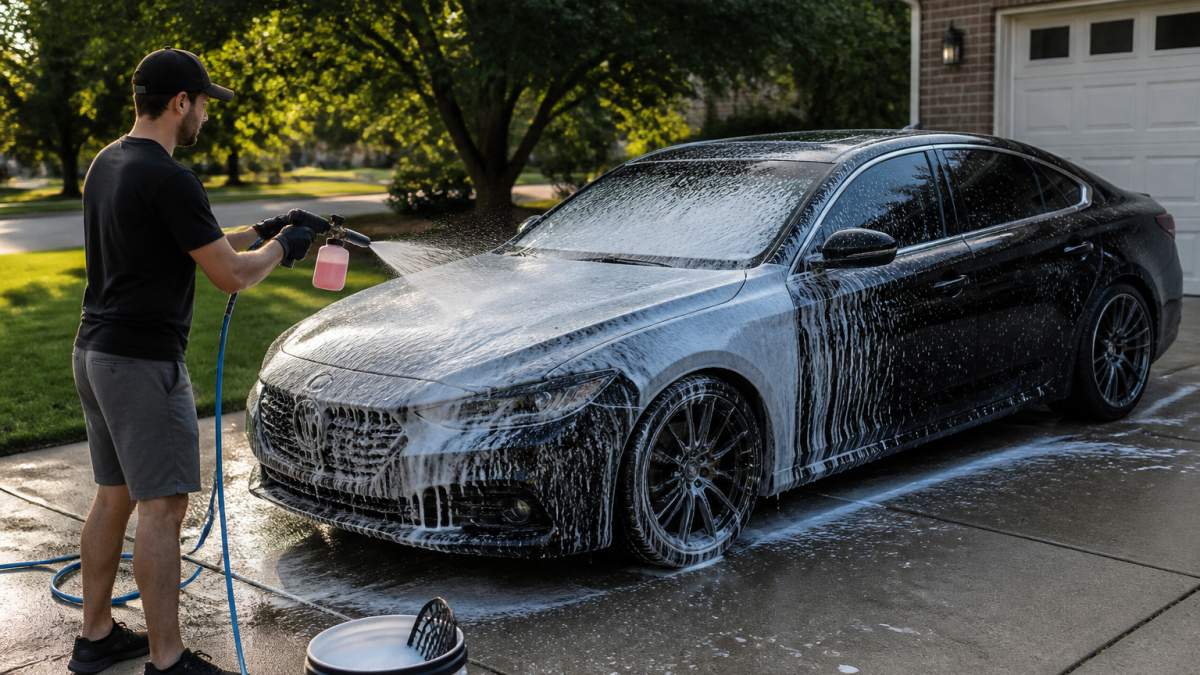
- Pre-rinse the whole car. Blast loose dirt and road grime off with a hose or pressure washer. Work from the roof down.
- Apply snow foam. Coat the car with foam and let it sit for a few minutes. This softens what the rinse missed.
- Rinse the foam away. Rinse thoroughly before you touch the paint.
- Set up two buckets. Fill one with soapy water and one with clean rinse water. Drop a grit guard in each.
- Wash with a mitt. Load the mitt with soap, wash one panel, then rinse the mitt in the clean bucket before reloading. The grit guard traps dirt at the bottom.
- Clean the wheels last. Use a separate bucket and brush so wheel grit never touches the paint.
The two-bucket method with grit guards is the best way to avoid scratching a coated car; one bucket spreads grit back onto the paint.
Safe Drying and Prompt Contaminant Removal
Drying is where most scratches happen. Use a clean microfiber towel and blot, don’t scrub.
- Dry the roof and glass first, then work down
- Use a drying aid or quick detailer for extra slip
- Wring out towels often, and swap to a fresh one when it gets soaked
- Never let the car air dry in the sun, which leaves water spots
Hard water minerals etch the surface if they dry in place, so dry promptly or use filtered water.
Bird droppings, bug residue, and tree sap are acidic and can stain the coating within a day. Soak them with a damp microfiber towel, lift gently, and never scrape them off dry.
Troubleshooting: Water Beading, Water Spots, and Coating Performance
Reduced water beading is the most common, and most misdiagnosed, complaint about a ceramic coating. Usually the coating is fine and the surface is clogged; the trick is telling the two apart before paying for the wrong fix.
Step 1: Read the Water Behavior
Before you touch anything, wash the car normally and watch how water reacts on a clean, dry panel.
- Tight, round beads that roll off quickly: the coating is working
- Beads that are flatter, wider, or slower to sheet: the surface is likely contaminated
- Water that clings in sheets or patches with no beading at all: possible coating wear, or a panel that was never coated
- Beading that is strong on the roof but weak on the hood and front bumper: normal, because those panels take the most road spray and UV
Compare the same panel over time: a hood that beaded tightly last month and sheets now is telling you something, while one that always sheeted may just be a high-contact area needing more frequent boosters.
Step 2: Rule Out Contamination First
Contamination is the most likely cause of weak beading, and the cheapest to fix.
- Wash with a pH-neutral, coating-safe shampoo
- Apply a ceramic booster or maintenance spray to a still-wet panel and dry as normal
- Re-check water behavior the next day, not immediately, since some boosters need time to set
If beading returns, the coating was fine and the surface was clogged. If beading improves but fades again within a few weeks, the contamination is deeper and bonded, which points to decontamination rather than more booster.
Step 3: Separate Water Spots From Coating Damage
Water spots and coating failure look similar in photos and are very different in person.
- Mineral spots: white or gray rings with a defined edge, often on horizontal panels, caused by hard water drying in place
- Etching: a dull, slightly depressed mark that catches light differently and does not wash off
- Coating wear: a broad loss of gloss and beading across a panel, not a localized mark
A light mineral spot often lifts with a dedicated water spot remover and a soft microfiber towel. Etching that survives a wash, a booster, and a mild remover needs a professional, since aggressive polishing removes coating along with the defect.
Step 4: Know When to Stop and Call the Installer
Some problems are not driveway fixes. Contact your installer if:
- Beading does not return after a wash and a booster
- You see dull patches, chalkiness, or a visible change in gloss across a panel
- Water spots have etched and do not respond to a mild remover
- The surface feels rough or gritty even after washing
A professional can chemically decontaminate, assess the coating’s remaining thickness, and decide whether a refresh, top layer, or full reapplication is right. Guessing with abrasives turns a recoverable coating into a repaint.
Weak beading does not mean your coating is gone. In most cases, a proper wash and a booster spray restore the hydrophobic properties. Only a professional inspection can confirm true coating failure.
When to Get Professional Decontamination and Maintenance
Professional decontamination is worth it once a year, or any time your coating stops repelling water, because it removes bonded contaminants regular washing cannot touch.
A pro detailer will:
- Perform a chemical decontamination to strip embedded grime
- Use a clay treatment to pull out bonded particles
- Inspect the coating for wear, scratches, or failure
- Apply a fresh layer of protection
This is also the moment to catch paint issues early. Swirl marks, oxidation, and dull patches show up clearly after a decontamination wash.
For owners who want the job done right without leaving home, our mobile team handles coating maintenance, paint correction, and full details at your driveway. You can review guidance on proper vehicle washing from the International Carwash Association to see how professional standards compare to a driveway wash.
Maintaining a ceramic-coated car comes down to routine: rinse weekly, hand wash every two weeks, and never let contaminants sit.
Frequently Asked Questions
Can I take a ceramic-coated car through an automatic car wash?
No. Automatic car washes use abrasive brushes and harsh detergents that scratch the paint and strip the ceramic coating, leaving swirl marks and dulling the gloss. Stick to hand washing with a pH-neutral, coating-safe soap and microfiber towels. If you must use a touchless wash in a pinch, choose one with no brushes and low-pH chemicals, but know that even touchless washes can leave water spots and degrade the coating over time.
How do I remove water spots from a ceramic-coated car?
Water spots form when hard water minerals dry on the surface. Remove them promptly with a dedicated water spot remover or a mild acid-based cleaner safe for ceramic coatings, then rinse thoroughly and dry with a plush microfiber towel. For stubborn spots, a light polish by hand may be needed. To prevent spots, never let water air-dry on the coating, and dry the car immediately after washing, especially in direct sun.
How can I tell if my ceramic coating is still working?
Water beading is the easiest test. If water still beads into tight droplets and rolls off, the coating is performing. When beading weakens and water starts to sheet or cling, the hydrophobic layer is fading. A maintenance spray or ceramic booster can restore beading temporarily. If the paint feels rough after washing and decontamination, or water no longer beads at all, the coating may be near the end of its life and due for professional inspection.
How often should a ceramic-coated car be professionally maintained?
Plan on a professional decontamination and inspection every 6 to 12 months, depending on how the car is used and stored. A certified installer can apply a ceramic booster or coating-safe sealant to extend performance. If you notice reduced water beading, stubborn water spots, or a rough paint surface after washing, schedule a professional maintenance wash sooner rather than waiting for the annual visit.