Table of Contents
- Does Mobile Detailing Damage Driveway Surfaces? The Short Answer
- Driveway Surface Risks: Concrete, Asphalt, Pavers, and Sealed Surfaces
- Can Detailing Chemicals Stain a Driveway?
- Pressure Washing Driveway Damage: What to Watch For
- Mobile Detailing Driveway Protection: A Pre-Service Checklist
- Car Detailing Product Spill Cleanup: Step-by-Step
- Temporary Residue vs. Permanent Damage: How to Tell the Difference
- Conclusion
- Frequently Asked Questions
Last Updated: October 17, 2026
Does Mobile Detailing Damage Driveway Surfaces? The Short Answer
No. The question of does mobile detailing damage driveway surfaces has a clear answer: not when the detailer uses the right process. The risk comes from three things: harsh chemicals, too much pressure, and poor containment. The surface under the vehicle matters as much as the vehicle itself. A driveway is a paved surface that can stain, etch, or discolor if chemicals sit on it too long.
Driveway Surface Risks: Concrete, Asphalt, Pavers, and Sealed Surfaces
Each driveway material reacts differently to water, soap, and solvents. Knowing your surface is step one. Here is how the four common types compare:
| Surface | Main Risk | Watch For | Best Protection |
|---|---|---|---|
| Concrete | Staining, etching | Dark spots, white residue | Seal yearly, rinse fast |
| Asphalt | Oil stains, heat softening | Soft spots, discoloration | Avoid solvents, keep cool |
| Pavers | Joint erosion, coating wear | Loose sand, faded sealer | Re-sand joints, reseal |
| Sealed surfaces | Coating breakdown | Dull patches, peeling | Test products first |
Concrete: Porous and Prone to Staining
Concrete is porous. It soaks up liquids fast, which makes it the most stain-prone driveway material. A degreaser or tar remover left to sit can leave a dark mark that lingers. Etching, a dull white scar, happens when an acidic product eats into the surface. The fix is simple: keep chemicals moving, rinse quickly, and avoid letting any product pool.
Asphalt: Soft, Oil-Prone, and Heat-Sensitive
Asphalt is softer than concrete and reacts to heat and oil. On a hot day, the surface can soften underfoot. Solvent-based products can break down the binder that holds the asphalt together. In practice, this means oil-based detailing chemicals are the biggest threat here. Water-based soaps and fast rinsing reduce the risk a lot.
Pavers and Sealed Surfaces: Joints, Coatings, and Chemical Sensitivity
Pavers have joints filled with sand, and a strong spray can wash that sand out. Sealed surfaces add another layer: the coating itself can react to a product. A common mistake is testing a new chemical on a hidden corner and skipping the visible area. Always test a small spot first.
Can Detailing Chemicals Stain a Driveway?
Yes, detailing chemicals can stain a driveway, but only under certain conditions. The risk depends on the product, the surface, and how long the chemical sits. Three product types cause most problems:
- Degreasers: Strong alkaline cleaners can leave dull patches on concrete and strip sealer.
- Tar removers: Solvent-based products soften asphalt and can discolor pavers.
- Acidic wheel cleaners: These etch concrete if they dry before rinsing.
Silicone-based dressings and tire shine are another story. If they spray onto the driveway, they leave a slick, dark residue that can stain over time. Spray carefully and wipe up drips right away.
Never let a degreaser or tar remover dry on the driveway. Once it dries, the chemical bonds to the surface and turns a quick rinse into a permanent stain.
Pressure Washing Driveway Damage: What to Watch For
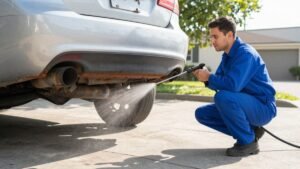
Pressure washing driveway damage happens when the spray is too strong or too close. High pressure can strip sealer, pit concrete, and blast sand from paver joints. A pressure washer used on the vehicle is fine in trained hands.
Watch for these signs:
- White streaks or lines on concrete (etching)
- Lifted or peeling sealer
- Sand washing out of paver joints
A detailer who knows surfaces keeps the nozzle moving and the pressure low near the pavement. That is the difference between a clean driveway and a damaged one.
Mobile Detailing Driveway Protection: A Pre-Service Checklist
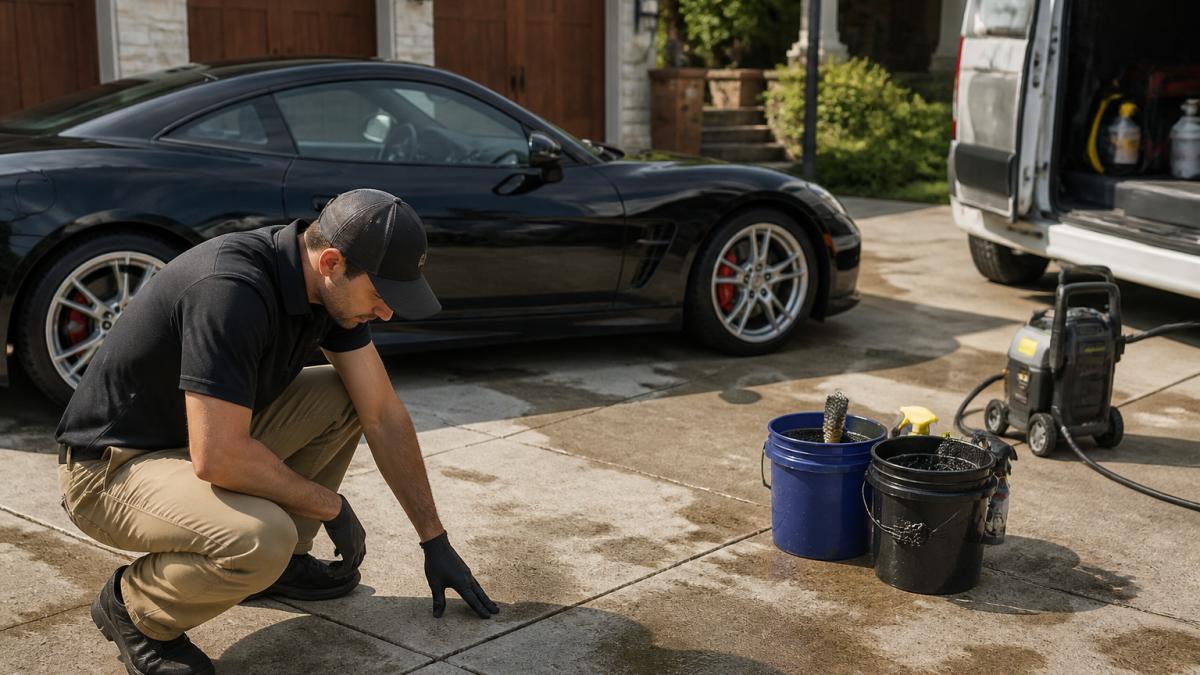
A few minutes of prep protects the surface under the vehicle. The checklist below goes beyond “move the car and hose it down”, it is organized so you can match precautions to your specific driveway material and hold the detailer to a surface-safe process.
Step 1: Identify the surface and its condition
Walk the driveway before the detailer arrives and note what you have:
- Concrete, look for dark oil spots, white chalky patches (old efflorescence or etching), and hairline cracks. Porous, unsealed concrete is the highest-stain-risk surface.
- Asphalt, press a heel into the surface on a hot afternoon. If it gives, the binder is soft and solvent-based products are a bigger threat that day.
- Pavers, check whether joint sand is at the surface or washed low, and whether the sealer looks dull or flaky.
Step 2: Match precautions to the material
| Surface | Pre-service precaution | Why it matters |
|---|---|---|
| Unsealed concrete | Pre-wet the pavement and keep a rinse hose charged | A saturated surface absorbs less chemical; fast dilution stops etching |
| Asphalt | Schedule for a cooler morning; ask for water-based products only | Heat softens binder and solvents break it down |
| Pavers | Confirm the detailer will not direct full pressure at joints | Joint sand is the weak point; loss causes loose pavers |
| Sealed surfaces | Ask for a small test patch in an inconspicuous corner | Coating compatibility varies by product |
Step 3: Control runoff and wash water
This is the step most homeowners skip, and it matters for both your pavement and your local storm drain system. Under the federal Clean Water Act, many municipal separate storm sewer systems are regulated to keep wash water with soap, oil, and heavy metals out of storm drains, and many local programs ask residents and mobile operators to contain or redirect wash water rather than let it run to the curb. Practical steps:
- Ask the detailer to use a containment mat or berm under the vehicle.
- Confirm where the runoff will go, a lawn or gravel strip is better than the street.
- Keep soapy water and rinse water out of the gutter and any storm drain inlet.
- If the detailer uses a water reclaim system, ask how the collected water is disposed of.
Step 4: Verify the detailer’s surface-safe process
Ask these questions before booking. A detailer who works on pavement regularly will answer them without hesitation:
- Which products do you use, and are the wheel and tire cleaners pH-neutral or acidic?
- What pressure do you run at the vehicle, and do you turn it down near the pavement?
- Do you pre-wet and rinse the driveway, or only the vehicle?
- How do you contain wash water, and where does it go?
- Will you test a new product on a hidden patch first?
- What is your procedure if a chemical drips onto the driveway?
A vague answer on chemicals or runoff is a signal to keep looking.
Step 5: Set up the work area
- Move the vehicle to shade if possible, cooler pavement and slower chemical drying
- Place drip trays under buckets, bottles, and the pressure washer
- Stage a hose or rinse bucket within reach of the work area
- Clear the driveway of mats, toys, and anything that traps water
Ask the detailer to bring a containment mat for wash water. It keeps soap and dirt off the pavement and out of storm drains, which protects both your driveway and local waterways.
Car Detailing Product Spill Cleanup: Step-by-Step
Spills happen. Fast action keeps a small drip from becoming a permanent mark, but the right response depends on what spilled and what it landed on. Use the procedure below, then check the product-specific notes.
The general response procedure
- Stop the source. Set the bottle upright and cap it. If a sprayer is leaking, swap it out before continuing.
- Blot, do not wipe. Press a dry cloth or paper towel onto the spill to soak it up. Wiping spreads the chemical across a wider area.
- Rinse with clean water. Flush the area to dilute residue. On concrete, pre-wetting the surrounding pavement first keeps the spill from wicking outward.
- Scrub gently with a soft brush. Use a nylon brush on concrete. Skip aggressive scrubbing on asphalt, which can lift aggregate, and on sealed surfaces, which can dull the coating.
- Rinse again until the water runs clear. Repeat blot-and-rinse cycles rather than one heavy soak.
- Let it dry and inspect. Some marks only appear after the surface dries. Compare against the photo you took before service.
Product-specific handling
- Degreasers (alkaline): Dilute and flush quickly. Alkaline residue can leave a dull patch on concrete and strip sealer. Do not let it dry.
- Tar removers (solvent-based): Blot, do not spread. On asphalt, solvent that soaks in can soften the binder, flush with water and avoid scrubbing. On pavers, solvent can discolor the surface and dissolve joint sand.
- Acidic wheel cleaners: Rinse immediately. Acid that dries on concrete etches a white scar that rinsing will not remove.
- Silicone dressings and tire shine: These leave a slick, dark film. Blot first, then use a degreasing soap and water, and rinse thoroughly, silicone residue resists plain water.
What you can fix vs. when to call a pro
Most fresh spills are homeowner-fixable with the steps above. Call a professional or a surface contractor if:
- The stain remains after two rinse-and-dry cycles.
- The surface feels etched, pitted, or chalky rather than stained.
- Sealer is peeling or lifting in a patch.
- Asphalt has gone soft or tacky in the spill area.
Prevention beats cleanup
- Ask the detailer to pre-wet the driveway before applying wheel and tire products.
- Keep drip trays under every bottle and bucket.
- Have the detailer spray dressings onto an applicator, not directly at the tire, when working over pavement.
- Rinse the work area at the end of the job, before chemicals have a chance to dry.
Temporary Residue vs. Permanent Damage: How to Tell the Difference
Not every mark is forever. Telling temporary residue from permanent damage saves a lot of worry. Temporary residue usually sits on top of the surface. It looks like a film, a light haze, or a soapy streak, and it washes away with water and a soft brush. Permanent damage goes deeper. Staining soaks into the pores of concrete. Etching leaves a dull white scar.
Rinse and dry any suspicious mark before you panic. Most driveway marks from detailing are residue, not damage. Fast rinsing is the single best way to keep it that way.
Conclusion
Every driveway is a little different, and so is every vehicle. The safest path is a detailer who knows both. Blue Ridge – Mobile Detailing brings fully mobile service to your driveway with surface-safe methods and controlled spray. We also offer ceramic coating, paint correction, and fleet detailing for owners who want show-quality results at home. Get started with Blue Ridge – Mobile Detailing and protect your vehicle and your driveway in one visit.
Frequently Asked Questions
Can detailing chemicals stain a driveway?
Yes, some detailing chemicals can stain driveways, especially porous surfaces like unsealed concrete or asphalt. Degreasers, tar removers, and acidic wheel cleaners are the most common culprits. Stains often appear as dark spots or discoloration within hours. To reduce risk, ask your detailer to apply them carefully and rinse thoroughly. A pre-treatment of the driveway with water can also help dilute spills before they soak in.
How can I protect my driveway during mobile detailing?
Start by clearing the area and sweeping away debris. Wet the driveway lightly before service to reduce chemical absorption. Ask the detailer to use a containment mat or work over a tarp, especially for chemical-heavy steps like wheel cleaning. Confirm they rinse all runoff and avoid letting wash water pool. After service, inspect the surface and rinse any residue promptly. For added protection, consider sealing your driveway beforehand to create a barrier against stains.
What should I do if car detailing products spill on my driveway?
Act quickly: blot the spill with an absorbent cloth or cat litter, then rinse with plenty of water. For oily spills, use a degreaser safe for your surface, scrub gently with a stiff brush, and rinse again. Avoid pressure washing immediately, as it can drive the chemical deeper. If a stain remains, consult a professional cleaner. Always test any cleaning product on a small, hidden area first to avoid damaging the surface.
Can pressure washing damage concrete or pavers?
Yes, pressure washing can damage concrete and pavers if the pressure is too high or the nozzle is held too close. It can etch concrete, strip sealant, and dislodge paver joint sand. Ask your detailer to use a wide-angle nozzle, keep the wand moving, and maintain a safe distance. For delicate surfaces like aged concrete or sealed pavers, a lower pressure setting or a dedicated surface cleaner is safer. Always verify the detailer’s method before work begins.