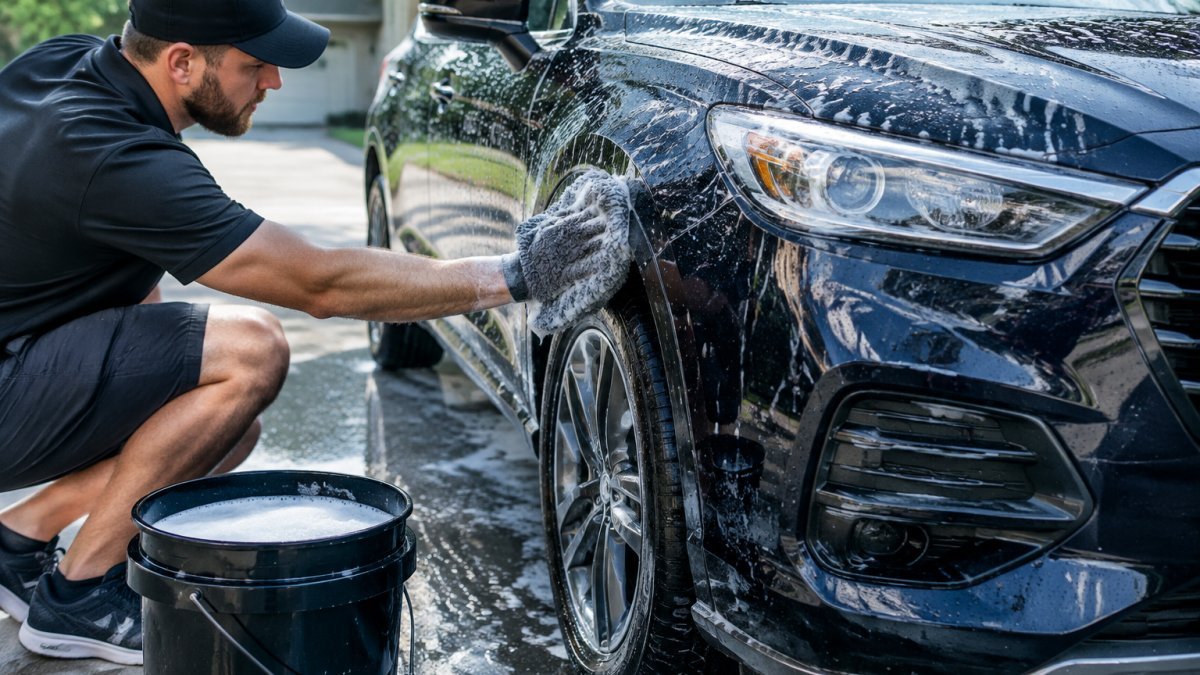
Last Updated: November 4, 2026
Quick Summary
To safely wash a ceramic coated car, use the two-bucket method with grit guards and a pH-neutral shampoo, working top-down in straight lines with a soft microfiber mitt. Pre-rinse and foam first, keep a separate mitt and bucket for wheels and lower panels, and dry fast with a microfiber towel or blower to prevent water spots.
- Use a pH-neutral shampoo with no waxes, gloss enhancers, or harsh degreasers on the coating.
- Keep the pressure washer nozzle at least a foot from the paint and use a wide fan tip.
- Rinse with an open hose so water sheets off, then finish with a plush microfiber drying towel.
- In winter, rinse the undercarriage and lower panels often and dry the car fully after every wash.
- Avoid dish soap, automatic car washes, and washing in direct sunlight to protect the coating.
Table of Contents
- What You’ll Need Before You Start
- Step 1: Prep With a Pre-Rinse and Foam Cannon
- Step 2: The Two-Bucket Method and Top-Down Washing
- The Best Car Wash Soap for Ceramic Coating
- Can You Use a Pressure Washer on Ceramic Coating?
- How to Dry a Ceramic Coated Car Without Water Spots
- Maintaining Ceramic Coating Longevity Through Hard Water and Winter
- Common Mistakes to Avoid When Washing a Ceramic Coated Car
- Frequently Asked Questions
What You’ll Need Before You Start
Washing a ceramic coated car is not the same as washing a bare paint finish. The coating adds a slick, hydrophobic layer that sheds water and dirt, but it is also a thin sacrificial surface that harsh tools can dull over time. A coating underperforms more often because of the wash routine than because of the product itself.
Before you touch the paint, gather the right supplies:
- Two wash buckets with grit guards
- pH-neutral shampoo made for coated finishes
- A soft microfiber wash mitt
- A dedicated microfiber drying towel
- A foam cannon or pump sprayer
- A hose or pressure washer
- A wheel brush and separate bucket for wheels
- An iron fallout remover for periodic decontamination
Skip the dish soap. Skip the old beach towel. Those two shortcuts alone cause more damage than most owners realize.
International Detailing Association surface care guidance recommends keeping wash tools clean and separated by zone, which is the foundation of every safe wash.
If your car is not coated yet, or you want a professional application, you can explore ceramic coating options before building a wash routine around it.
Step 1: Prep With a Pre-Rinse and Foam Cannon
Start with a thorough pre-rinse to knock off loose grit before anything touches the paint. Work from the top of the roof down to the lower panels, where the heaviest contamination collects. This first pass removes the abrasive dust that causes swirl marks during contact washing.
Next, apply a thick layer of pH-neutral foam with a foam cannon. Let it dwell for a few minutes. The foam lifts road film and softens surface contaminants so the mitt glides instead of scrubs.
Watch out: never let foam or shampoo dry on the surface in direct sunlight. Dried soap leaves streaks and can etch a coated finish. Work in shade, or wash one panel at a time.
Rinse the foam away completely before moving to the contact stage.
Step 2: The Two-Bucket Method and Top-Down Washing
The two-bucket method is the safest way to wash a ceramic coated car because it keeps dirty water away from the paint. Fill one bucket with clean pH-neutral shampoo solution and the other with plain rinse water.
The mechanism matters more than the ritual. A wash mitt picks up abrasive particles from the panel, road grit, brake dust, and fine sand, and those particles stay trapped in the fibers. If you reload that mitt straight into the soap bucket, you carry the grit back to the paint on the next pass.
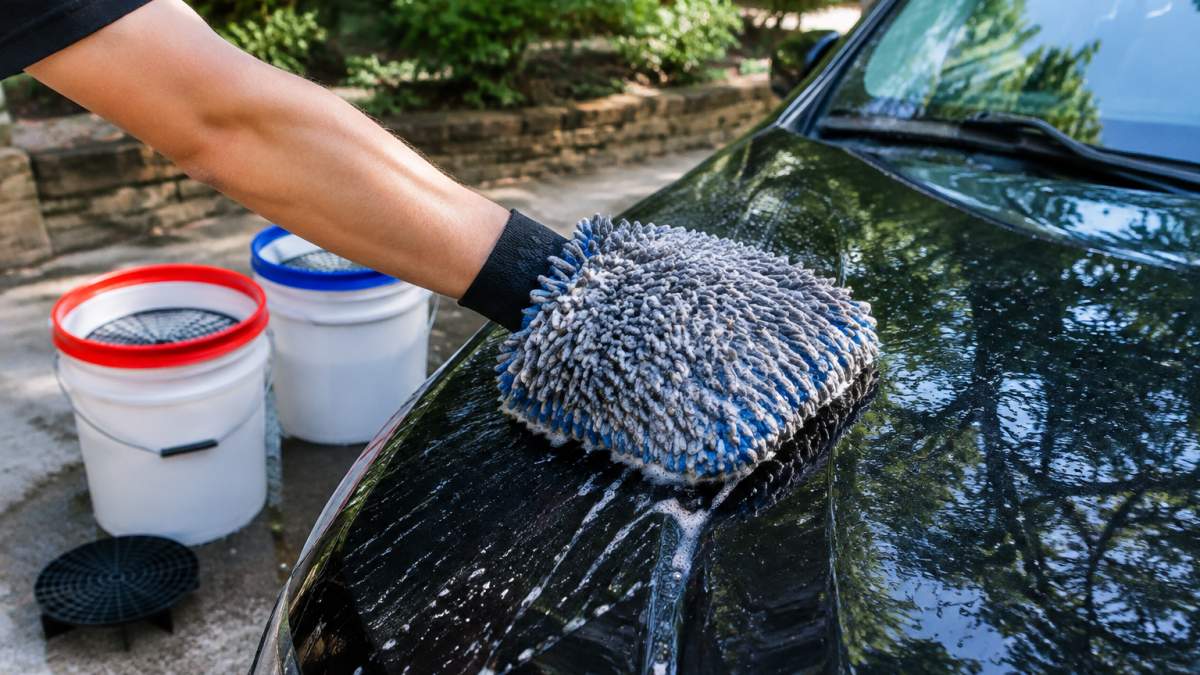
Wash in straight lines, not circles, and work top-down. Start at the roof, then glass, then upper panels, and save the rocker panels and bumpers for last. Those lower areas hold the most grit.
Sequence your wash media by contamination level. Use one mitt for the upper panels and a separate, ideally darker, mitt or sponge for the lower third of the car. Never move a lower-panel mitt back up to the hood or roof.
Rinse the mitt often. A clean mitt is the difference between a swirl-free finish and a weekend of paint correction.
Watch out: a rinseless or waterless wash can be safe on a coated car, but only if you pre-treat heavy dirt first and use a fresh, clean microfiber for each panel; dragging a loaded towel across a gritty lower panel is how rinseless washes cause marring.
The Best Car Wash Soap for Ceramic Coating
The best car wash soap for ceramic coating is a pH-neutral shampoo with no waxes, gloss enhancers, or harsh degreasers. Coatings already repel water and dirt. A wax-heavy soap can leave a film that masks the coating’s hydrophobic properties and dulls the finish over time.
Look for these traits:
- pH-neutral formula
- High lubrication to reduce paint marring
- No added wax or sealant
- Safe for SiO2 sealant and coating layers
A dedicated ceramic booster wash, used occasionally, can refresh beading without stripping the coating. Use it as a maintenance wash, not every time.
Avoid dish soap and any all-purpose degreaser on the paint. They strip the protective layer and shorten coating life.
Can You Use a Pressure Washer on Ceramic Coating?
Yes, you can use a pressure washer on a ceramic coated car, but keep the nozzle moving and stay back from the surface. A pressure washer is excellent for the pre-rinse and for blasting foam off, and it removes grit with zero contact. The risk is holding the wand too close or aiming at edges, seams, and badges.
Follow these rules:
- Keep the nozzle at least a foot from the paint
- Use a wide fan tip, never a pinpoint stream
- Never aim at panel gaps, trim, or the coating’s edge
- Keep the stream moving at all times
A pressure washer paired with a foam cannon is the safest first stage of any wash. Just treat it as a rinse tool, not a scrubbing tool.
How to Dry a Ceramic Coated Car Without Water Spots
Drying is where most coated cars pick up water spots. The coating’s hydrophobic properties make water bead and sheet, but if droplets dry in the sun, minerals in the water leave spots that bond to the surface. Dry fast and dry smart.
Here is how to dry a ceramic coated car without water spots:
- Rinse with an open hose so water sheets off in a low-pressure flow.
- Use a leaf blower or filtered drying tool to push standing water off the panels.
- Finish with a plush microfiber drying towel, patting rather than dragging.
- Work top-down and dry glass and trim first.
Water quality is the variable most guides skip. Hard water carries dissolved calcium and magnesium, and when a droplet evaporates on a hot panel those minerals stay behind as a white ring. Soft water sheets and evaporates more cleanly, but it is not mineral-free. If your tap water is hard, a filtered final rinse or a deionized water filter removes most of the minerals before they can bond.
Watch out: never let the car air-dry in direct sunlight, because droplets dry quickly on hot panels and mineral spots can bond to the surface.
Distinguish mineral spots from a clogged coating. Mineral spots are hard, white, and localized where droplets sat. A clogged coating looks different: water stops beading across whole panels, and the surface feels rougher than it did after installation. Bonded contamination such as tree sap, industrial fallout, or road film can sit on top of a coating and reduce beading. If beading does not return after decontamination, the coating may genuinely be at the end of its service life, and a ceramic booster or a fresh application is the next step.
For the full upkeep routine, read our guide on how to maintain a ceramic coated car. And when winter hits, our breakdown of preventing salt damage on vehicles goes deeper on protecting the finish through the cold months.
Maintaining Ceramic Coating Longevity Through Hard Water and Winter
Mineral-heavy water and road salt are common contributors to wear on coated finishes. Hard water can leave mineral deposits on the surface that reduce beading. Winter salt and brine cling to lower panels and slowly degrade the protective layer.
Here is what actually works:
- Rinse the undercarriage and lower panels often in winter
- Use a pH-neutral shampoo, never a harsh degreaser, on salt film
- Dry the car fully after every winter wash
- Do a periodic iron fallout removal to clear bonded contaminants
- Reapply a ceramic booster to refresh the top layer
For the full upkeep routine, read our guide on how to maintain a ceramic coated car. And when winter hits, our breakdown of preventing salt damage on vehicles goes deeper on protecting the finish through the cold months.
Common Mistakes to Avoid When Washing a Ceramic Coated Car
The most common mistake is treating a coated car like an uncoated one. Owners reach for dish soap, a dirty mitt, or an automatic car wash, and the coating pays the price. Automatic car washes can grind grit into the paint and leave swirl marks.
Other mistakes we see:
- Washing in direct sunlight so soap dries on the surface
- Using one bucket and dragging grit back onto the paint
- Skipping the pre-rinse and going straight to the mitt
- Drying with a worn or dirty towel
- Using a degreaser on the coating itself
- Washing the wheels last with the same mitt
If you are unsure whether your paint has swirl marks or clear coat damage, our guide on clear coat failure vs swirl marks helps you tell the difference before you wash again. And if the job feels too risky for your finish, you can always contact our team for professional help.
A coated car rewards a careful wash with years of gloss and easy maintenance, but one careless routine can undo the protection fast. If you would rather leave the wash and coating care to certified hands, Blue Ridge – Mobile Detailing brings fully mobile service to your driveway, dock, or hangar, with professional ceramic coating installation, paint correction, and ongoing maintenance built around your schedule. Get started with Blue Ridge – Mobile Detailing and keep your finish protected, glossy, and easy to maintain.
Most coating damage comes from a handful of avoidable habits, and these are the ones the article flags.
| Mistake | Why it hurts the coating |
|---|---|
| Using dish soap | Strips the protective layer and shortens coating life |
| Automatic car washes | Grind grit into the paint and leave swirl marks |
| Washing in direct sunlight | Soap dries on the surface and can etch the finish |
| Using one bucket | Drags grit back onto the paint |
| Skipping the pre-rinse | Abrasive dust causes swirl marks during contact washing |
| Drying with a worn or dirty towel | Leaves spots and can mar the finish |
| Using a degreaser on the coating | Harsh degreasers strip the coating |
| Washing wheels last with the same mitt | Splashes brake dust onto clean panels |
Frequently Asked Questions
What is the best way to wash a car that has been ceramic coated?
Use a pH-neutral shampoo made for coated finishes, a foam cannon pre-rinse, and the two-bucket method with a grit guard. Work top-down with a microfiber wash mitt, rinse thoroughly, then dry with a plush microfiber towel or filtered leaf blower. Wash in shade and never let soap dry on the paint. This routine keeps the coating’s hydrophobic properties intact and avoids swirl marks that dull gloss.
Can I use Dawn dish soap on a ceramic coated car?
No. Dish soap is a degreaser that strips waxes and can degrade the ceramic layer over time, leaving the surface dull and less water-repellent. Use a pH-neutral car wash soap designed for coated vehicles instead. Save harsh degreasers for wheels, tires, and engine bays, and keep them off the clear coat.
Is it safe to use an automatic car wash on a ceramic coated vehicle?
Avoid automatic car washes. Brush-style tunnels drag grit across the clear coat and cause paint marring and swirl marks, while harsh alkaline chemicals can shorten coating life. Touchless washes are gentler but often use strong soaps. Hand washing with proper lubrication is the safest way to protect your ceramic coated car.
How often should I wash a ceramic coated car to maintain the coating?
Wash every two weeks under normal conditions, and more often in winter or if you park near trees and industrial fallout. Regular maintenance washes remove surface contaminants before they bond to the coating. Watch for reduced beading and sheeting as a sign that a decontamination wash or ceramic booster is due.