Table of Contents
- What Drives Mobile Ceramic Coating Installation Cost in 2026
- Coating Tiers and Multi-Year Durability: What You Pay For
- The Ceramic Coating Paint Correction Process and Its Price Impact
- How Long Does Ceramic Coating Take to Apply?
- Mobile Ceramic Coating vs Shop Installation: Cost and Convenience
- Hidden Costs in Quotes and Why Prices Vary by Region
- Conclusion: Getting an Accurate Quote for Your Vehicle
- Frequently Asked Questions
Last Updated: October 4, 2026
What Drives Mobile Ceramic Coating Installation Cost in 2026
Mobile ceramic coating installation cost 2026 depends on four variables: vehicle size, paint condition, coating tier, and how much paint correction your finish needs before the coating goes on. A ceramic coating is a liquid polymer, typically silica-based, that bonds to your clear coat and forms a semi-permanent protective layer.
The problem is that “starting at” pricing makes it nearly impossible to compare quotes. A $600 quote and a $2,400 quote can describe the same vehicle if one includes multi-stage paint correction and the other does not. Pricing depends on quantity, dates, and delivery. For current prices or a quote, please schedule online.
| Vehicle Class | Entry-Level (1-2 yr) | Mid-Tier (3-5 yr) | Premium (5+ yr) |
|---|---|---|---|
| Compact sedan / coupe | $450-$700 | $800-$1,300 | $1,400-$2,200 |
| Mid-size sedan / crossover | $550-$850 | $950-$1,500 | $1,600-$2,500 |
| Full-size SUV / truck / van | $700-$1,100 | $1,200-$1,900 | $2,000-$3,200 |
Those bands assume light-to-moderate paint correction. Heavy correction, wet-sanding, or a vehicle that has never been decontaminated can add several hundred dollars on top.
Below, we break down each cost driver and show you exactly what to ask before you approve a quote.
Vehicle Size, Paint Condition, and Coating Tier
Vehicle size classification is the first multiplier. A compact sedan uses far less coating material and labor time than a full-size SUV, truck, or van. Paint condition is the second. A new vehicle with clean, swirl-free paint needs minimal prep, while a daily driver with oxidation, swirl marks, and embedded contamination can require hours of additional work.
A fourth, often-overlooked multiplier is the vehicle’s paint system itself. Modern factory finishes vary in clear-coat hardness, some are soft and mar easily, others are hard and resist correction. Installers who work on a wide range of makes learn to adjust pad and polish combinations accordingly, and that judgment is part of what you are paying for.
Before you compare two quotes, ask each installer for the same three numbers: hours of paint correction, coating tier and rated durability, and whether decontamination is included. Quotes that match on those three are comparable. Quotes that do not are not.
Coating Tiers and Multi-Year Durability: What You Pay For
Entry-level coatings offer shorter protection windows and thinner film build. Mid-tier coatings add chemical resistance and stronger hydrophobic properties. Premium professional-grade coatings deliver multi-year durability, higher gloss enhancement, and better UV protection. The higher the tier, the longer the curing time and the more precise the application process.
| Tier | Typical Durability | Best For | Key Trade-off |
|---|---|---|---|
| Entry-level | 1-2 years | Lease returns, budget builds | Less chemical resistance |
| Mid-tier | 3-5 years | Daily drivers, newer vehicles | Moderate prep required |
| Premium | 5+ years | Luxury, exotic, classic vehicles | Highest prep and cost |
The mobile ceramic coating installation cost 2026 is rarely driven by the coating itself, which is rarely the biggest line item. Preparation usually is. Ask any installer to separate prep from product on the quote.
The Ceramic Coating Paint Correction Process and Its Price Impact
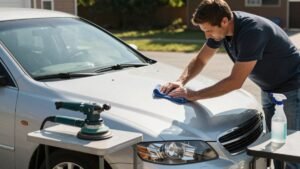
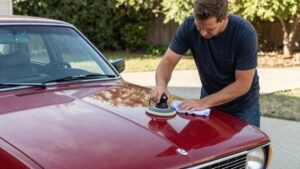
The ceramic coating paint correction process is the single largest cost variable in any quote. Paint correction removes swirl marks, scratches, and oxidation through machine polishing before the coating is applied. A one-step polish handles light defects. A multi-stage correction restores deeper clarity on neglected paint. The more correction your vehicle needs, the more labor hours the job requires.
Surface Decontamination, Clay Bar Treatment, and Paint Depth Checks
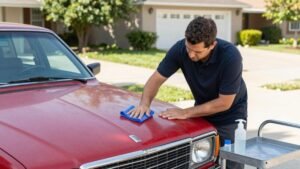
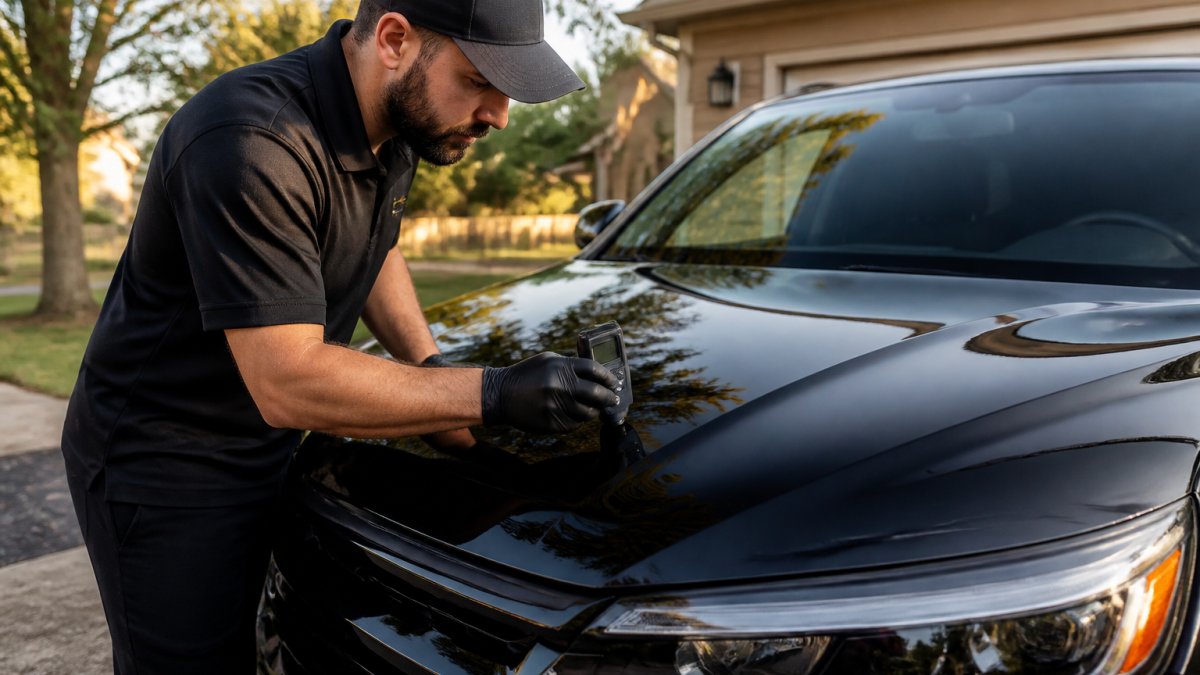
Surface decontamination comes before any polishing. This means a chemical wash to strip old wax and sealants, followed by a clay bar treatment to pull embedded contaminants out of the clear coat. A paint depth gauge then measures film thickness so the installer knows how aggressively they can polish without risking the clear coat. Skipping these steps is the most common shortcut in low quotes, and it shows up months later as poor bonding and premature coating failure.
How Long Does Ceramic Coating Take to Apply?
A typical ceramic coating appointment takes one to three days from drop-off to pickup. Mobile installation adds travel and setup time on top, and the vehicle must stay stationary during curing. Most coatings need to remain dry for 24 hours and avoid washing for about a week while the base layer fully bonds. If the vehicle is driven in rain during the curing window, the coating can cure unevenly and lose gloss.
Booking a coating the day before a road trip is a mistake. Curing time is not optional, and water exposure during the first 24 hours can compromise the bond.
Mobile Ceramic Coating vs Shop Installation: Cost and Convenience
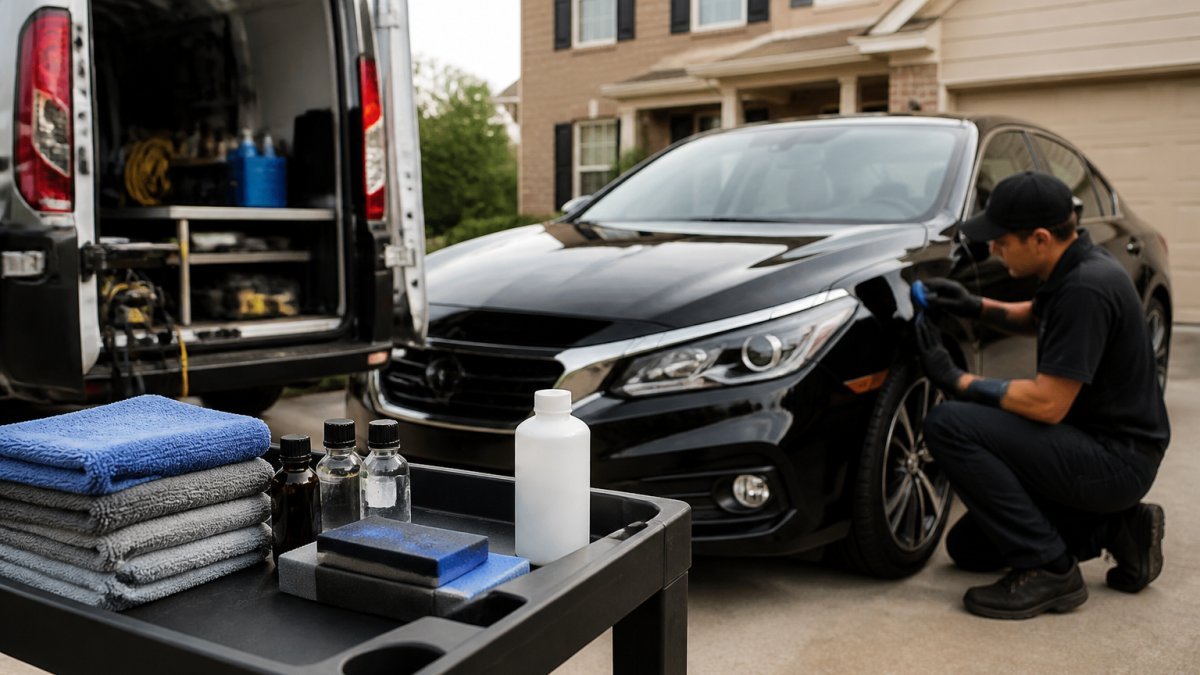
Mobile ceramic coating vs shop installation comes down to logistics, not quality. A mobile installer brings the equipment to your home, workplace, or fleet yard, which eliminates drop-off and pickup time. Shop-based installation offers a controlled environment with less dust and better lighting. Mobile setups compensate with enclosed work areas, filtered water, and portable lighting, but the installer needs a shaded, dust-free space to work.
For fleet operators, mobile service means multiple vehicles coated on-site without pulling trucks off the road. That convenience is often worth more than any price difference.
Hidden Costs in Quotes and Why Prices Vary by Region
Hidden costs in ceramic coating quotes usually hide in the prep line. Some quotes exclude paint correction, clay bar treatment, or decontamination entirely, then add them after inspection. Others exclude glass coating, wheel coating, or trim coating, which are often sold as add-ons. Regional price variance also plays a role: labor rates, drive time, and demand differ significantly between metro areas and rural service zones.
It helps to know what a complete quote should itemize. The list below covers the line items most commonly left out of “starting at” pricing, along with the typical add-on range you should expect to see when they are included.
- Paint correction, one-step polish versus multi-stage correction is the single largest swing in any quote. A one-step may be bundled; multi-stage is almost always a separate line.
- Surface decontamination, chemical wash plus clay bar treatment. Frequently omitted from low quotes and essential for bonding.
- Glass coating, hydrophobic coating on windshield and side glass.
- Wheel and caliper coating, protects against brake dust and road grime.
- Trim and plastic coating, restores and protects faded exterior plastic.
- Interior protection, fabric and leather coating. Often quoted separately and rarely included in an exterior-only price.
- Warranty registration, some installers charge a registration or transfer fee; others include it. Ask before you pay.
If a quote looks unusually low, the fastest way to find out why is to ask which of those line items are included. In most cases, the answer explains the gap.
Why the Same Job Costs Different Amounts in Different Markets
Regional price variance is real, and it is driven by three factors that have nothing to do with the coating product itself.
Labor rates. A mobile installer in a high-cost metro area pays more for labor, insurance, and vehicle operating costs than one in a rural service zone. Those costs flow into the quote.
Drive time and service radius. Mobile installation adds travel.
Local competition and demand. Markets with many qualified installers tend to have tighter pricing and more tiered options. Markets with few installers can support higher prices, especially for premium coatings that require certification.
Climate. In regions with harsh winters, road salt, or intense sun, demand for durable coatings is higher, and installers can charge more for premium tiers.
Insurance, Warranty Registration, and Coating Maintenance
Warranty registration matters more than most owners realize. A registered coating ties the warranty to your VIN, which protects you if you sell the vehicle. Insurance and ceramic coating is a murkier topic: most standard auto policies do not cover coating damage separately, so check with your carrier before assuming you are covered. If the coating is damaged in a collision, some carriers will include it in the repair estimate as part of the paint work, but that is not guaranteed and varies by policy and adjuster.
Coating maintenance is the other ongoing cost. A maintenance wash every few months with pH-neutral soap keeps the hydrophobic properties intact. Skipping maintenance can void a warranty. Budget for a professional maintenance wash once or twice a year, and expect to pay for it separately from the original installation.
Ask for the warranty terms in writing before you pay. If the installer cannot produce a registration document, the “warranty” is verbal only.
Conclusion: Getting an Accurate Quote for Your Vehicle
Quotes for ceramic coating vary so widely because preparation, tier, and region all move the number. The fix is to ask for an itemized quote that separates decontamination, paint correction, coating product, and warranty registration. That single request filters out most lowball quotes.
Blue Ridge – Mobile Detailing brings certified ceramic coating installation, multi-stage paint correction, and fleet detailing directly to your driveway, dock, or hangar across the Eastern Panhandle, Shenandoah Valley, and DMV regions. Our mobile setup includes the equipment and lighting needed for professional-grade results without a shop visit. Schedule online and get a quote built around your specific vehicle.
Frequently Asked Questions
Is mobile ceramic coating worth it compared to shop-based services?
For most owners, yes. Mobile installation removes the drop-off and pickup time, and a certified installer brings the same professional-grade products, paint depth gauge, and curing setup to your driveway. The main trade-off is environmental control: a shop bay blocks wind, dust, and direct sun, so a mobile installer may schedule around weather. If your vehicle needs heavy multi-stage paint correction, a shop can be more practical. For maintenance washes and lighter correction, mobile service usually wins on convenience.
What factors influence the total ceramic coating cost in 2026?
Five factors dominate: vehicle size classification, paint condition, coating tier, paint correction stage, and whether the installer travels to you. A compact car with clean paint needs far less labor than a full-size truck with oxidation and swirl marks. Coating tiers with longer multi-year durability cost more than entry-level options. Regional labor rates also shift quotes, so two identical vehicles in different metro areas can land far apart. Ask for a line-item quote that separates preparation from coating application.
Are there hidden costs associated with mobile ceramic coating installation?
Common add-ons include paint correction beyond a basic one-step, glass and wheel coating, trim restoration, and travel fees for rural areas. Some quotes exclude surface decontamination or clay bar treatment, then charge extra once the vehicle arrives. Ask upfront whether the price covers washing, decontamination, paint correction, and the coating itself. Also confirm whether warranty registration is included, since an unregistered coating may not be honored later.
How long does a professional ceramic coating last on a daily driver?
Durability depends on the coating tier and how you maintain the vehicle. Entry-level coatings typically hold up for one to two years, while professional-grade multi-layer systems can last five years or more with proper care. Daily drivers exposed to road salt, UV, and automatic car washes degrade faster. A maintenance wash every few weeks with pH-neutral soap, plus an annual inspection, keeps the hydrophobic properties and gloss enhancement working as intended.
Does mobile ceramic coating include paint correction in the price?
Not always. Many quotes bundle a light one-step polish, but multi-stage paint correction is often priced separately because it takes hours of buffing and polishing. If your paint has swirl marks, oxidation, or scratches, expect correction to be the largest line item. Ask the installer to inspect your paint with a depth gauge and explain which correction stage your finish actually needs before you approve the quote.
What is the difference between DIY ceramic kits and professional mobile installation?
DIY kits cost less upfront, but they usually skip the preparation that makes a coating last: surface decontamination, clay bar treatment, and machine paint correction. Professional installation includes those steps, plus a controlled application process and warranty registration. A DIY coating applied over swirl marks locks in the defects and often fails early. If long-term protection and gloss enhancement matter more than saving money, professional installation is the better value.