Quick Summary
Used car prep is the work done before listing a used car to make it look cared for and sell faster, and it should be done in order of impact: disclose known defects, fix safety items, clean and deodorize the interior, then wash, glass-clean and polish the exterior. Prep improves the car you present without hiding what is wrong.
- Document known defects with photos before cleaning, to protect you if a buyer later claims prep hid something.
- Start with the interior, which has the highest visible impact per dollar.
- Remove odors at their source instead of covering them with fragrance, since masked smells usually return.
- Schedule the detail a few days before listing, not the morning of the first showing.
Table of Contents
- Why Used Car Prep Matters Before a Sale
- Used Car Detailing Before Selling: The Prioritized Prep Checklist
- Interior Remediation: Odors, Stains, and Wear
- Exterior Prep: Paint Correction, Spot Removal, and Protection
- How Long Mobile Car Detailing Takes for Used Car Prep
- Matching Services to Your Car’s Condition and Expected Return
- Mobile Detailing Service Reviews: What Sellers Should Look For
- Booking Your Used Car Prep Appointment at Your Home or Dealership
- Frequently Asked Questions
Why Used Car Prep Matters Before a Sale
Buyers judge a used car in the first two minutes, mostly by sight. A dull finish, sour smell or stained seat signals neglect, whatever the service history says. Used car prep closes that gap before you list.
A car that looks cared for tends to sell faster and hold its price. Prep does not mean perfection, it means removing what makes buyers doubt the rest of the car.
Prep matters for three practical reasons:
- First impressions drive the offer. Buyers who see a clean, glossy car negotiate from respect, not suspicion.
- Small defects look large. Swirl marks, water spots and a faint odor can each cost a buyer more in their mind than the repair would cost you.
- Listing photos do the early selling. A car that photographs well gets more views, and more views usually mean more offers.
Prep also protects you. Masking a defect with scent or cosmetic product can backfire later. Good prep improves the car you present without hiding what is wrong.
Used Car Detailing Before Selling: The Prioritized Prep Checklist
Most prep lists treat every task as equal. They are not. Order a used-car reconditioning workflow by what buyers notice first, what is cheapest to fix, and what carries the most risk.
Stage 1: Safety and disclosure (do this before any cleaning).
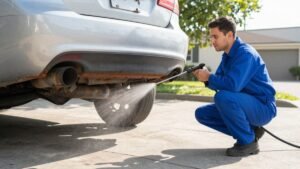
- Document known defects. Photograph existing damage, warning lights, tire wear and mechanical issues before touching the car. This protects you if a buyer claims prep hid something.
- Check safety items a detailer should not mask. Confirm brake pads, tires, lights and wipers are serviceable. A clean car with bald tires invites a complaint, not an offer.
- Decide what you will disclose. A detailed car can make undisclosed problems more obvious. Write your disclosure list now so prep does not drift into concealment.
Stage 2: Interior first (highest visible impact per dollar).
- Remove all personal items and debris. Clear the cabin, trunk, glove box and door pockets. Clutter reads as neglect.
- Vacuum thoroughly, including under and between seats. Use a crevice tool along seat rails, console seams and the trunk hinge area, pet hair and grit collect there first.
- Shampoo carpets and floor mats, then dry fully. Damp carpet creates the musty smell you are trying to remove. Extract and air-dry before reassembly.
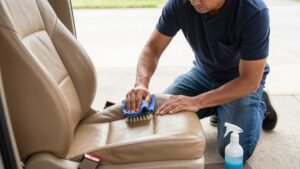
- Clean and condition high-touch surfaces. Steering wheel, shifter, door handles, seat bolsters and the driver’s armrest show wear first. Condition leather and vinyl without leaving surfaces greasy.
- Treat odors at the source, not with fragrance. Locate the cause (spill, pet accident, smoke residue, damp carpet) before treating. See the interior remediation section for the sequence.
Stage 3: Exterior (visible impact, but watch the cost curve).
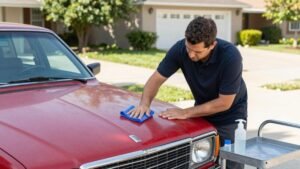
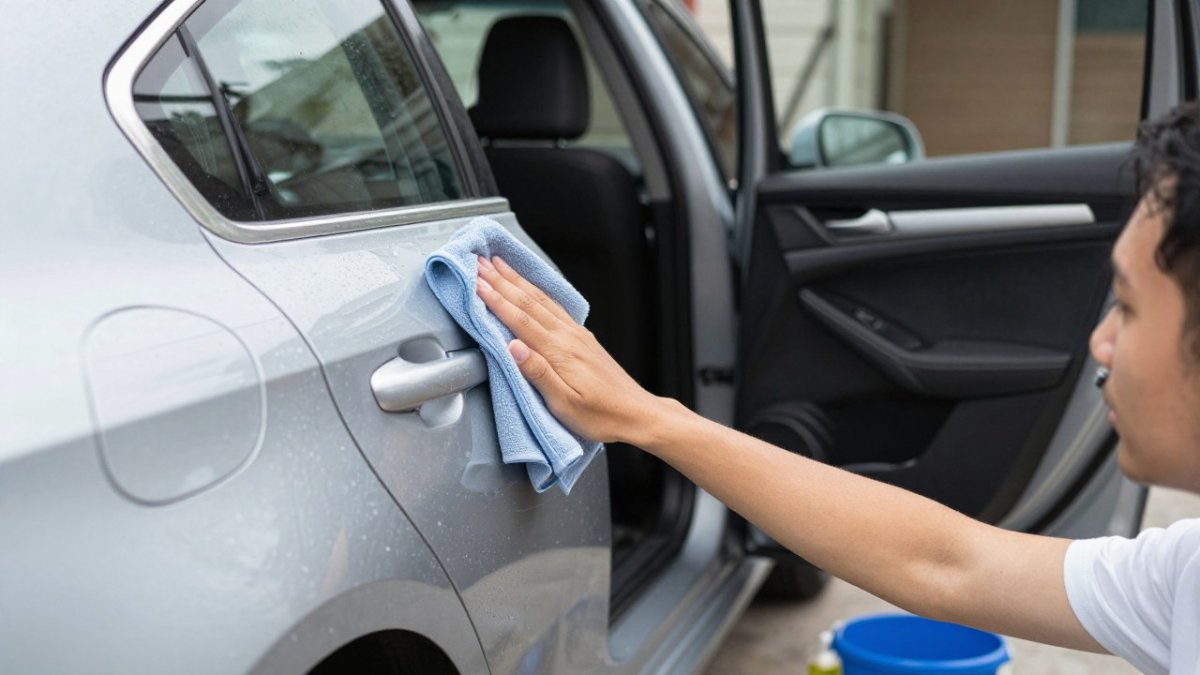
- Hand wash with a two-bucket method. Remove loose grime before any paint work; a dirty surface turns polishing into scratching.
- Clean wheels, tires and glass. Dirty wheels and hazy windows make a clean car look tired, and they are inexpensive to fix.
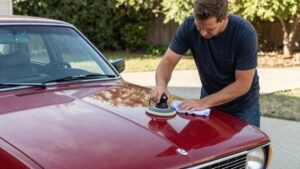
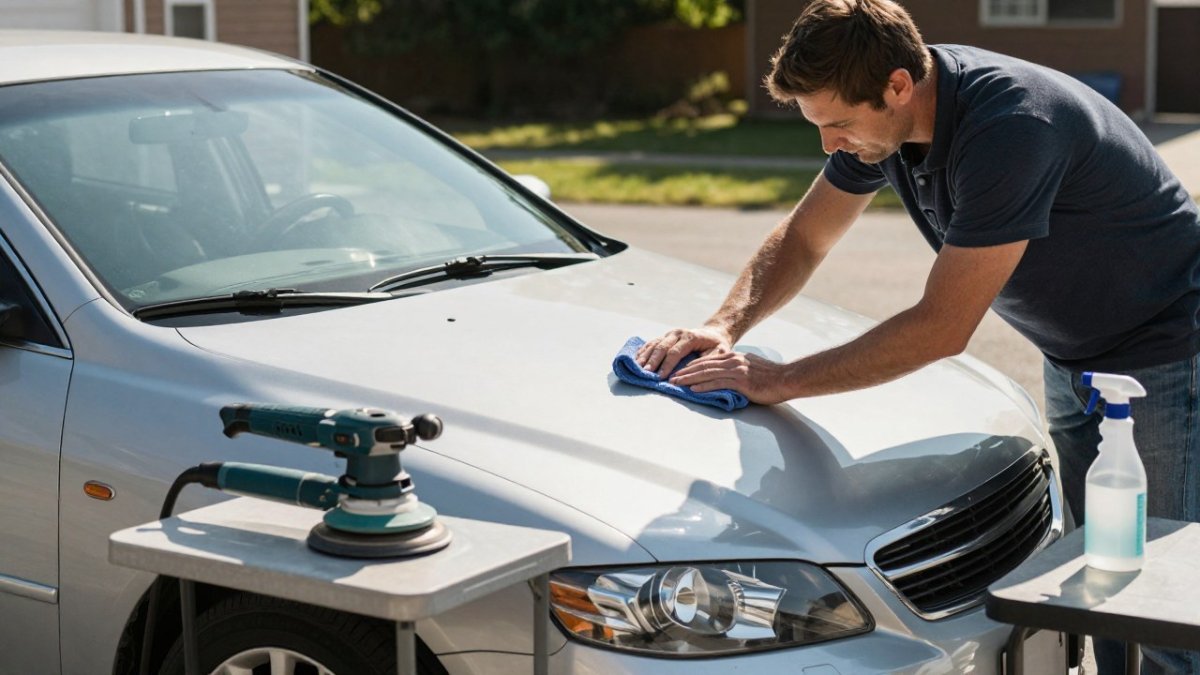
- Do a one-step polish on the most visible panels. Hood, roof and front fenders get the most attention. A light polish removes swirls and oxidation; deeper scratches may need more work or may not come out.
- Touch up minor chips on forward-facing panels. Small hood and bumper chips are cheap to address and easy to spot.
- Apply protection only if the car will sit. A spray sealant is a quick, low-cost option for a car selling soon.
When to stop. If the car is older, high-mileage or priced for a quick sale, stages 1 and 2 plus a wash and glass cleaning deliver most of the return. Paint correction and coating make more sense on higher-value cars where buyers expect a finish matching the price.
Watch out: Do not let a strong air freshener stand in for odor removal.
Interior Remediation: Odors, Stains, and Wear
The interior sells the car to the person who sits in it. Odors and stains affect that person more than almost anything else, so treat them as a priority.
Used car interiors usually show three problems: lingering smells, fabric or carpet stains, and wear on high-contact surfaces like the steering wheel, shifter, door handles and seat bolsters. Each needs a different approach.
For odors, the goal is removal, not coverage.
For stains, identify the material before choosing a cleaner. Cleaners that suit cloth can damage leather, and the wrong product can set a stain permanently.
Removing Odors and Stains Without Masking Them
A masked odor returns, usually within weeks of the sale, and the buyer may connect it to dishonest prep. Real removal takes longer but holds.
Follow this sequence:
- Locate the source, including under seats and inside vents.
- Clean the affected surfaces with a product suited to the material.
- Treat the air system, then ventilate the cabin fully before testing.
If the smell persists after these steps, it may come from a part that needs repair. Disclose that to buyers rather than adding another layer of fragrance.
Exterior Prep: Paint Correction, Spot Removal, and Protection
Exterior prep has three layers: correction, spot removal and protection. Correction removes defects from the paint itself. Spot removal targets water spots, tar and bug residue. Protection adds a barrier that keeps the finish looking good between wash and sale.
Paint correction can improve gloss on an older car, but results depend on the paint.
Water spots and tree sap often need more than a wash, and they can etch the clear coat if left too long.
Protection ranges from a simple spray sealant to a professional ceramic coating.
Pricing depends on vehicle size, paint condition, and the services chosen, so request a quote for your specific car from Blue Ridge – Mobile Detailing.
How Long Mobile Car Detailing Takes for Used Car Prep
Time depends on the car’s condition and the level of work you choose. A light refresh on a well-kept car can take a few hours.
Mobile service is performed at your location. Rough ranges:
- Basic interior and exterior clean: typically a few hours, depending on condition.
- Full interior restoration with odor treatment: typically longer, depending on condition.
- Paint correction on top of a full detail: typically longer, depending on how many defects need correction.
Schedule the detail a few days before you list the car, not the morning of the first showing. That gives you time to notice anything that did not come out and to make the car look its best in photos.
Detailing time depends on the car’s condition and the level of work chosen, as summarised below.
| Service level | Typical time | Condition it suits |
|---|---|---|
| Basic interior and exterior clean | A few hours | Well-kept car |
| Full interior restoration with odor treatment | Longer, depending on condition | Heavy stains or strong odor |
| Paint correction on top of full detail | Longer, depending on defects | Many paint defects |
Matching Services to Your Car’s Condition and Expected Return
Spending more on prep is not automatically better.
Start with three questions.
- What will a buyer see in the first two minutes? The interior, driver’s seat, hood and front bumper. Money spent there returns the most.
- What will a buyer smell or touch? Odors, sticky surfaces and worn touchpoints create doubt faster than paint defects.
- What will a buyer ask about? Mechanical issues, warning lights and damage history. Prep cannot fix these, and hiding them creates legal and reputational risk.
Condition-based service recommendations.
- Late-model car in good condition, selling within a month: A thorough interior clean, hand wash, glass cleaning, and a one-step polish on the hood and front panels. Skip ceramic coating unless the car will sit for months.
- Mid-age car with moderate wear: Prioritize odor removal, carpet and upholstery shampoo, high-touch surface conditioning, and spot paint correction on the most visible panels. This is where most sellers see the clearest improvement per dollar.
- Higher-value or luxury car: Buyers expect a finish that matches the price. A full interior restoration plus multi-stage paint correction is more defensible here, and a protective sealant helps the car stay presentable during showings.
- Older car or one with mechanical problems: Do the safety and disclosure work first, then a basic interior and exterior clean. Price the car for its condition rather than spending on cosmetic work that cannot change the underlying issues.
Sequencing matters as much as scope. Do the interior first, highest visible impact and longest dry time.
A realistic view of return. Prep has no fixed payback.
Disclosure and avoiding cosmetic concealment. Detailing improves appearance; it does not repair mechanical faults, structural damage or safety defects.
Watch out: Do not approve heavy paint correction on thin or failing clear coat just to chase gloss.
Mobile Detailing Service Reviews: What Sellers Should Look For
When you compare providers, look past marketing and check for the things that affect your car.
Look for:
- Clear scope. A provider should list exactly what each package includes, such as interior vacuuming, odor treatment or paint correction.
- Experience with used-car prep. Ask whether they regularly prepare cars for sale, since priorities differ from a routine detail.
- Transparent pricing. Ask for a written quote tied to your car’s condition.
- Recent reviews from sellers. Read reviews mentioning resale outcomes or specific repairs, not only general satisfaction.
Be cautious of any provider that promises perfect results on every car. Those are signs of a sales pitch rather than a careful assessment.
Booking Your Used Car Prep Appointment at Your Home or Dealership
Booking is simple once you know the scope. Describe the car, its age and mileage, and known problems such as odor, stains, scratches or swirls.
Mobile service can be arranged at your home or another location where the car is parked. Confirm the location and any power or water needs with your provider before booking.
For a precise quote and an appointment, book a mobile detailing appointment with Blue Ridge – Mobile Detailing, or request a free quote to describe your vehicle and your timeline. A paint correction service can address swirls and oxidation directly if the exterior is your main concern.
Before you book, decide your goal: a quick refresh for a fast sale, or a full restoration supporting a higher price. You can request mobile detailing at your home or office and describe your car’s condition there.
Frequently Asked Questions
Is mobile detailing worth it before selling a used car?
Often yes, especially when the cosmetic condition is what buyers and appraisers notice first. Pricing depends on vehicle size, condition, and the services chosen, so request a quote from Blue Ridge Mobile Detailing on the website to compare the cost against the expected increase in sale price. Focus spending on visible issues rather than full paint restoration unless the car is a higher-value vehicle.
How long does a full mobile car detail take for used car prep?
Duration depends on the vehicle’s condition and the services chosen. Heavily soiled or neglected vehicles generally take longer. Scheduling is done on site at your home, workplace, or dealership lot, so the car does not need to be dropped off. Confirm the expected duration when you request a quote, since it depends on the condition and package selected.
What should I ask a mobile detailer before booking used car prep?
Ask what is included in the package, whether interior odor treatment is removal or masking, and whether paint correction is spot work or a broader correction. Confirm the service area, turnaround time, and any water or power needs. Ask how condition findings are reported before work begins, so you know which services are recommended and which are optional. Reviews and references from other vehicle owners can also help you judge consistency.
Can detailing remove stains and odors from a used car?
Interior cleaning can address many surface stains and odors, though deep-set odors and some upholstery staining may not fully disappear. Avoid relying on air fresheners or cosmetic masking, because experienced buyers and inspectors often detect them. Tell your detailer about any known odor sources so the right treatment can be planned.