Table of Contents
- Interior Detailing: Deep Cleaning That Restores Your Cabin
- Exterior Wash and Wax: Protection That Goes Beyond a Basic Wash
- Mobile Detailing vs Car Wash: Why Professional Service Delivers More
- Paint Correction and Ceramic Coating: Restoring and Protecting Your Finish
- Benefits of Ceramic Coating: Long-Term Protection and Easier Maintenance
- How Often Should You Detail Your Car? A Seasonal Maintenance Guide
- Mobile Detailing Services in Shenandoah Valley: Pricing, Packages, and What to Expect
- Conclusion: Professional Detailing Without the Shop Visit
- Frequently Asked Questions
Last Updated: September 30, 2026
Interior Detailing: Deep Cleaning That Restores Your Cabin
Interior detailing is the process of deep cleaning, sanitizing, and restoring every surface inside a vehicle, from carpet fibers and upholstery seams to vents, consoles, and leather trim. It goes far beyond vacuuming. At Blue Ridge – Mobile Detailing, interior work focuses on deep cleaning, sanitizing, and restoring every surface inside a vehicle.
Most people are surprised by where the dirt actually hides. A common mistake is treating a visible stain while ignoring the grit ground into carpet backing and seat rails. That grit acts like sandpaper over time, wearing fibers thin.
A proper interior service includes:
- Hot-water extraction or steam on carpets and cloth seats
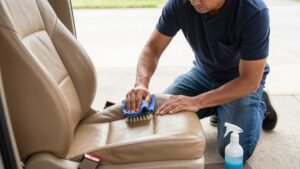
- Leather cleaning followed by conditioning to prevent cracking
- Vents, crevices, and console detail work with soft brushes
- Odor treatment at the source, not just masking sprays
Odor removal deserves its own mention. Odor removal deserves its own mention. Extraction and full drying can address recurring smells.
Ask any detailer how they dry carpets after extraction. If the answer is “it air-dries on its own,” you risk mildew.
Exterior Wash and Wax: Protection That Goes Beyond a Basic Wash
An exterior wash and wax is a multi-stage process: pre-soak, contact wash, surface decontamination, and a protective wax or sealant layer. Each stage matters because skipping one leaves bonded contaminants behind that dull the paint and accelerate oxidation.
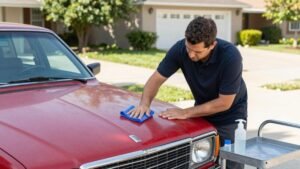
Touchless tunnels and gas-station washes rely on harsh chemicals and high pressure. They strip wax and leave a film that attracts dust within days. Hand washing with the two-bucket method and clean microfiber mitts removes dirt without grinding it across the clear coat.
Decontamination is the step most people have never heard of. A clay bar treatment pulls embedded metal particles and industrial fallout out of the paint, leaving a surface that feels glass-smooth. Wax or paint sealant then bonds properly instead of sitting on top of grit.
Wax protects for weeks. A paint sealant holds for months. Ceramic coating lasts years. The right choice depends on how much maintenance you want to do yourself.
Consumer Reports guide to car washing and paint care
Mobile Detailing vs Car Wash: Why Professional Service Delivers More
Mobile detailing is a full-service, on-site vehicle care appointment performed at your home or workplace, while a car wash is a high-volume cleaning stop focused on speed. The difference shows up in results, not just convenience.
A car wash cycles vehicles through in minutes. That model cannot address swirl mark removal, interior shampooing, or paint correction. Mobile detailing brings professional-grade equipment, water supply, and power to your driveway, then spends hours on one vehicle.
| Factor | Car Wash | Mobile Detailing |
|---|---|---|
| Time per vehicle | 5-15 minutes | 2-6 hours |
| Paint correction | Not offered | One-step to multi-stage |
| Interior depth | Vacuum and wipe | Extraction and conditioning |
| Convenience | Drive to location | On-site service |
| Protection applied | Basic wax or none | Sealant or ceramic coating |
That explains the price gap. You are not paying for a wash. You are paying for labor hours, professional products, and a finish that holds up.
The biggest mistake buyers make is comparing a $30 tunnel wash to a full detail and assuming the detail is overpriced. They are different services solving different problems. A tunnel wash will never remove swirl marks.
Paint Correction and Ceramic Coating: Restoring and Protecting Your Finish
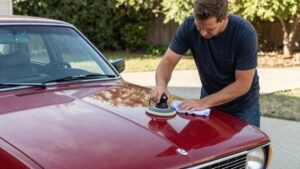
Paint correction is the machine-polishing process that removes swirl marks, scratches, oxidation, and holograms from your clear coat, restoring depth and clarity. Ceramic coating is a liquid polymer applied after correction that bonds to the paint and creates a hydrophobic, protective layer.
Correction comes first for a reason. Coating over uncorrected paint locks in every defect under a glossy shell. A one-step correction removes light marring and brightens the finish. Multi-stage correction removes deeper defects and delivers a show-quality finish, though it takes significantly longer.
Ceramic coating then protects what correction revealed. The hydrophobic coating repels water, makes washing easier, and shields against UV fade and environmental fallout.
Not every vehicle needs the same level of correction. Daily drivers with light swirling often look transformed after a single stage.
Correction and coating are a sequence, not a menu. The coating protects the corrected surface. Skipping correction means paying for protection over damaged paint.
Benefits of Ceramic Coating: Long-Term Protection and Easier Maintenance
The benefits of ceramic coating come down to three things: durability, easier cleaning, and consistent gloss. But the reason those benefits exist is chemistry, not marketing. A ceramic coating is a liquid polymer, most commonly a silicon dioxide (SiO2) or siloxane-based formula, that cross-links and bonds to the clear coat as it cures. That bond is what separates it from wax, which sits on top of the paint and washes away.
Vehicle-specific considerations. Not every vehicle benefits the same way:
- Daily drivers and commuters: The biggest win is easier washing and UV protection on paint that sits outside all day.
- Off-road trucks and SUVs: Coating helps mud and dust release from paint and wheels, but rocker panels and lower doors still take physical abuse that no coating prevents. Paint protection film is the better answer for impact zones.
- Luxury sedans and darker finishes: Gloss and swirl resistance matter most here, and a coating makes sense after a multi-stage correction.
- Work trucks and fleet vehicles: Coating reduces wash frequency and keeps a professional appearance with less labor per vehicle.
How Often Should You Detail Your Car? A Seasonal Maintenance Guide
Most vehicles need a full interior and exterior detail every four to six months, with lighter maintenance washes in between. How often you detail your car depends on climate, parking situation, how much you drive, and, often overlooked, what kind of vehicle you drive.
-
Spring: Pollen and tree sap bond to paint within days. Pollen is mildly acidic and abrasive; left on the surface, it etches and dulls clear coat. A decontamination wash and clay bar treatment reset the surface before summer sun bakes the residue in.
-
Summer: UV exposure fades paint and cracks dashboards. Wax or sealant and interior UV protection matter most. This is also the season when bug splatter becomes a daily problem, bug acids etch paint if left for more than a day or two.
-
Fall: Leaves trap moisture in gutters, trim, and cowl drains. Clogged drains push water into the cabin and can lead to the trapped-padding moisture that causes recurring odors. A full wash, undercarriage rinse, and drain check are the priority.
-
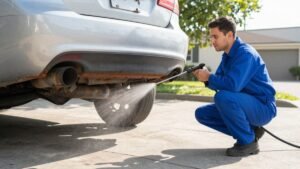
Winter: Road salt is the real threat. Salt brine creeps into wheel wells, rocker panels, and frame rails, and it accelerates corrosion fastest on bare metal and chips. Frequent rinses, especially after storms, and a durable sealant or coating prevent rust and corrosion. Undercarriage flushing matters more than a shiny hood in January.
-
Off-road trucks and SUVs: Driven on gravel, mud, and rural roads, these need more frequent undercarriage rinses and interior extraction. Mud holds moisture against metal, and dust works into seat seams and vents.
-
Luxury sedans and darker finishes: Swirl marks and water spots show immediately. These benefit from gentler wash methods and more frequent maintenance washes to protect the corrected finish.
-
Work trucks and fleet vehicles: High mileage and constant use mean shorter intervals, often monthly maintenance washes with quarterly full details.
-
Garage-kept weekend cars: These can stretch intervals, but they still need protection reapplied on schedule because coatings and sealants degrade with time, not just use.
Mobile Detailing Services in Shenandoah Valley: Pricing, Packages, and What to Expect
Mobile detailing services in Shenandoah Valley bring professional interior and exterior care to your driveway, workplace, or fleet lot, with no drop-off required. Blue Ridge – Mobile Detailing serves the Eastern Panhandle, Shenandoah Valley, and DMV regions, including rural locations that shops rarely reach.
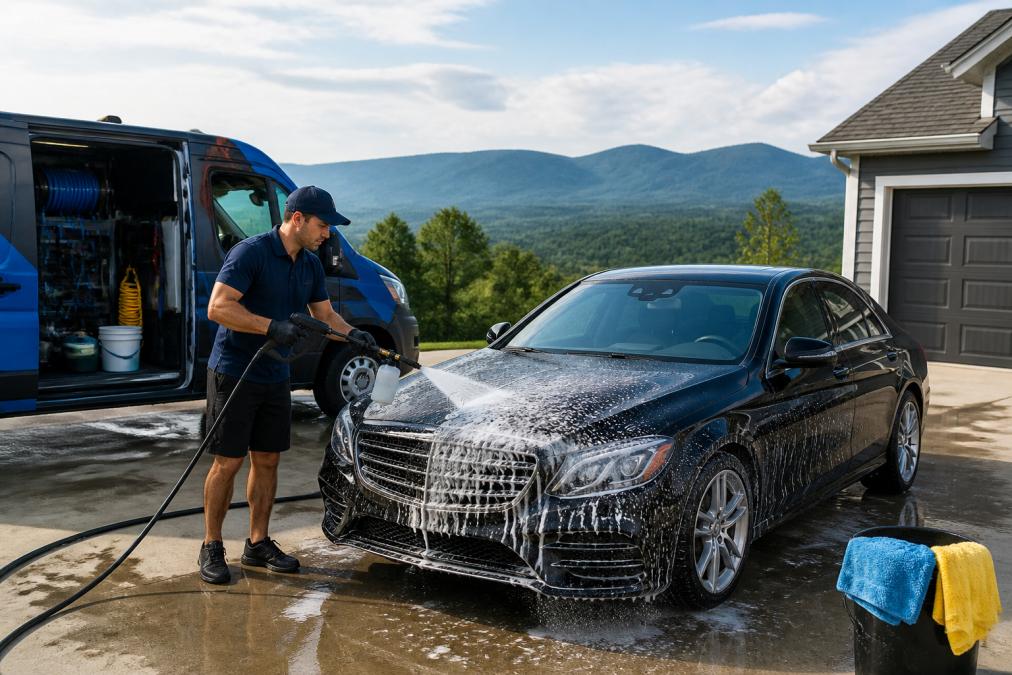
Typical service tiers look like this:
- Maintenance wash: exterior wash, wheels, and light interior wipe-down
- Full-service detailing: interior shampooing, extraction, wax, and decontamination
- Correction and protection: multi-stage paint correction plus ceramic coating
Conclusion: Professional Detailing Without the Shop Visit
The hard part of vehicle care is not finding a wash. It is finding someone who will correct your paint properly, protect it for the long term, and come to you instead of taking your car for a day. Blue Ridge – Mobile Detailing brings certified ceramic coating installation, multi-stage paint correction, and complete interior and exterior detailing to your driveway, dock, or fleet lot across the Eastern Panhandle, Shenandoah Valley, and DMV.
Frequently Asked Questions
How much does mobile detailing cost?
Pricing for mobile detailing depends on your vehicle’s size, condition, and the services you choose. A basic exterior wash and interior vacuum costs less than a full-service detail with paint correction and ceramic coating. Most providers offer tiered packages so you can match the service to your needs and budget. Request a quote based on your specific vehicle and goals to get accurate pricing.
What is the difference between a car wash and professional detailing?
A car wash removes surface dirt in minutes using automated brushes or high-pressure sprays. Professional detailing is a multi-step process that includes surface decontamination, clay bar treatment, swirl mark removal, interior shampooing, and protective coatings. Detailing addresses embedded contaminants and paint imperfections that a standard wash leaves behind, restoring your vehicle’s finish rather than just cleaning it.
Are mobile detailing services worth it?
Mobile detailing saves you the time and hassle of driving to a shop and waiting. For vehicle owners who value convenience, the on-site service model means your car gets professional-grade care while you work from home or handle other tasks. If you drive a luxury, performance, or classic vehicle, the paint correction and ceramic coating options available through mobile detailing can protect your investment long-term.
How often should you detail your car?
Most vehicle owners benefit from a full detail two to four times per year, with seasonal changes being natural reminders. Spring removes winter road salt and grime, while fall prepares your paint for colder months. If you have ceramic coating, maintenance washes every four to six weeks keep the hydrophobic layer performing. Vehicles parked outside or driven on gravel roads need more frequent attention.
Your paint and cabin face another season of salt, pollen, and UV whether you book or not. Get started with Blue Ridge – Mobile Detailing and schedule online for show-quality results at your home or workplace.