Last Updated: November 14, 2026
Quick Summary
Choose your window tint percentage by matching VLT to your legal limit, night driving needs, and heat goals. Lower VLT means darker film, so pick the lightest shade that meets your privacy or heat goal, typically 35% or higher on front side windows. Meter your bare factory glass first, since it already carries a slight tint.
- Window tint percentage is visible light transmission (VLT): a 35% tint lets 35% of light through and blocks 65%.
- Factory glass often reads 70% to 80% VLT, so film meters darker than its label.
- Each state sets its own VLT limits for front sides, rear sides, back glass, and windshield.
- For night driving, choose the lightest shade that meets your privacy or heat goal.
- Lighter ceramic film can reject heat well at 50% or 70% without dark glass.
Table of Contents
- What Window Tint Percentage Actually Means
- Comparing Tint Darkness Levels: 5%, 20%, 35%, 50%, and 70%
- Matching Tint Percentage to Privacy, Heat, and UV Needs
- Window Tint Laws by State: What You Can Legally Install
- Best Tint Percentage for Night Driving and Low-Light Visibility
- Ceramic Window Tint Benefits That Change the Percentage Decision
- Book Mobile Window Tinting for Your Vehicle
- Frequently Asked Questions
What Window Tint Percentage Actually Means
Window tint percentage is the amount of visible light that passes through the glass, measured as visible light transmission (VLT). A 35% tint lets 35% of incoming light through and blocks the other 65%.
The scale runs in reverse of what most people expect: lower VLT means darker film. If you’re re-tinting over old film, know whether old window tint can be removed without damage before settling on a new shade.
How VLT Is Measured on Your Glass
VLT is measured with a tint meter, a handheld device that clamps onto the glass and reads the light passing through it. The meter reports a single percentage. That reading is what a state inspector or law enforcement officer checks, and it reflects the combined result of your factory glass plus the film, not the film alone.
Why Factory Glass Changes Your Final Tint Percentage
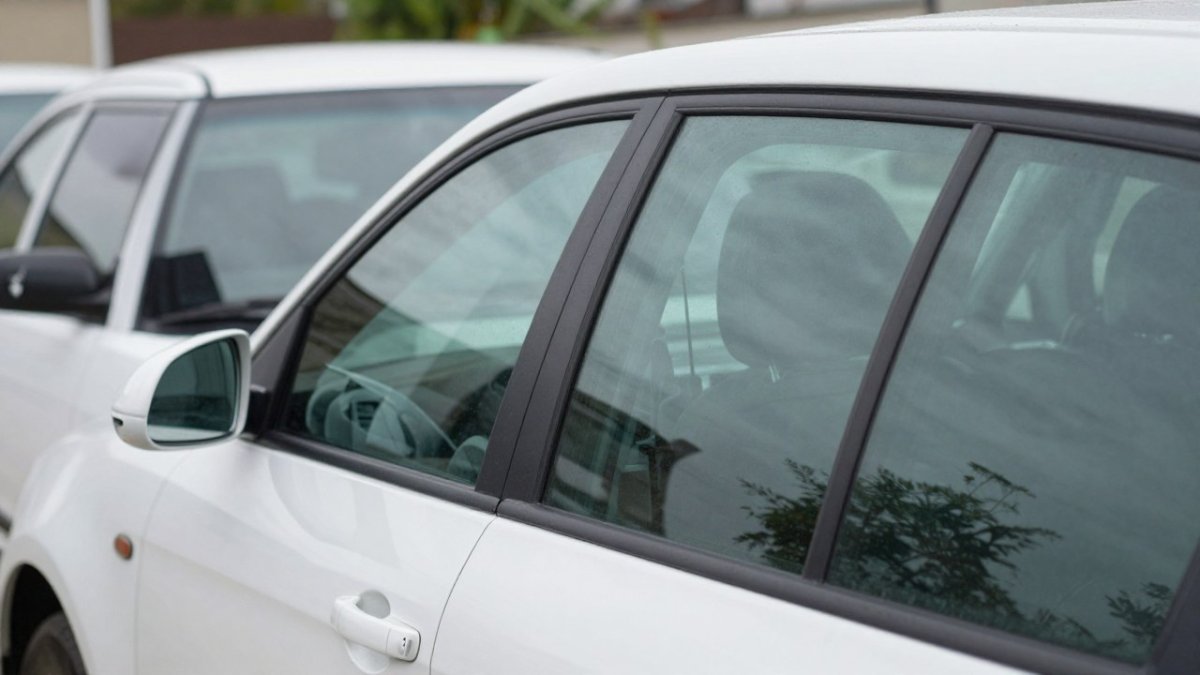
Factory automotive glass is not clear. Most windshields and side windows already carry a slight tint, often 70% to 80% VLT, and some rear glass is darker. Install a 35% film on a window that already reads 75% and your final number lands lower than 35%. That’s why two vehicles with identical film can meter differently. A reputable installer meters the bare glass first, then calculates which film gets you to your target.
Comparing Tint Darkness Levels: 5%, 20%, 35%, 50%, and 70%
The five shades on almost every film sample card behave very differently in daily use.
| VLT | Darkness | Privacy | Night Visibility | Best For |
|---|---|---|---|---|
| 5% | Very dark | Maximum | Poor | Rear glass, show vehicles |
| 20% | Dark | High | Reduced | Rear side and back windows |
| 35% | Medium | Moderate | Good | Front side windows |
| 50% | Light | Low | Very good | Windshields, legal-safe fronts |
| 70% | Nearly clear | Minimal | Excellent | Windshields, heat-only goals |
5% tint delivers the darkest look and the most privacy, but makes night driving a genuine chore; we steer most daily drivers away from it on front glass. 20% tint is the popular “dark but livable” choice for rear windows. 35% tint is the sweet spot for front side windows in many states. 50% tint and 70% tint are light tints chosen for heat and UV rejection rather than privacy, and they’re the safe picks for windshields.
Matching Tint Percentage to Privacy, Heat, and UV Needs
Privacy and heat rejection pull in opposite directions from visibility, so match the film to the goal rather than the look. For privacy from passing traffic, 20% on the rear windows gets you there. For interior comfort, a lighter ceramic film often beats a dark dyed film, because darkness and heat performance are separate properties. Quality films block most UV rays regardless of shade, and 35% handles glare from headlights behind you without turning the cabin into a cave.
Window Tint Laws by State: What You Can Legally Install
Tint law is not one national rule. Each state’s motor vehicle code sets its own VLT limits for front side windows, rear side windows, and the windshield. Treat your state’s statute as the spec sheet before you order film.
The Four Numbers Every State Code Regulates
Tint statutes commonly regulate the following surfaces, which often carry different limits:
- Front side windows (driver and front passenger). Often the strictest aftermarket limit, set differently by each state.
- Rear side windows. Often more permissive, and some states allow any darkness on rear passenger glass.
- Rear windshield (back glass). Frequently tied to the rear side limit, and many states require a side mirror on each side if the back glass is darkened.
A few states also cap reflectivity, measured as a percentage of light reflected off the film, and some restrict colors such as red, blue, or amber. Those clauses are easy to miss because they are not VLT numbers.
How the Limit Is Measured and Enforced
Enforcement is typically carried out with a tint meter, the same handheld device described above. The number on the meter, not the film box, is what generally has to clear the statute. Two enforcement patterns commonly apply:
- Inspection-time checks. States with periodic safety inspections often test tint, and a failed reading means the vehicle does not pass until the film is removed or replaced.
- Roadside checks. Some states authorize officers to meter glass during a traffic stop and issue a fix-it ticket or citation. The remedy is usually removal plus a re-inspection, which is why an illegal shade is more expensive to undo than to install correctly the first time.
Watch out: a film labeled 35% can meter below 35% on factory glass that already reads around 75% VLT, so a shade that is legal on paper can fail on the meter. Meter the bare glass first, then choose film that lands above your state’s floor.
Medical Exemptions and the Paperwork Behind Them
Some states offer a medical exemption allowing darker film for drivers with a documented medical need. Requirements are state-specific, so check your state’s motor vehicle department for the process and any paperwork involved.
A Jurisdiction Checklist Before You Buy Film
Work through these steps in order, and you will avoid the most common legal mistakes:
- Find your state’s statute or DMV tint page. Search your state DMV or highway patrol site for ‘window tint’ and read the official rules rather than a third-party summary, which may be out of date.
- Write down the limits that apply to each window and any reflectivity or color clause.
- Meter your bare factory glass on each window, because the starting VLT varies by vehicle and by window.
- Calculate the film VLT that keeps each window within the legal limit once combined with the glass.
- Check the exemption process if you have a medical need, and confirm approval before installation.
- Keep your receipt and film spec sheet in the vehicle, since some officers and inspectors may ask for documentation.
- Re-check the rule if you move or re-register the vehicle, because the new state’s rules apply.
Because statutes are amended and enforcement practices shift, confirm the current limit against your state’s official motor vehicle department before ordering film, and check the frequently asked questions we get about tint and service details.
Best Tint Percentage for Night Driving and Low-Light Visibility
The best tint percentage for night driving is the lightest shade that still meets your privacy or heat goal, and lighter shades generally preserve more night visibility. Dark film removes the light your eyes need most after sunset, and the loss compounds in rain, on unlit rural roads, and when oncoming headlights wash across the windshield.
Why Darkness Hurts More at Night Than in Daylight
Your eyes adapt to low light by dilating the pupil and switching to rod-dominated vision, which is sensitive to brightness but poor at sharp detail and color. Tint reduces the light reaching the retina before that adaptation even starts, so a 20% film that feels comfortable at noon can turn a dim road into a gray blur at 10 p.m. The effect is worst in three conditions:
- Rain or wet pavement, which scatters light and cuts contrast between the road surface and lane markings.
- Unlit rural roads, where there is no ambient light to spare and headlights are the only source.
- Oncoming headlights and following vehicles, where dark glass plus a bright source creates glare and halation rather than relief.
Age matters too, since low-light sensitivity tends to decline over time. If you already avoid night driving, dark film will likely make that avoidance worse.
A Decision Process for Night-Heavy Drivers
Use this sequence to pick a shade you can live with after dark:
- Log your actual night driving. Count how many trips per week happen after sunset, and note whether they are lit city streets, unlit rural roads, or highway. A driver who rarely drives at night can accept a darker rear shade than someone commuting before dawn.
- Set the front side windows first. Front glass is where night visibility matters most, so choose the lightest shade that meets your heat or privacy goal, typically 35% or higher. Keep the rear windows one step darker if you want privacy without hurting forward vision.
- Test a sample panel at dusk and again after full dark. Hold the film sample against the glass from the driver’s seat and look at a curb, a lane line, and a parked car. If you cannot clearly separate the curb from the road surface, the film is too dark.
- Repeat the test in rain if you can. Wet pavement is the harshest realistic test short of an unlit rural road.
- Check your mirrors through the film. Sit in the driver’s seat and confirm you can identify a vehicle in each mirror through the proposed rear shade.
- Consider a lighter ceramic film instead of a darker dyed film if heat is the reason you wanted dark glass, since ceramic performance does not depend on darkness.
Watch out: a shade that passes the dusk test on a dry, lit street can still be too dark for the unlit rural roads you drive every week, so test under the worst conditions you actually face.
Matching Front and Rear Shades for Night Use
A common pattern is a darker shade on the rear sides and back glass and a lighter shade on the front side windows, keeping forward and mirror visibility workable while giving rear passengers privacy. If you drive at night often, a lighter front shade is generally the safer choice.
When to Skip Dark Film Entirely
If you regularly drive before dawn, in rain, or on unlit roads, and you do not have a strong privacy or heat reason for dark glass, a lighter ceramic film is generally the better choice, since it keeps night visibility closer to stock.
Ceramic Window Tint Benefits That Change the Percentage Decision
Ceramic film rejects heat through infrared-blocking technology rather than dark dye, so it performs well at lighter shades. That changes the math: you can choose a 50% or 70% ceramic tint for solid heat rejection and keep excellent night visibility, instead of going dark just to stay cool. For the full picture on how a professional install works, our mobile window tinting service guide explains the process from measurement to cure.
Book Mobile Window Tinting for Your Vehicle
Once you’ve picked a percentage, the next step is getting it installed correctly, and that’s where mobile service earns its keep. Blue Ridge – Mobile Detailing brings precision window tinting to your location, cutting film on an on-board plotter and installing it in your driveway or at your workplace. Ready to lock in your shade? Get a free quote with your vehicle details and we’ll confirm the right setup for your state’s limits.
Choosing a tint percentage comes down to one honest question: what do you actually need the film to do? Match the shade to your legal limit, your night driving, and your heat goals, and the number picks itself. Blue Ridge – Mobile Detailing offers mobile window tinting with plotter-cut film and on-site installation. Book a mobile tint that fits your vehicle and your state’s rules.
Frequently Asked Questions
What is the most common window tint percentage?
35% is the most common choice for front side windows because it sits at or near the legal limit in many states while still cutting glare and heat. For rear windows, 20% is popular with owners who want more privacy. Your final number depends on your state’s legal tint limit and how much factory tint is already built into the glass, so have the installer meter your windows before the film goes on.
Is 20% tint too dark for night driving?
For many drivers, yes. At 20% VLT, only about one-fifth of outside light reaches your eyes, which makes unlit roads, pedestrians, and cyclists harder to spot after dark. If you drive at night often, 35% on the front side windows is a safer balance. Some owners run 20% on the rear windows and 35% up front to keep privacy without sacrificing forward visibility.
How do I know which window tint percentage is legal in my state?
Check your state’s statutes or motor vehicle department rules for the exact VLT limit on front side windows, rear side windows, and the windshield. Each state sets its own legal tint limits, which may differ for front side glass and the windshield. Because factory glass already carries some tint, ask your installer to measure the combined VLT after installation so you stay compliant.
Does window tint percentage affect heat rejection?
Less than most people expect. A darker film blocks more visible light, but heat comes largely from infrared rays, and film darkness alone does not determine how much infrared is rejected. Ceramic films can offer heat rejection at lighter shades. Look at the film’s infrared rejection and total solar energy rejected specs rather than picking a shade for cooling alone.