Last Updated: November 10, 2026
Quick Summary
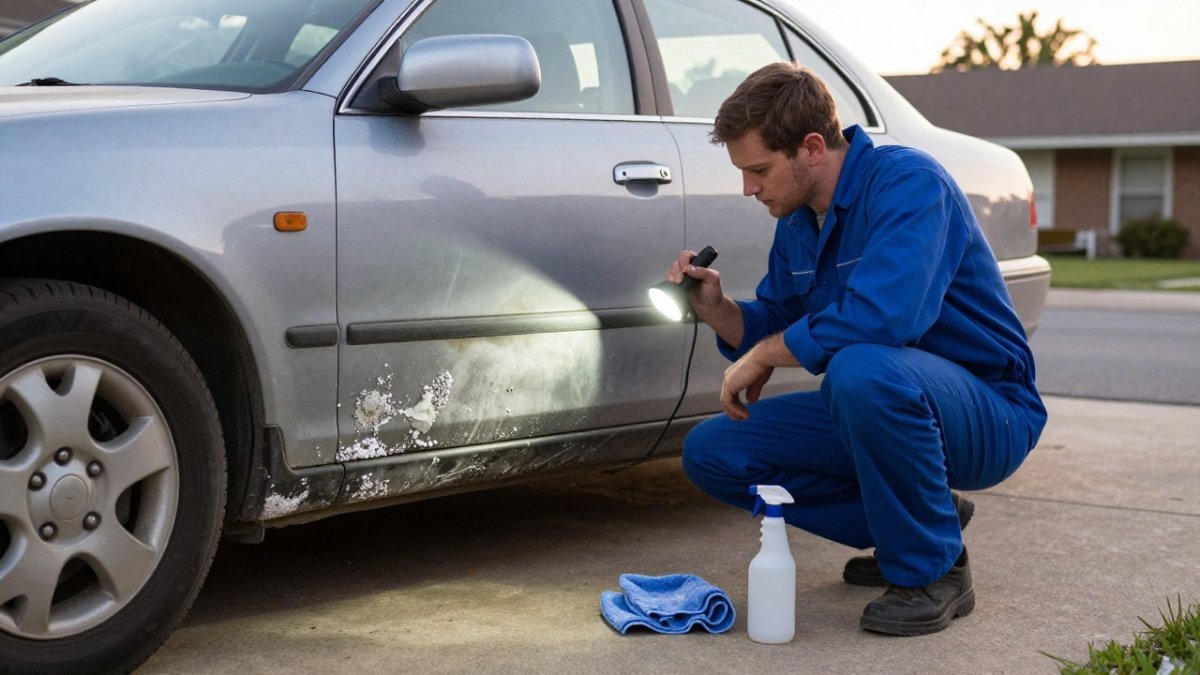
Signs of salt corrosion on car paint include a white powdery film, pale blotches, and dull or uneven fading, usually near the lower body and wheel wells. Early damage is easiest to fix when caught before the paint starts to bubble or flake.
- Check the lower body, rocker panels, wheel wells and door edges first, since salt lingers there longest.
- Wipe marks with a damp microfiber towel and pH-neutral soap; if they stay and feel rough, the clear coat is etched.
- Grade damage as Level 1 (minor), Level 2 (moderate) or Level 3 (severe), each with a different next step.
- Level 3 bubbling, peeling or flaking needs a body repair professional, and polishing over it can widen the failure.
- Inspect the car in shade on a cool, washed and dried panel, checking monthly through winter.
Table of Contents
- Why Road Salt Attacks Car Paint
- Early Signs of Salt Corrosion on Car Paint
- Step-by-Step Paint Inspection With Severity Levels
- Salt Residue vs. Water Spots and Mineral Deposits
- Where Salt Damage Hides: Wheel Wells, Seams and Undercarriage
- Using a Salt Neutralizer Safely on Painted Surfaces
- Ceramic Coating for Salt Protection and Preventing Salt Damage on Vehicles
- Scheduling Your Next Inspection Before Winter Ends
- Frequently Asked Questions
Why Road Salt Attacks Car Paint
Road salt is one of the fastest ways to damage a car’s finish. Salt on your paint works like a battery: moisture, oxygen and salt form an electrolyte that speeds up corrosion. This damage often starts small. Knowing the signs of salt corrosion on car paint lets you catch it before it reaches the metal.
Salt does its worst work where it sits longest. Water runs off the roof quickly, but it pools in wheel wells, along rocker panels and in door seams. That’s where salt lingers, and where corrosion gets started.
- Salt holds moisture against the paint
- Heat and humidity speed up the chemical reaction
- Paint chips and scratches give salt a direct path to metal
- Repeated freeze-thaw cycles open tiny cracks in the clear coat
Early Signs of Salt Corrosion on Car Paint
Early damage rarely looks dramatic. It shows up as small changes in how the paint looks and feels. Catching these changes early is the key to limiting repair work.
Chalky White Residue and Pale Blotches
Look for a white, powdery film on the paint or around the edges of panels. This residue is dried salt, and it often leaves pale blotches where the clear coat has started to break down. If the marks don’t wipe away with a damp microfiber towel, the salt has likely started to etch the surface.
Dull Paint and Uneven Fading
A healthy finish reflects light evenly. Salt-damaged paint looks flat or hazy in some spots and glossy in others. Uneven fading is most common on horizontal panels like the hood, roof and trunk, where the sun and salt combine to break the clear coat down.
Step-by-Step Paint Inspection With Severity Levels
Use this process to check your vehicle. Work in shade, on a cool panel, and only after a full wash and dry. Inspecting a dirty or hot panel hides defects and can push grit into the clear coat.
- Wash and dry the car to remove loose salt. Rinse the lower body and wheel wells first so you are not dragging salt upward.
- Run your palm lightly over each panel inside a thin plastic bag. The bag amplifies texture, so you can feel raised bumps, grit, and rough patches that a bare hand misses.
- Check the lower body, rocker panels, wheel wells and door edges first. These areas hold salt longest.
- Look at the paint under diffuse light, an overcast sky or a handheld LED work light held at a low angle. Note any haze, blotches, dull patches, or rings.
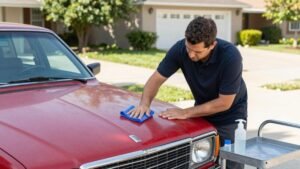
- Test one small spot with a damp microfiber towel and a pH-neutral car wash soap. If the mark lifts, it is surface residue. If it remains and feels rough, the clear coat is etched.
- Assign each area a severity level and note its location.
Severity levels:
- Level 1 (Minor): Light residue or slight dullness that wipes away or polishes out with a finishing polish. The paint still feels smooth after washing.
- Level 2 (Moderate): Etching, persistent haze, or small chips with early surface rust. The defect remains after washing and feels rough to the bag test, but the paint is intact and no metal is exposed.
- Level 3 (Severe): Bubbling, peeling, flaking paint, or visible rust spots on body panels. Any bubble or blister means corrosion is lifting the paint from underneath, and the panel needs professional assessment.
Watch out: rust that has broken through the paint will keep spreading if you cover it with wax or a coating. Treat Level 3 damage promptly, and do not polish over bubbling or flaking paint, polishing removes more clear coat and can widen the failure.
What each level means for next steps:
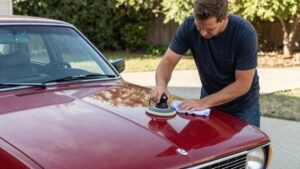
- Level 1 usually responds to a thorough wash, a decontamination wash, and a light polish. Most DIYers can handle it.
- Level 2 usually calls for paint correction by a detailer and a check of the surrounding seams. If rust is present in a chip, clean it and apply touch-up paint to slow progression.
- Level 3 needs a body repair professional. Bubbling and flaking indicate corrosion beneath the paint, and repainting or panel repair is the only durable fix.
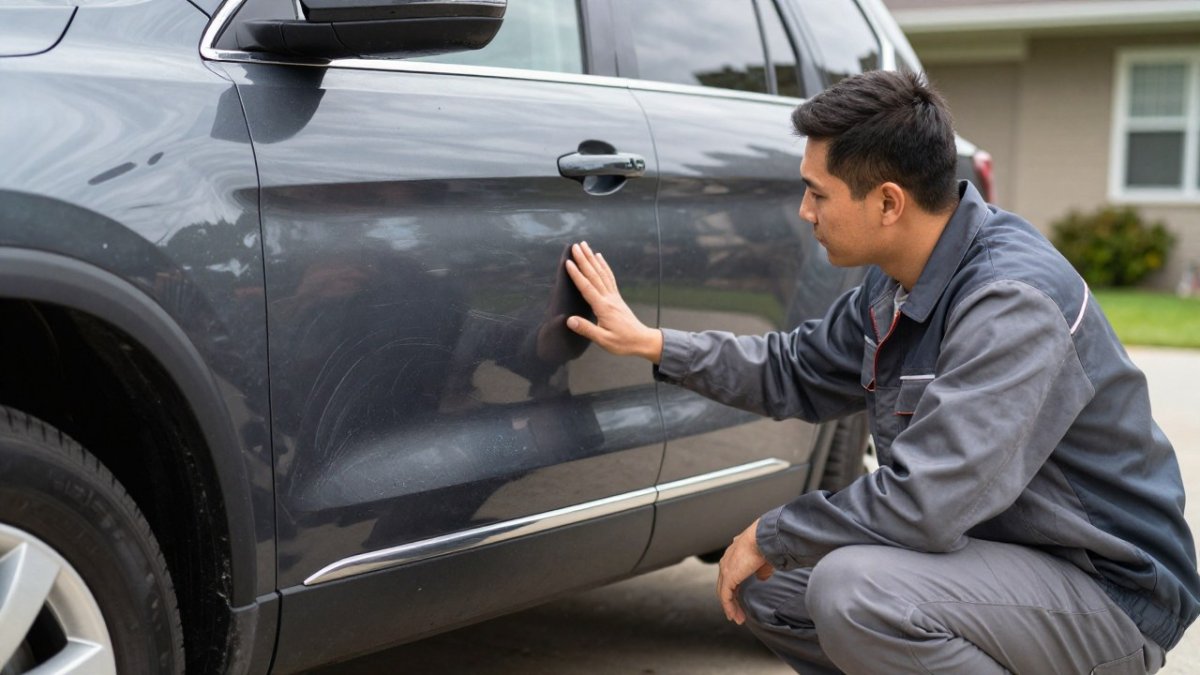
The article breaks paint damage into three severity levels, each with a different next step.
| Severity | What it looks like | Next step |
|---|---|---|
| Level 1 (Minor) | Light residue or slight dullness that wipes away | Wash, decontaminate, light polish |
| Level 2 (Moderate) | Etching, persistent haze, small chips with early rust | Detailer paint correction; touch-up paint on chips |
| Level 3 (Severe) | Bubbling, peeling, flaking, visible rust spots | Body repair professional assessment |
Salt Residue vs. Water Spots and Mineral Deposits
Not every white mark is salt damage, and treating the wrong defect wastes time or makes it worse. Salt residue, hard water spots, mineral deposits, and clear-coat etching look similar in photos but behave differently under a wipe test and a close look.
Salt residue is a powdery or crystalline film, usually concentrated near the bottom of panels, wheel wells, fender lips, and door edges where splash collects. It often looks like a faint white haze or pale blotches. A damp microfiber towel with pH-neutral car wash soap dissolves it, and the paint underneath feels smooth once dry.
Hard water spots are mineral rings left when water dried in place, most common on the hood, roof, and trunk where rain or sprinkler water sits. They often form circular outlines and can feel slightly raised. A mild water spot remover or a diluted white vinegar wipe can lift fresh spots, but etched spots remain after wiping.
Mineral deposits from sprinklers or well water can leave a chalky crust that looks like salt but appears in patterns that follow water flow, not road splash. They may need a dedicated mineral remover and should not be scrubbed hard.
Clear-coat etching is the stage after residue or spots have sat too long. The mark remains after washing, feels rough to the bag test, and may show a dull ring or haze. This is paint damage, not surface dirt, and it needs polishing or paint correction rather than more washing.
A simple sequence to tell them apart:
- Wash and dry the area.
- Wipe with a damp microfiber towel and pH-neutral soap. If it lifts, it was residue.
- If it remains, try a water spot remover on a small test area. If it lifts, it was a mineral spot.
- If it still remains and feels rough, it is etching. Do not keep scrubbing, move to polishing or professional assessment.
Watch out: scrubbing a stubborn white mark with a dry towel or an abrasive pad can add scratches and make etching worse. Always lubricate the surface with soapy water or a dedicated product before wiping.
car wash soap and paint-safe cleaning products
Where Salt Damage Hides: Wheel Wells, Seams and Undercarriage
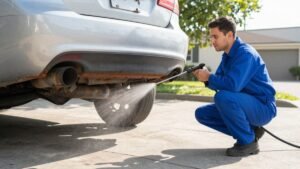
The worst damage often sits where you rarely look. Check these areas every few weeks during winter:
- Inside wheel wells and along the fender lips
- Lower rear quarter panels and door bottoms
- Body seams and panel gaps
- Brake components and exposed undercarriage metal
Salt that gets into body seams can corrode from the inside out. By the time the bubbling shows on the outside, the damage is already well underway.
Using a Salt Neutralizer Safely on Painted Surfaces
A salt neutralizer is a product that can help dissolve residue left on the surface. Use it after washing, not as a replacement for washing. Spray a small test area first, follow the label directions, and rinse thoroughly. Avoid letting neutralizer dry on the paint or on trim, and never use it in direct sunlight.
Ceramic Coating for Salt Protection and Preventing Salt Damage on Vehicles
Preventing salt damage is easier than repairing it. A ceramic coating adds a hard, hydrophobic layer over the clear coat, so water and salt bead up and release more easily. A coating applied before winter gives the paint a stronger line of defense. Blue Ridge – Mobile Detailing offers ceramic coating and undercarriage coating, and you can learn more about our undercarriage coating for direct protection where salt does the most harm. If you’re weighing options, you can also read about our ceramic coating service.
Coatings work best on clean, corrected paint. Any existing etching or swirl marks should be addressed first. Once your paint is in good shape, regular rinses and periodic washes keep the coating performing.
Scheduling Your Next Inspection Before Winter Ends
Plan your inspection before the last salt treatment of the season, not after. Check the lower body and wheel wells at least monthly during winter, and do a full paint inspection in early spring to catch anything that developed. If you find moderate or severe damage, read our guide on removing swirl marks and etching for the next steps, or book a paint correction if the finish needs professional attention. Residents in Leesburg can also book mobile detailing in Leesburg, VA for a quote at home or the office.
Ready to protect your vehicle? Get started with Blue Ridge – Mobile Detailing and have your paint checked by professionals who come to you.
Frequently Asked Questions
How long does it take for road salt to start corroding car paint?
Salt can begin affecting paint within a single winter if a vehicle is driven on treated roads and not washed. Corrosion speeds up when salty slush sits against body panels, wheel wells and seams for days at a time. Chips and scratches in the clear coat let moisture and salt reach bare metal faster, so a car with existing paint damage can show rust spots sooner. Rinsing the underside and lower panels after each snowy drive slows the process noticeably.
Can professional paint correction fix salt-damaged car paint?
Paint correction can remove light etching, dullness and surface haze caused by salt residue, because it levels the clear coat. It cannot restore metal that has already rusted through. If corrosion has reached bare metal, the damaged area needs sanding, treatment and repainting. A technician can inspect the panel and tell you which of these situations applies before any work begins.
Does salt corrosion lead to permanent rust if left untreated?
Left alone, salt-driven corrosion can progress from surface discoloration to bubbling paint, then to rust that eats into the metal. Bubbling and flaking paint are usually signs that rust is already forming underneath. Catching it while the damage is limited to the clear coat gives you far more repair options and lower costs. Pricing for any repair depends on the damage, so contact Blue Ridge – Mobile Detailing for a quote on your vehicle.
What is the best way to neutralize salt on a car’s exterior?
Start with a thorough rinse to flush loose salt from the body, wheel wells and undercarriage. A pH-balanced salt neutralizer can then be applied to lift remaining residue, followed by a second rinse. Avoid harsh household cleaners, which can strip protective coatings and dull the paint. Dry the vehicle completely afterward, since trapped moisture is what keeps corrosion active.