Last Updated: November 8, 2026
Quick Summary
Yes, a ceramic coating can go over vinyl wrap, but only if the coating is formulated for film and the wrap is fully cured, intact, and clean. A coating built for bare clear coat may not bond well to vinyl. Matte and satin wraps need a coating specifically labeled for that finish.
- Confirm the coating’s technical data sheet lists vinyl or paint protection film compatibility before buying.
- Wait for a new wrap to cure, and inspect it for lifting edges, cracks, or bubbles.
- Test the coating on a small hidden area, such as a lower door edge, before coating the whole vehicle.
- Coating a failing wrap traps contamination underneath and can make removal harder.
- Professional installation is worth considering for matte, satin, textured, or high-value wraps.
Table of Contents
- Yes, Ceramic Coating Works Over Vinyl Wrap, With Conditions
- Does Ceramic Coating Bond to Vinyl Wrap and Protect It?
- Best Ceramic Coating for Vinyl Wrap: Choosing a Film-Safe Formula
- Ceramic Coating for Matte Wrap: Why Finish Changes the Approach
- How to Apply Ceramic Coating to Vinyl Wrap Step by Step
- Ceramic Coating on Vinyl Wrap Cost: DIY Versus Professional Installation
- Risks, Exclusions and Troubleshooting Common Problems
- Booking Your Vinyl Wrap Coating With Blue Ridge
- Frequently Asked Questions
Yes, Ceramic Coating Works Over Vinyl Wrap, With Conditions
A ceramic coating can go over vinyl wrap. The catch is that the coating has to be formulated for film, and the wrap has to be in good shape before anything goes on. A coating built for bare clear coat may not bond well to vinyl, which is a different surface with different chemistry.
Here is what usually decides whether the job goes well:
- The coating is made for vinyl or film surfaces. Check the product’s technical sheet for wrap compatibility.
- The wrap is fully cured and intact. Fresh wraps need time to settle before coating.
- The surface is clean and free of contamination. Old wax, sealant, and road film will block bonding.
Does Ceramic Coating Bond to Vinyl Wrap and Protect It?
Ceramic coatings generally bond to the surface they are applied to.
Once cured, the coating adds a sacrificial layer. Generally, coatings of this type can make cleaning easier, improve water behavior, and offer some resistance to staining, though results depend on the specific product used.
A coating does not make a wrap indestructible. It does not stop rock chips or deep scratches, and it will not reverse existing damage. Think of it as a maintenance layer, not armor.
Best Ceramic Coating for Vinyl Wrap: Choosing a Film-Safe Formula
When you shop for a coating, look for a product explicitly labeled for vinyl wrap or paint protection film. Many general-purpose coatings are designed for clear coat and may not be tested on film.
Also consider these points when comparing options:
- Formulation. A coating built for film is less likely to cause adhesion problems or edge lifting.
- Application method. Some products are sprayed and wiped, others are applied by hand. Ease of leveling matters more on wrap than on paint.
- Gloss and finish. Gloss coatings suit gloss wraps. Satin and matte finishes need coatings that do not add unwanted shine.
The right choice depends on the wrap. For most gloss wraps, a film-compatible ceramic coating with good leveling and a clear technical sheet is a sensible starting point.
Ceramic Coating for Matte Wrap: Why Finish Changes the Approach
Matte and satin wraps behave differently from gloss. A standard glossy coating can add a shine that changes the look of the wrap, sometimes in patches where it was applied unevenly. On matte film, that shift is easy to see and hard to undo.
For matte wraps, the approach changes in a few ways:
- Choose a coating specifically labeled as safe for matte or satin film.
- Test on a small hidden area first, such as a lower door edge. If you have a matte wrap and want to know whether paint correction is offered before coating, you can check our paint correction options.
- Apply thinly and level carefully to avoid visible high spots.
Not every coating is sold for matte films, and some are only designed for gloss. Confirm compatibility before you buy.
How to Apply Ceramic Coating to Vinyl Wrap Step by Step
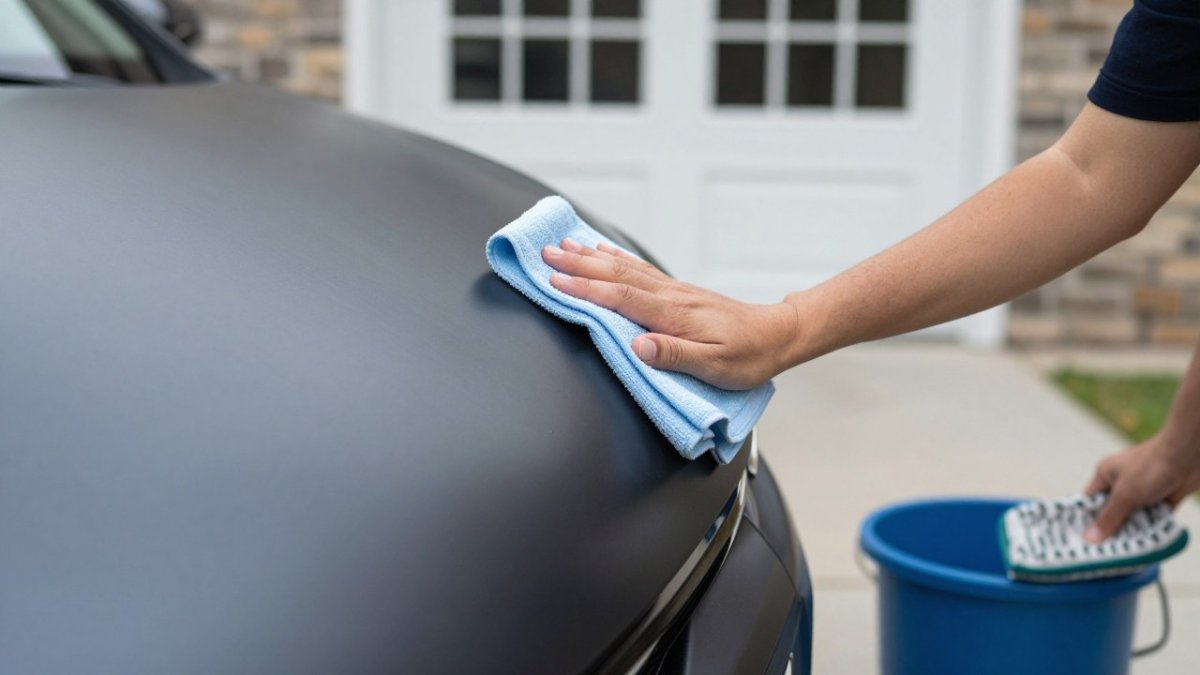
A safe application sequence matters as much as product choice. The steps below assume no professional experience, but they do assume you will read both the film manufacturer’s guidance and the coating’s technical data sheet before you start. If either document warns against coating, stop there.
1. Confirm compatibility by wrap material and finish
Vinyl films are not all the same. Cast films (the kind that stretch and conform to complex curves) and calendared films (economy films with less conformability) can respond differently to solvents and coating carriers.
Before buying anything, check three things:
- The film manufacturer’s care guide for any statement about coatings or sealants.
- The coating’s technical data sheet for a listed vinyl or PPF compatibility statement.
- Whether the coating is labeled for the specific finish (gloss, satin, matte, textured).
A common pattern is that film makers approve only pH-neutral products and warn against solvent-heavy prep wipes. If the data sheet is silent on vinyl, treat that as a no rather than a maybe.
2. Inspect the wrap and decide whether it should be coated at all
Walk the vehicle in good light and look for:
- Lifting or curled edges, especially around wheel arches, mirrors, and bumper seams.
- Bubbles, blisters, or sanded-through spots from a previous repair.
- Cracks, scratches that catch a fingernail, or areas where the film has gone chalky.
Any failing edge or crack is a reason to pause. Coating over a failing wrap traps moisture and contamination and can make the eventual removal harder. If the wrap is near the end of its service life, the better spend is often re-wrap rather than coat.
3. Time the job correctly
A newly installed wrap needs time for installation fluids and adhesive to settle. Most installers advise waiting at least a few days and following the film maker’s cure guidance before washing or coating. Coating too soon can trap moisture under the film or interfere with adhesion. On an older wrap, the opposite problem applies: contamination and oxidation may have built up, so prep has to be more thorough, and heavily aged film may not be worth coating.
4. Wash and decontaminate
Work in a shaded, cool area. Heat and direct sun make coatings flash too fast and leave streaks.
- Pre-rinse to remove loose dirt, then wash with a pH-neutral car wash soap and a soft microfiber wash mitt. Avoid degreasers and any wash that strips wax unless the coating maker specifically calls for it.
- Remove bonded contaminants with a clay bar or clay mitt and plenty of lubricant. Keep the clay moving and re-knead it often; pressing hard on vinyl can mar the surface.
- Wipe panels with a film-safe prep solvent or an IPA-based panel wipe to remove oils and residue. Do not let solvent pool on edges or seams.
- Dry with clean microfiber towels and keep the surface dust-free before coating.
A quick check: if water still beads unevenly or the surface feels grabby, it is not clean enough yet.
5. Test on a small hidden area
Before coating the whole vehicle, apply a small amount to a lower door edge or inside a door jamb. Level it as the product instructs and let it cure. Check for haze, color shift, or edge lift. On matte and satin films, this test is essential because a gloss coating’s effect is easy to see and hard to undo.
6. Apply, level, and cure
Follow the coating maker’s flash times, but plan to work one small panel at a time.
- Apply a few drops or a light spray to a foam applicator or suede block.
- Use straight-line passes with light pressure, keeping the coating thin and even.
- Level within the product’s stated window, removing excess with a clean, dry microfiber. Change towels often; a saturated towel smears residue.
- Inspect under good light for streaks, high spots, and missed areas before moving to the next panel.
- Allow the full cure time before exposing the vehicle to water, rain, or washing. Most coatings need a long cure window, and washing too early can disturb the bond.
Watch out: on textured films, coating can collect in the grain and dry into white residue. Apply sparingly and level immediately, and do not try to scrub residue out after it cures.
7. Document and maintain
Note the product, date, and any panels you skipped. Follow the coating maker’s maintenance wash guidance, and avoid automatic brush washes, which are hard on both coating and film. If you see edge lift after coating, do not ignore it; have the wrap inspected before it spreads.
The main steps for applying a film-safe ceramic coating, with the timing and checks that matter at each stage.
| Step | What to do | Time or frequency |
|---|---|---|
| Confirm compatibility | Check film maker guide and coating data sheet | Before buying |
| Inspect wrap | Look for lifting edges, cracks, bubbles | Before coating |
| Time the job | Let new wrap settle before coating | At least a few days |
| Wash and decontaminate | pH-neutral wash, clay, film-safe prep wipe | Before application |
| Test small area | Coat a hidden lower door edge first | Before full job |
| Apply and level | Thin coat, level within product window | Per panel |
| Cure | Keep water off the vehicle | Full cure window |
Ceramic Coating on Vinyl Wrap Cost: DIY Versus Professional Installation
Cost is where most guides go vague, so here is a practical framework rather than a single number. Total cost is the coating product plus prep supplies plus, if you hire out, labor. The wildcard is the cost of a mistake.
What drives the price
- Coating product. Consumer coatings sold for vinyl or PPF vary widely, and a small bottle may cover only a portion of a vehicle. Check the stated coverage on the label against your vehicle size before comparing prices.
- Prep supplies. Clay bar or mitt, lubricant, pH-neutral wash, microfiber towels, applicators, and a film-safe panel wipe add up. Skipping prep supplies is the most common false economy.
- Labor. Professional installation is priced by vehicle size, condition, and finish. For a breakdown of typical rates, see our mobile ceramic coating installation cost guide. A coated wrap job typically includes wash, decontamination, and application, so ask for an itemized quote rather than a single lump sum.
DIY: when it makes sense
DIY can work for a single panel, a small vehicle, or an owner who is patient and comfortable with a controlled process. Before committing, you can read how to decide if ceramic coating is worth the cost.
DIY becomes riskier when:
- The finish is matte, satin, or textured, where streaks and residue are hard to fix.
- The wrap is expensive or newly installed.
- The vehicle has complex curves, many seams, or existing edge lift.
Watch out: a failed DIY coating on a matte wrap can require polishing or even re-wrapping the panel, which often costs more than professional application would have.
Professional: when it is worth the premium
Professional installation can make sense when the wrap is valuable, the finish is unforgiving, or you want the prep and leveling done consistently across the whole vehicle. A good installer will inspect the wrap first and may decline the job if the film is failing.
Ask for:
- A written scope covering wash, decontamination, application, and cure guidance.
- The product name and data sheet so you can confirm vinyl compatibility.
- What happens if the coating reacts poorly or an edge lifts after the job.
The decision rule
Compare the all-in DIY cost (product plus supplies plus your time) against the professional quote, then add the likely cost of correcting a bad outcome. If the gap is small, professional application is usually the better value. If you are coating a small, gloss panel and are comfortable with the process, DIY can be reasonable. For matte, satin, textured, or high-value wraps, the risk-adjusted math usually favors a professional.
Risks, Exclusions and Troubleshooting Common Problems
Not every wrap should be coated, and some problems show up only after application. Be aware of these issues:
- Haze or streaking. Often caused by applying too much product or leveling too late. Light polishing can sometimes correct it, but test first on a small area.
- Edge lifting. Usually a sign the wrap was already failing or the surface was not cleaned well. Coating may make this more visible.
- Uneven gloss. Common on matte and satin wraps when a glossy coating is used.
Some wraps are excluded from coating altogether, especially those that are cracked, heavily worn, or near the end of their life. Coating a failing wrap rarely helps and can make the eventual removal more difficult.
Booking Your Vinyl Wrap Coating With Blue Ridge
If you want the job done by a professional, Blue Ridge – Mobile Detailing provides mobile service at your driveway, workplace, or business, so you do not need to drop the vehicle off at a shop. You can book our mobile detailing service for the coating at your location. For current availability and a quote, visit our website and schedule online.
Frequently Asked Questions
Can you put ceramic coating over vinyl wrap?
Yes, but only with a coating formulated for vinyl film. Standard glass coatings are designed for paint and can stiffen, haze or fail to bond cleanly on wrap material. Film-compatible formulas flex with the vinyl and are designed to cure at lower temperatures. The wrap must be intact, clean and fully cured from installation before any coating is applied. If the wrap is lifting, cracked or faded, repair or replace it first, because the coating will not fix the underlying film.
Is ceramic coating safe for vinyl wrap?
It is safe when the product is labeled compatible with vinyl or PPF and the application follows the manufacturer’s directions. Problems usually come from using a paint-only coating, applying over a dirty or oily surface, or coating a wrap that was installed recently and has not finished curing. Test a small hidden area first and check for any change in gloss, color or texture after the recommended cure time.
How long does ceramic coating last on vinyl wrap?
Durability depends on the coating product, the wrap quality, the climate and how the vehicle is washed. Film-compatible coatings are generally rated for a shorter service life than the same product on paint, so expect to refresh the coating sooner. Regular pH-neutral washing and avoiding harsh chemicals will extend how long the hydrophobic and easy-clean properties last.
Can you ceramic coat a matte or satin vinyl wrap?
Yes, but a standard gloss coating will change the finish, adding shine and darkening the surface. Use a matte-specific or finish-appropriate film coating and test it on a small area first. Some matte wraps show uneven sheen after coating, so confirm the product is designed to preserve a flat or satin look before committing to the whole vehicle.