Table of Contents
- What Determines How Long Ceramic Coating Lasts
- Factors Affecting Ceramic Coating Durability
- Professional vs DIY Ceramic Coating Longevity
- Ceramic Coating Maintenance Tips to Extend Its Life
- How to Tell If Your Ceramic Coating Is Failing
- Cost-Per-Month Analysis: Is Ceramic Coating Worth It?
- Layering Misconceptions and Realistic Expectations
- Frequently Asked Questions
Last Updated: September 22, 2026
What Determines How Long Ceramic Coating Lasts
How long does ceramic coating last? A professionally applied coating typically delivers two to five years of protection, while consumer-grade products often fall short of one year. This guide from Blue Ridge – Mobile Detailing breaks down what actually drives that range, because the honest answer depends far less on the bottle than on what happens before and after application.
SEMA’s automotive refinishing guidance
Product Quality and Formulation
Silica-based coatings with higher solid content generally outlast entry-level sprays. Professional-grade products cross-link more densely, which slows the breakdown of hydrophobic properties over time. Consumer-grade formulas trade durability for ease of use.
Application Process and Surface Preparation
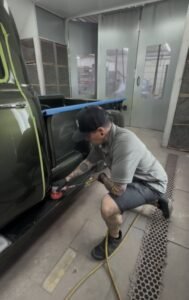
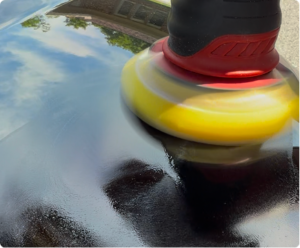
Surface preparation decides more than product choice. Paint correction removes defects, a clay bar treatment strips embedded contaminants, and an isopropyl alcohol wipe removes oils so the coating can bond. Skip any step and the coating sits on top of grime instead of the paint.
Factors Affecting Ceramic Coating Durability
Durability is a range, not a fixed number. Two identical coatings on identical cars can differ by years depending on where the vehicle lives, how it’s stored, and how it’s driven. Most guides stop at “sun and salt are bad.” The useful version explains how each stressor breaks the bond, because the failure mechanism determines whether maintenance can save the coating or whether it’s already gone.
How Heat and UV Break the Siloxane Bond
A ceramic coating’s backbone is a siloxane (Si-O-Si) network cross-linked to the clear coat. UV energy doesn’t just fade the shine, it attacks the organic side chains hanging off that silicon backbone. Once those chains oxidize, the network can’t shed water the same way, and the surface starts grabbing contaminants instead of repelling them.
Road Salt, Brine, and Winter Chemistry
Where winter road treatment is heavy, the threat isn’t the salt sitting on paint, it’s what salt does over months of exposure. Chloride ions are small and aggressive, and they migrate into microscopic pores and chips in the coating and clear coat. Once they’re in, they accelerate corrosion under the film, which shows up as creeping edge failure and pitting long before the coating looks “worn.”
Humidity, Coastal Air, and Industrial Fallout
High humidity slows the initial cure and, over time, keeps the surface wet longer, which feeds water spotting and mineral deposits. Coastal air adds airborne chloride on top of that, so a car parked near the water faces salt exposure year-round, not just in winter.
Driving Habits and Storage Conditions
Daily highway commuting invites rock chips and contaminant buildup. A chip that penetrates the coating and the clear coat creates an entry point for water and chloride, and failure spreads outward from that edge. Frequent washing with harsh detergents strips the sacrificial top layer that the coating relies on to stay hydrophobic.
A Quick Climate Reality Check
The honest takeaway: the same product can realistically deliver the top of its range in a mild, garaged, low-mileage setting and the bottom of its range in a coastal or heavy-winter setting with daily exposure. Before you buy, match the coating’s expected life to your actual environment, not the marketing number on the box.
Professional vs DIY Ceramic Coating Longevity
Professional vs DIY ceramic coating longevity comes down to preparation and application environment. A certified installer works in a controlled space with proper lighting, paint depth gauge readings, and multi-stage correction before any coating touches the surface.
Why Professional Installation Lasts Longer
DIY kits rarely include the correction steps that make a coating bond properly. Without a dust-controlled environment, airborne particles get sealed under the layer. Professionals also apply even coats at controlled thickness, avoiding the high spots that fail first.
Ceramic Coating Maintenance Tips to Extend Its Life
Ceramic coating maintenance tips matter more than most owners expect. A coating is a sacrificial layer, not a force field. How you wash it in the first year largely determines whether it reaches year four.
Washing and Aftercare Best Practices
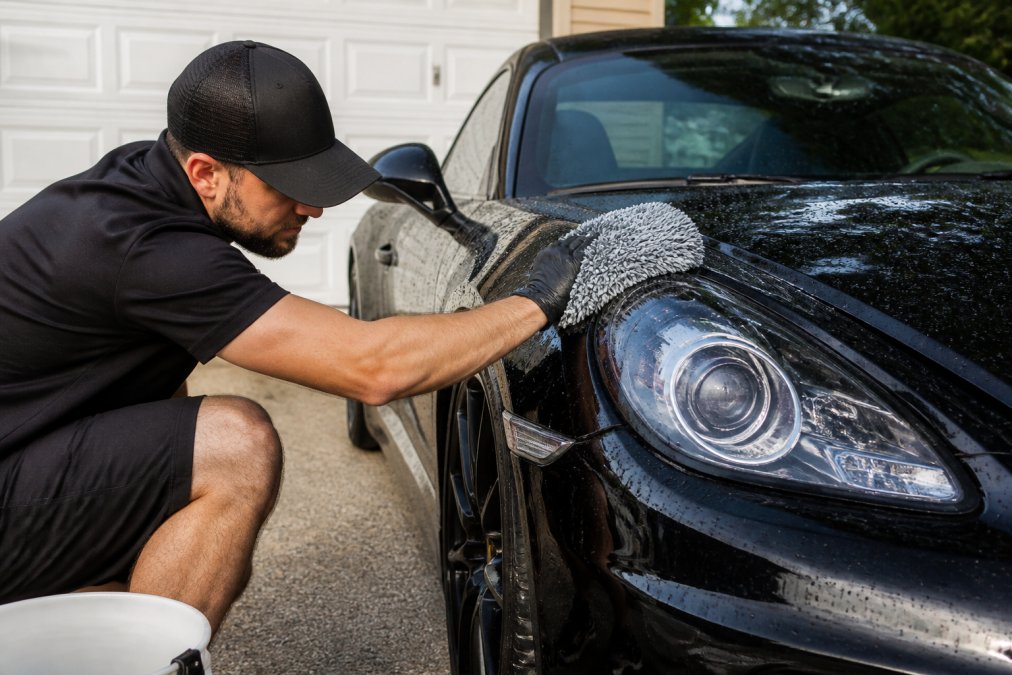
Use a pH-neutral shampoo and the two-bucket method with microfiber mitts. Avoid automatic brush washes entirely; they inflict the swirl marks a coating was meant to prevent. A maintenance wash every two to three weeks keeps contaminant buildup from bonding.
Top-Up Sprays and Annual Inspections
A top-up spray refreshes hydrophobic properties between full applications. Annual inspections catch failing sections early, and a decontamination wash restores beading when it starts to fade.
|
Maintenance Task |
Frequency |
Why It Matters |
|---|---|---|
|
pH-neutral maintenance wash |
Every 2-3 weeks |
Prevents contaminant buildup |
|
Top-up spray |
Every 2-3 months |
Restores beading and sheeting |
|
Decontamination wash |
Annually |
Removes bonded fallout |
|
Professional inspection |
Annually |
Catches early failure |
How to Tell If Your Ceramic Coating Is Failing
Most owners jump to “the coating is gone” the first time water stops beading. In reality, the two most common situations look identical from the driver’s seat but have completely different fixes. This section gives you a way to tell them apart before you pay for a reapplication you may not need.
Step 1: Read the Water
Water behavior is the first diagnostic, but the pattern matters more than whether it beads at all.
- Tight, uniform beads, the hydrophobic layer is intact.
- Flat patches in some areas, beads in others, localized contamination or wear. Usually recoverable.
- Water sheets off in a film everywhere, the top layer is compromised across the panel. Needs a decontamination wash and top-up before you assume failure.
- Water clings and dries into spots, the surface is now hydrophilic, which means the functional layer is gone, not just dirty.
Step 2: The Bag Test
After a normal wash and dry, put your hand inside a clean plastic sandwich bag and run it lightly across the paint. The bag amplifies friction, so your fingertips feel what they can’t feel bare.
- Smooth, slick, coating is still doing its job.
- Gritty or sandy, bonded contamination (rail dust, brake dust, industrial fallout). This is the most common false alarm. A decontamination wash with an iron remover and a clay treatment usually restores beading.
- Rubbery or grabby, the slick top layer has worn through. A top-up spray or a light polish-and-recoat is the next step.
Step 3: The 50/50 Panel Test
When you’re not sure, tape off a small section of a horizontal panel (hood or roof, where UV and fallout hit hardest) and do a full decontamination wash on just that section. Compare it to the untreated area next to it.
- Treated side beads again, the coating is alive; the rest of the car just needs the same treatment.
- Both sides behave the same, the coating has genuinely failed on that panel.
Step 4: Look for the Failure Signatures
Different failure modes leave different marks. Match what you see to the cause:
- Uniform loss of beading across the whole car, normal end-of-life wear, or a coating that was never properly cured.
- Patchy loss on horizontal panels only, UV and fallout exposure; recoverable with decontamination in most cases.
- Edge failure along panel gaps, wheel arches, and rocker panels, abrasion and contaminant ingress; often the first place a coating actually dies.
- Chalky or dull finish that won’t polish back, the coating has oxidized through; reapplication is the only fix.
- Water spots that won’t wash off, mineral etching into the coating or clear coat. Once etched, it’s permanent without polishing.
What “Failing” Usually Isn’t
Faded beading is the most over-diagnosed symptom. A coating that’s been on the road for a year is almost always clogged before it’s dead. Bonded contamination sits on top of the hydrophobic layer and masks it, the coating is still there, it just can’t shed water through the grime.
When It’s Actually Time to Reapply
Reapply when a 50/50 panel test shows no difference between treated and untreated areas, when the surface feels grabby after a proper decontamination wash, or when the coating has visibly failed at the edges and the failure is spreading. Short of those, you’re almost always looking at maintenance, not replacement.
Cost-Per-Month Analysis: Is Ceramic Coating Worth It?
Cost-per-month analysis reframes the decision. Instead of comparing a one-time coating price against a single wax job, divide the total investment by the months of protection it delivers.
|
Option |
Typical Protection Window |
Reapplication |
|---|---|---|
|
Wax |
Weeks |
Monthly |
|
Sealant |
Months |
Quarterly |
|
Consumer coating |
Under a year |
Annually |
|
Professional coating |
2-5 years |
Every few years |
Layering Misconceptions and Realistic Expectations
More layers don’t multiply durability. Layering misconceptions lead owners to stack coats expecting double the life, but the second layer bonds to the first, not the paint, and adds gloss more than longevity.
Frequently Asked Questions
What are the disadvantages of ceramic coating?
Ceramic coating requires proper maintenance to last, and it does not prevent rock chips or deep scratches. It also needs a curing time of 24 to 48 hours after application, during which the vehicle should stay dry. If you skip maintenance washes or use harsh soaps, the coating can degrade faster than expected. Professional installation costs more upfront, but it typically delivers longer-lasting results than DIY kits.
How often should I reapply ceramic coating to my vehicle?
Most professionally applied ceramic coatings last between 2 and 5 years, depending on the product and how well you maintain them. A top-up spray applied every few months can extend the coating’s life. Annual inspections by a certified installer help catch early signs of failure. If you notice reduced water beading or a duller finish, it may be time for a professional decontamination wash and reapplication.
Can I run my ceramic coated car through a car wash?
Automatic car washes with brushes can scratch the coating and reduce its lifespan. Touchless car washes are safer, but they often use harsh chemicals that degrade the coating over time. The best approach is a pH-neutral shampoo hand wash or a rinseless wash. If you must use an automatic wash, choose a touchless option and avoid high-pressure sprays aimed directly at the coating edges.
Does ceramic coating prevent rock chips and deep scratches?
No. Ceramic coating adds a sacrificial layer that protects against UV rays, oxidation, and light contaminants, but it cannot stop rock chips or deep scratches. For impact protection, you would need paint protection film. Ceramic coating does make the surface easier to clean and adds gloss, but it is not a substitute for physical armor against road debris.