Last Updated: October 26, 2026
Quick Summary
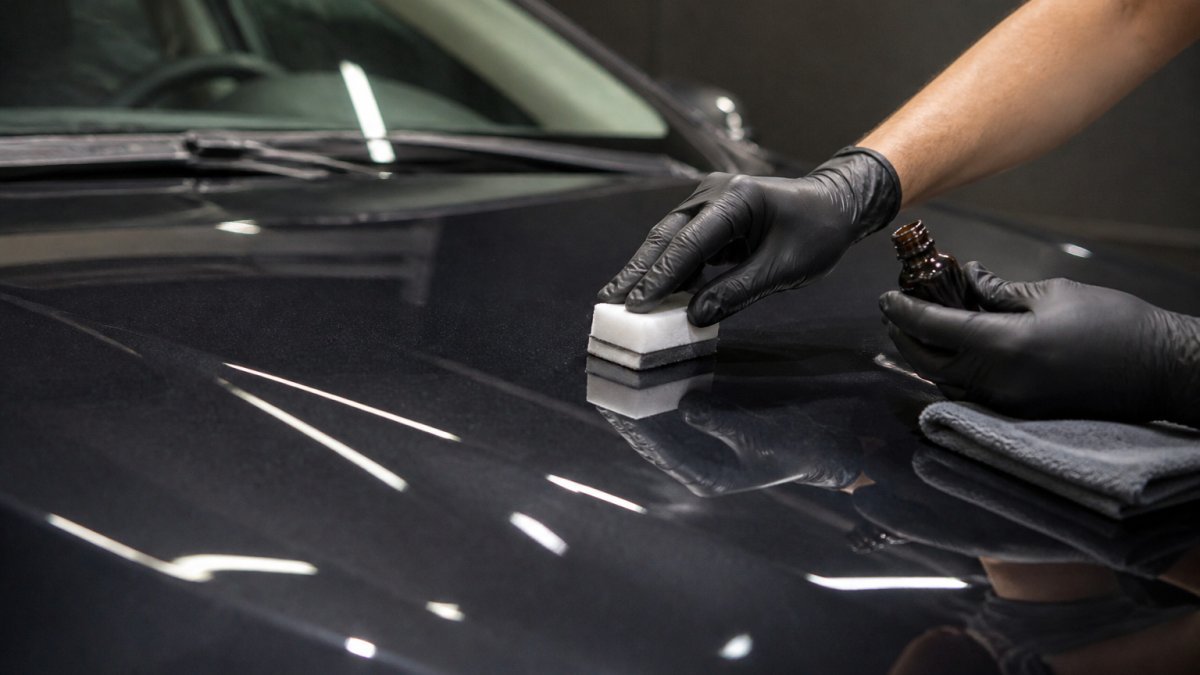
The best ceramic coating for swirl mark prevention is a professional SiO2 or graphene coating installed over properly corrected paint, since the coating takes light wash contact instead of your clear coat. A ceramic coating reduces wash-induced marring but does not make paint scratch-proof, so PPF is still needed for impact zones.
- A coating adds a sacrificial layer that absorbs light contact so your clear coat doesn’t have to.
- Pencil hardness ratings like 9H are marketing shorthand, not real-world scratch resistance.
- Prep decides the result: coating over swirled paint permanently seals the defects in.
- Wash-induced scratches are the number one cause of swirls on coated cars.
- Compare quotes on equal terms: same correction stage, coating layers, cure conditions and maintenance obligations.
Table of Contents
- What the Best Ceramic Coating for Swirl Mark Prevention Can and Cannot Do
- Does Ceramic Coating Prevent Scratches? Setting Realistic Expectations
- Quick Comparison: Coating Types Ranked for Mar Resistance
- Paint Correction Before Ceramic Coating: Why Prep Decides the Result
- How to Wash a Ceramic-Coated Car Without Adding Swirls
- How to Evaluate Coating Claims, Warranties, and Total Cost
- Choosing the Right Coating for Your Vehicle and Use Case
- Book a Mobile Coating Consultation at Your Driveway
- Frequently Asked Questions
What the Best Ceramic Coating for Swirl Mark Prevention Can and Cannot Do
The best ceramic coating for swirl mark prevention reduces wash-induced marring, but it does not make paint scratch-proof.
Swirl marks are fine circular scratches in the clear coat, usually caused by washing and drying with dirty media.
What a coating cannot do is repair damage already there. If your paint is swirled now, the coating locks the defects in under a glossy layer.
Guide to automotive clear coat and paint systems
Why Coated Paint Still Gets Light Marring
Coated paint still gets light marring because the coating is a thin film measured in microns, not a shield of armor. Grit that stays on the surface during a contact wash abrades whatever is on top.
Durability varies with chemistry and prep quality. A coating that is maintained with proper washing holds its water behavior far longer than one that gets run through a brush tunnel every week.
Does Ceramic Coating Prevent Scratches? Setting Realistic Expectations
No. A ceramic coating does not prevent scratches in any meaningful sense. It improves mar resistance against light wash-induced contact, and it does nothing against impact damage, rock chips, or deliberate scratching. Anyone selling it as scratch protection is overselling.
Here is what to consider before an install:
- It helps with: towel marks, wash mitt trails, light marring from dust and water spotting
- It does not help with: rock chips, door dings, pet claws, abrasive brushes, sandpaper-grade grit
- Paint protection film (PPF) is the answer for impact: film absorbs stone strikes; coatings do not
The smartest setups combine both. Film on the high-impact zones, coating over the film and the rest of the car for gloss and easy cleaning.
Hardness Ratings and Pencil Hardness Claims Explained
Pencil hardness ratings sound scientific and mostly aren’t. The test presses graded pencils against a cured film to see which one mars it. A “9H” claim on a coating bottle does not mean your paint reaches 9H, and it does not translate to real-world scratch resistance.
What most guides miss is that pencil hardness measures a thin, fully cured film on a test panel, not a coating on a flexible clear coat in the sun. Treat hardness numbers as marketing shorthand.
Quick Comparison: Coating Types Ranked for Mar Resistance
Most comparisons of the best ceramic coating for swirl mark prevention rank products by brand or by a single hardness claim. That is not useful for a buyer. A fair comparison uses the same criteria across every option: mar resistance against wash-induced contact, realistic durability under a maintenance regimen, application difficulty, and total cost of ownership. Here is that framework, applied to chemistry types rather than brands.
| Coating Type | Mar Resistance | Realistic Durability | Application Difficulty | Relative Cost of Ownership | Best For | Watch Out For |
|---|---|---|---|---|---|---|
| Professional SiO2 coating (multi-layer) | High against light wash marring | Multi-year with maintenance washes and annual inspection | High, requires decontamination, correction, controlled cure | Highest upfront; lowest per year if kept | Daily drivers, dark paint, outdoor parking | Prep quality decides everything; a cheap install over swirled paint locks defects in |
| Graphene-infused coating | High; slickness is the main benefit | Multi-year, similar to SiO2 in practice | High, same prep demands as SiO2 | Comparable to SiO2 | Hot climates, owners who want easy dirt release | Marketing outruns independent data; treat claims as unproven until you see the prep |
| Spray sealant | Low, handles towel marks only | Months | Low, DIY-friendly | Low upfront, recurring | Quick DIY top-ups between professional services | Short lifespan; frequent reapplication adds up |
| Traditional wax | Very low | Weeks | Low | Low per tin, high per year in labor | Show cars, owners who enjoy the ritual | Attracts dust; soft film offers little mar resistance |
| PPF plus coating | Highest against impact and wash marring | Multi-year | Highest, film install is a specialist job | Highest upfront; strong long-term value on high-impact zones | Front ends, high-impact zones, dark paint | Cost and installation complexity; coating still needed over film for slickness |
How to read the framework:
- Mar resistance means resistance to light contact from wash media, drying towels, and dust, not resistance to keys, carts, or chips. Every coating type loses to impact; only film absorbs it.
- Realistic durability assumes proper maintenance washing. A coating run through a brush tunnel weekly will not hit its rated life regardless of chemistry.
- Application difficulty is the hidden cost. Professional SiO2 and graphene coatings demand decontamination, machine correction, and a controlled cure environment. DIY spray sealants and waxes are easy but short-lived.
For swirl prevention specifically, the ranking is: PPF plus coating for impact zones, professional SiO2 or graphene for the rest of the car, spray sealant as a maintenance top-up, and wax as a hobby choice rather than a protection strategy. The gap between SiO2 and graphene is smaller than the gap between either one and a spray sealant.
A common pattern among owners who regret their purchase is choosing on hardness claims alone. The coating that prevents the most swirls is the one installed over properly corrected paint and maintained with a contact-minimizing wash, not the one with the biggest number on the bottle.
Paint Correction Before Ceramic Coating: Why Prep Decides the Result
Paint correction before ceramic coating is not optional, it is the whole job. A coating is a clear, glossy layer that magnifies whatever is underneath.
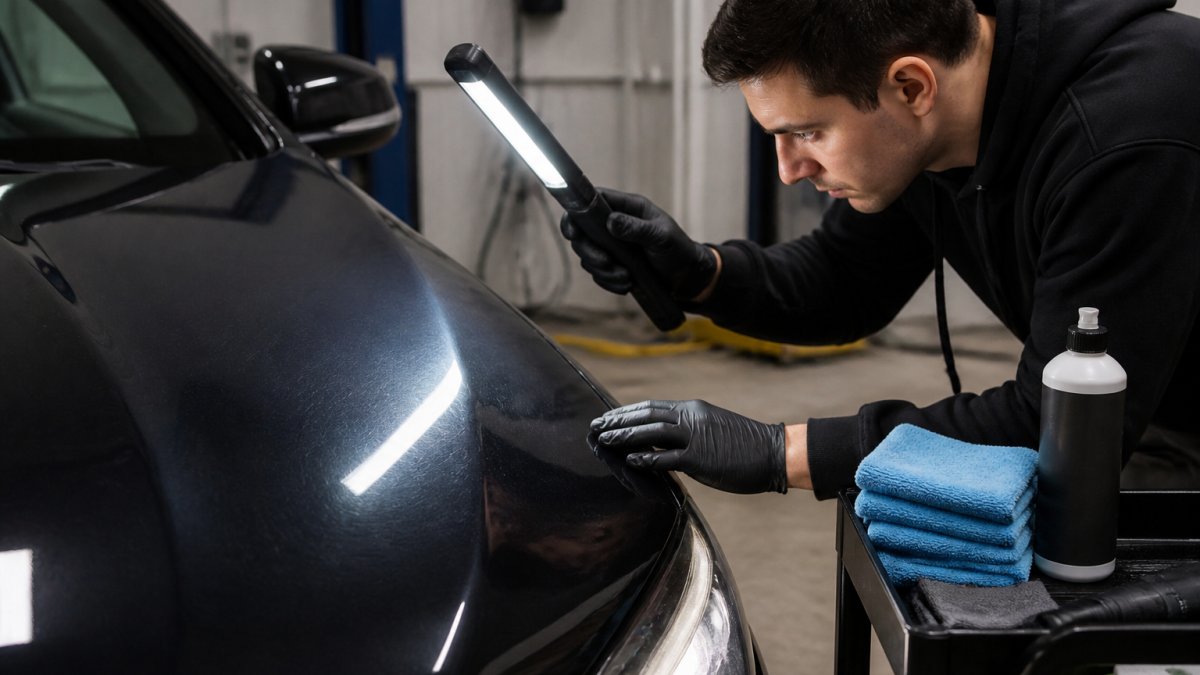
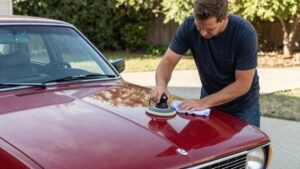
Surface preparation includes a decontamination wash, clay treatment to pull bonded fallout, and usually a machine polish to level micro-scratches.
This is also where owners ask whether the work is real correction or a glorified wash. It is the difference between a one-step polish and a multi-stage paint correction that removes defects rather than filling them.
Removing Existing Swirls and Micro-Scratches First
Removing swirls means abrasively leveling the clear coat around each scratch until the surface is flat again. A swirl remover or finishing polish on a soft pad handles light marring; deeper fine scratches need a compound step first.
For owners who want to understand the process before booking, a guide on how to remove swirl marks from car paint walks through pads, polish stages, and inspection.
How to Wash a Ceramic-Coated Car Without Adding Swirls
Wash-induced scratches are the number one cause of swirls on coated cars, and the fix is a contact-minimizing routine.
The safe washing sequence we recommend:
- Pre-rinse with a pressure washer to lift loose grit
- Foam the car and let dwell time do the work
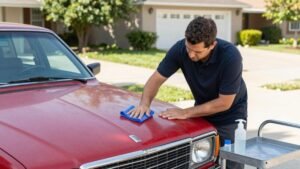
- Wash top-down with a clean microfiber towel or mitt, one panel at a time, rinsing the media often
- Dry with a plush microfiber towel or forced air, never a chamois dragged dry
- Use a maintenance wash product that leaves the coating’s water behavior intact
Two buckets, grit guards, and fresh towels matter more than any single product. A common mistake is washing in direct sun, which dries the soap and forces extra rubbing.
A full ceramic coating maintenance guide covers the wash cadence and products that keep the surface slick.
How to Evaluate Coating Claims, Warranties, and Total Cost
Total cost is where most buyers get lost, so evaluate it in three parts: preparation, product, and maintenance. A quote that skips correction is cheaper for a reason, it is not the same job. The coating is a thin film; the correction underneath is what makes the finish look right and keeps swirls from being sealed in.
Preparation. Decontamination wash, clay treatment, and machine polishing are labor hours, and they scale with paint condition.
Product and installation. Coating tiers differ in solids content, number of layers, and cure requirements. A controlled environment matters; mobile installation is convenient but demands care with dust and cure time.
Maintenance. This is the recurring cost owners underestimate. Warranties typically require annual inspections and specific wash practices, and they cover the coating failing, not damage you cause.
Ask providers these questions before you commit:
- What correction stage is included, and how do you inspect for defects before coating?
- How many coating layers are applied, and what cure conditions are required?
- What does the warranty actually cover, what voids it, and what inspections are required to keep it valid?
- What maintenance interval and wash method keep the warranty valid?
A warranty that requires annual inspections and specific wash practices is only as good as your adherence to those terms. Read the maintenance requirements before you buy, not after a claim is denied.
For a realistic look at what mobile installation runs, a mobile ceramic coating pricing guide breaks down the cost structure. Pricing depends on vehicle size, paint condition, and coating tier, so quotes are provided after inspection rather than guessing.
FTC guidance on advertising claims and substantiation
Compare quotes on equal terms: same correction stage, same number of coating layers, same cure conditions, and same maintenance obligations. The cheapest quote is usually the one that skipped prep, and prep is what prevents swirls from being locked in.
Choosing the Right Coating for Your Vehicle and Use Case
Match the coating to how the vehicle actually lives. A garage-kept weekend car and a daily-driven work truck need different answers, and the best ceramic coating for swirl mark prevention is the one suited to your wash habits and exposure.
- Daily driver, dark paint: professional SiO2 coating with annual maintenance
- New or newer vehicle: coating early, before defects accumulate
- High-impact exposure: PPF on the front end, coating over the rest
- Fleet vehicles: durable coating plus a scheduled maintenance wash program
Once you have picked a type, you can explore ceramic coating installation and the right tier for your paint can be confirmed after inspection.
Book a Mobile Coating Consultation at Your Driveway
Here is the challenge: most swirl damage happens in the first year of ownership, long before an owner realizes a coating could have slowed it.
Blue Ridge – Mobile Detailing brings the whole process to your driveway, dock, or hangar.
Get started with Blue Ridge – Mobile Detailing and protect your paint with a coating installed over properly corrected, swirl-free surfaces.
Frequently Asked Questions
Does ceramic coating protect against swirl marks?
A ceramic coating adds a sacrificial barrier that reduces light marring and makes wash-induced scratches less likely, but it does not make paint scratch-proof. Swirl marks come from grit trapped during washing, drying, and contact, so the coating buys you tolerance while your wash technique does the rest. Coatings with higher mar resistance and a proper two-bucket wash routine together deliver the best real-world result on dark-colored paint.
Do you need paint correction before applying ceramic coating?
Yes, if the paint already has swirl marks, micro-scratches, or surface contamination. A coating locks in whatever finish sits underneath it, so polishing first is what delivers optical clarity and gloss. Paint correction before ceramic coating also improves bonding by removing oils and embedded grit. Skipping this step on a swirled black car usually means the defects stay visible for the life of the coating.
How should you wash a ceramic-coated car to reduce swirl marks?
Rinse off loose dirt first, then use the two-bucket method with a grit guard and a pH-neutral coating-safe shampoo. Wash top-down with a soft microfiber mitt, dry with a plush microfiber towel or forced air, and never scrub bird droppings or tar with a dry cloth. A maintenance wash every two to four weeks keeps the hydrophobic properties working and cuts the contact that causes fine scratches.
Does ceramic coating hide existing swirl marks?
No. Coatings are transparent and add gloss, so they can make defects slightly less obvious in low light, but they do not fill or remove swirl marks. The only reliable fix is abrasive polishing during paint correction before the coating goes on. If your goal is a defect-free surface finish on dark-colored paint, budget for correction and coating as one job rather than expecting the coating alone to mask defects.